When travelers plan a trip to Sicily, they usually flock to the sun-soaked shores of San Vito Lo Capo, the boutique streets of Taormina, or the smoky volcanic craters of Mount Etna. But if you want to experience the island in its rawest, most unvarnished, and delightfully quiet form, you have to leave the coastline behind and head deep into the rugged interior of Enna province. Our guide to a Gagliano Castelferrato Sicily day trip takes you straight to a corner of the island where time stopped decades ago, houses are carved into towering cliffs, and foreign tourists are a genuine rarity.
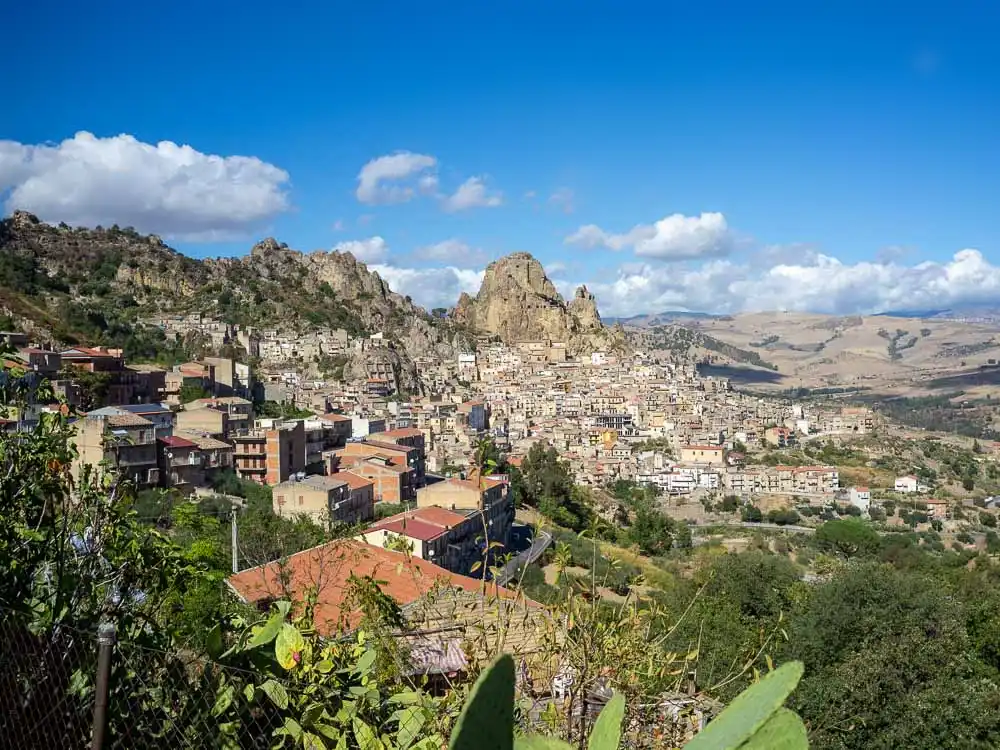
We set off toward the rock dwellings of Gagliano Castelferrato and the vast waters of Lago Pozzillo the moment we spotted a single vintage photograph in an old guidebook. That dramatic skyline—a village quite literally fusing with a sheer slab of rock—looked unlike anything else in Sicily.
Gagliano Castelferrato: Older Than Christ
Human settlement here stretches back into deep antiquity. Originally known as Galaria, the settlement flourished long before the Roman era, eventually rising to prominence under Roman rule. The name Gagliano most likely traces back to an ancient landowner (Gallianum), while the suffix Castelferrato was officially added in 1862 in tribute to the seemingly impregnable hilltop fortress known as the castle of iron (di ferro).
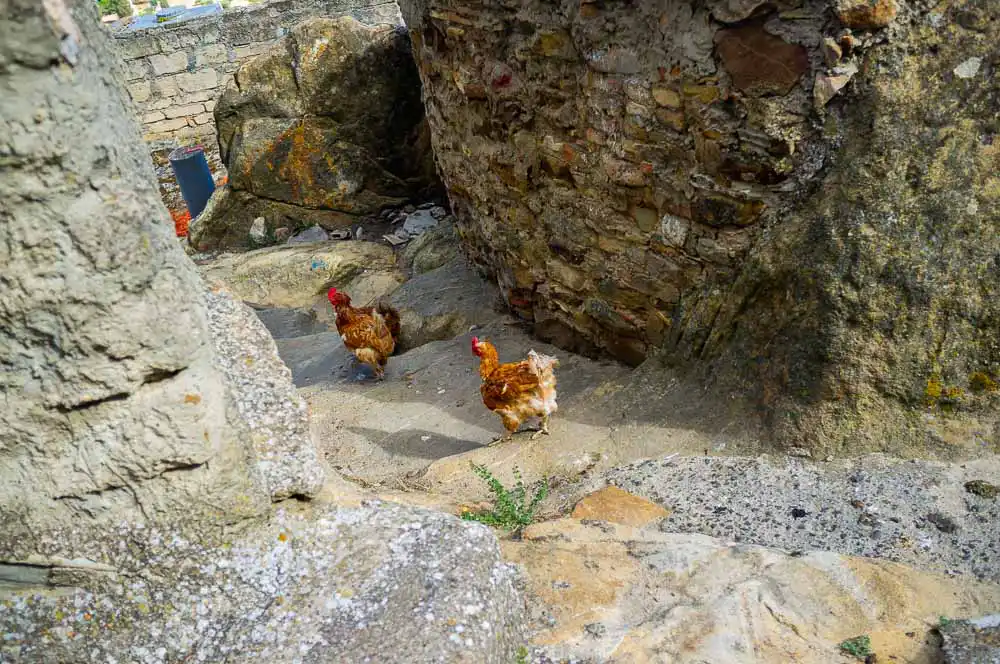
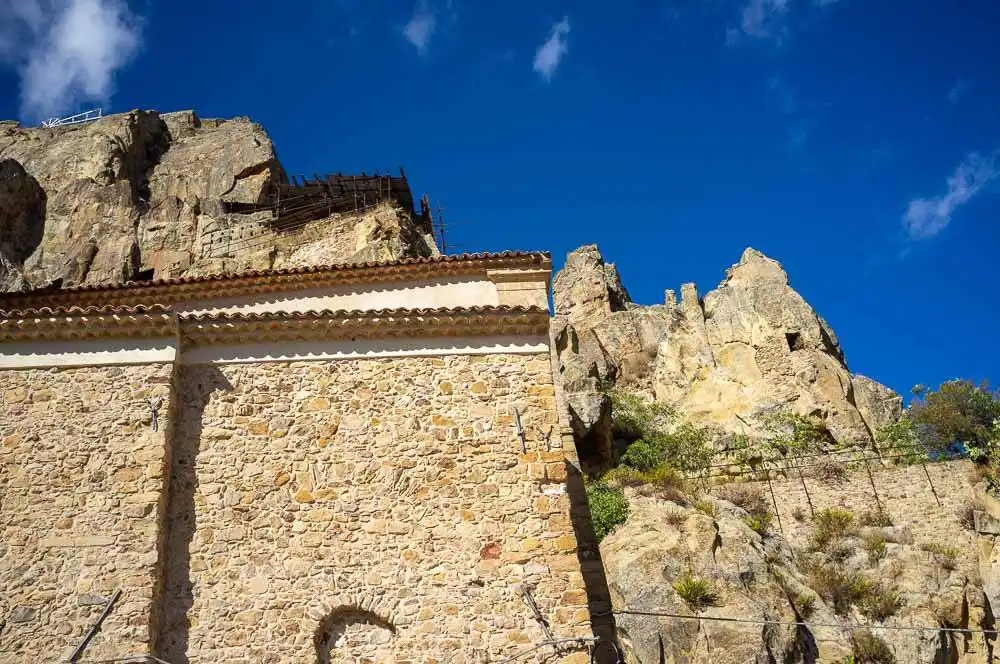
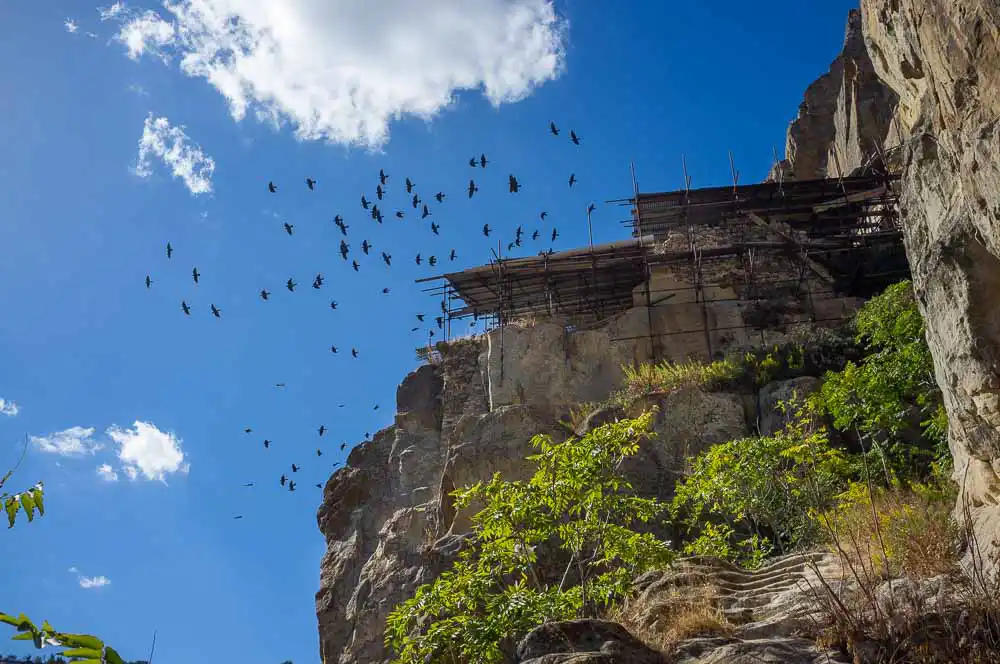
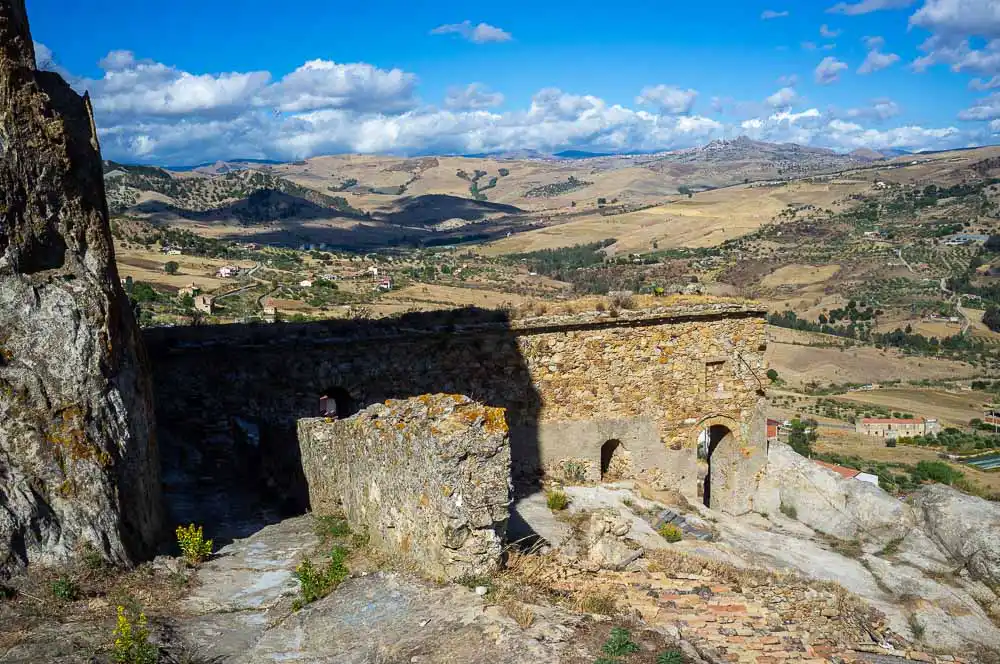
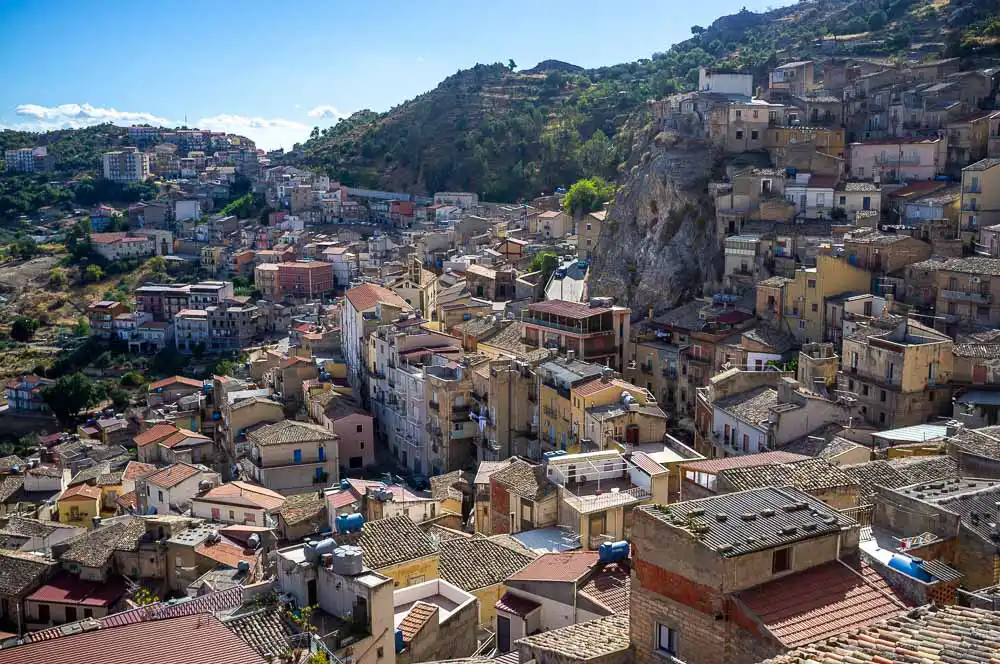
Perched at an elevation of roughly 650 meters (2,130 ft), the modern town operates under an unspoken, age-old social rhythm. At the pavement cafes around the square, elderly men sit over a single espresso from morning until dusk, dissecting local politics with animated hand gestures. Through open ground-floor kitchen windows, the scent of garlic, olive oil, and crushed tomatoes drifts out under the command of local matriarchs. Younger locals lean on stone ledges tapping away at smartphones, stray cats and chickens weave through cobblestone alleys beneath the cliffs, and wild pigeons dominate the high ramparts. In between, you might spot the occasional wandering traveler trying to make sense of it all.
Climbing the Castello Rupestre: A Fortress Carved from Living Rock
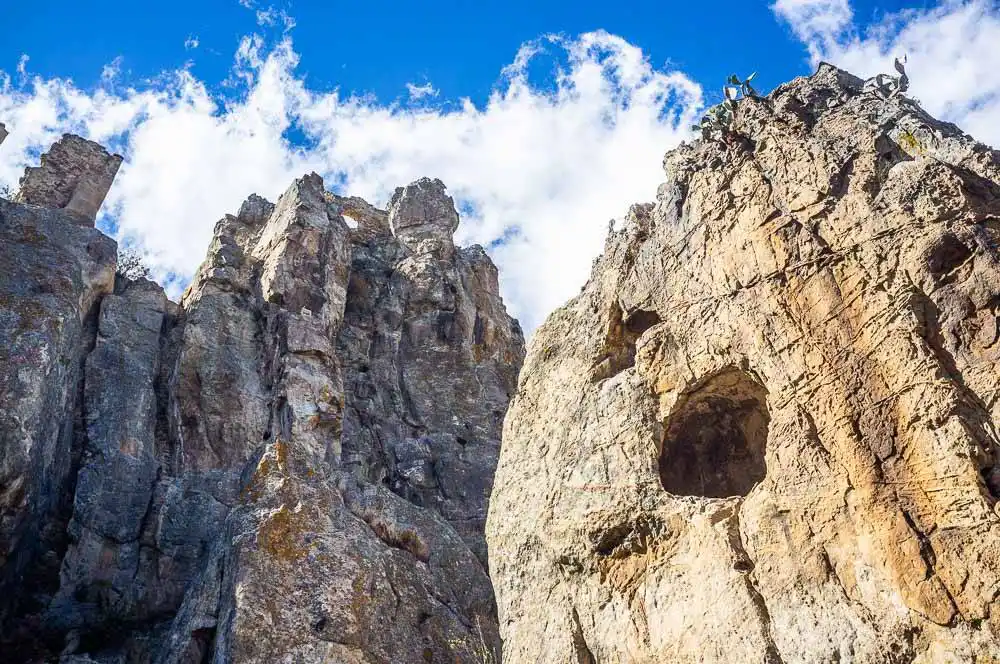
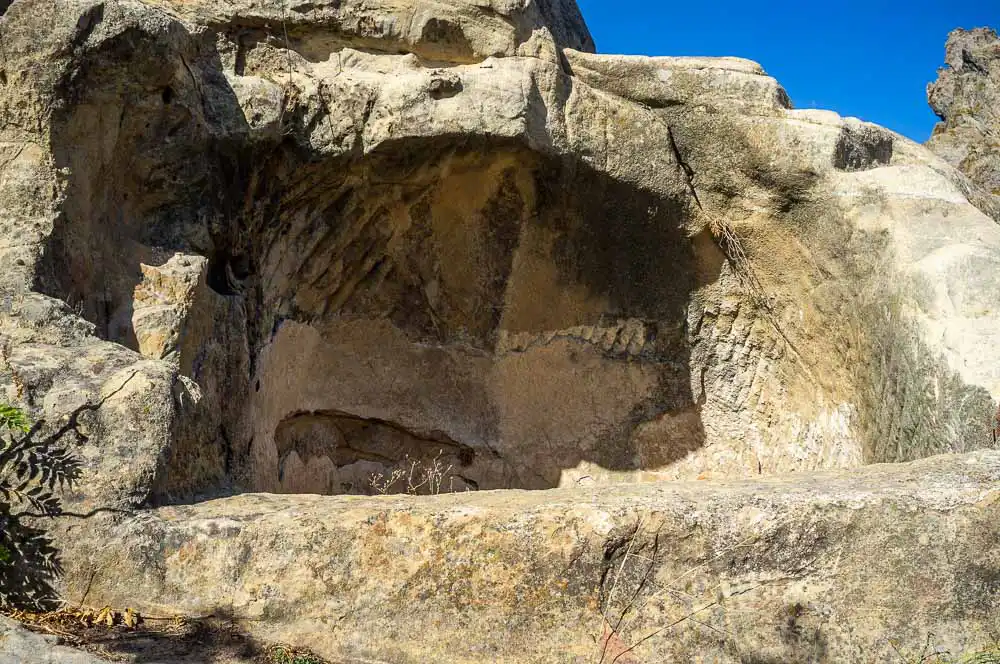
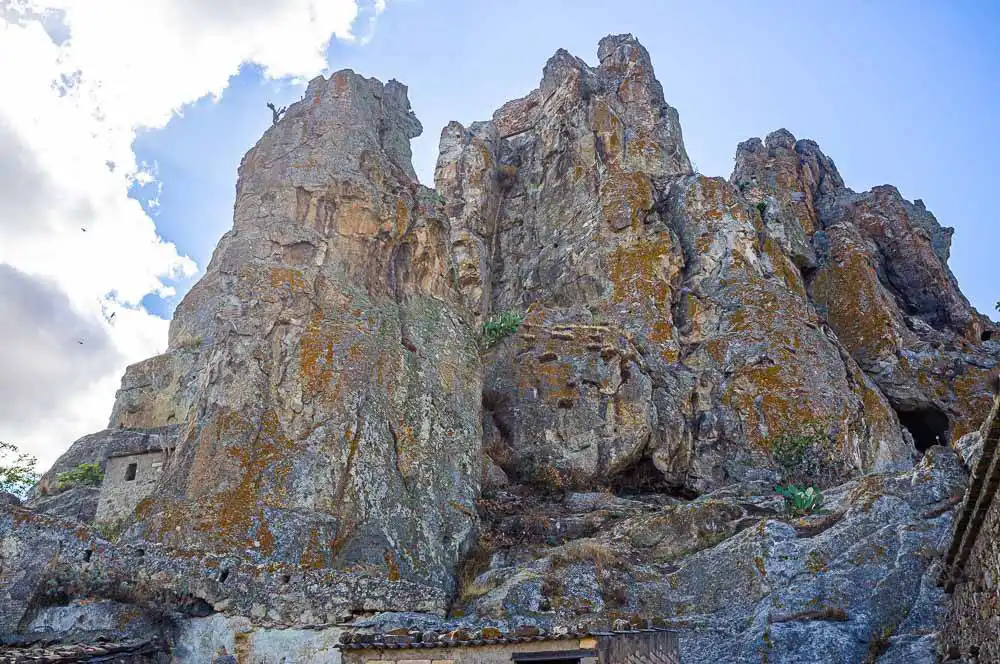
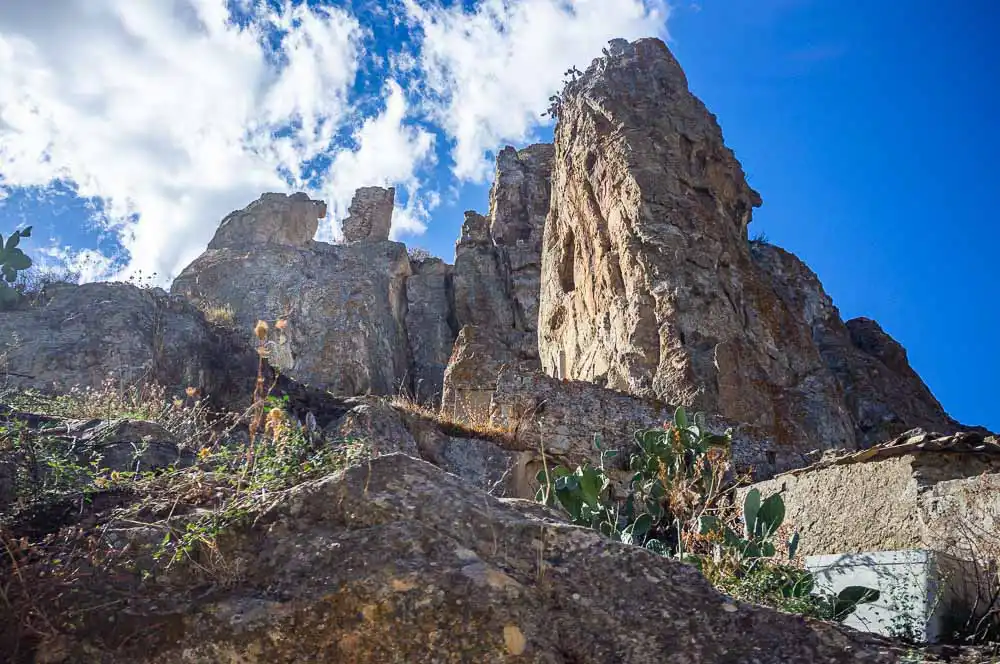
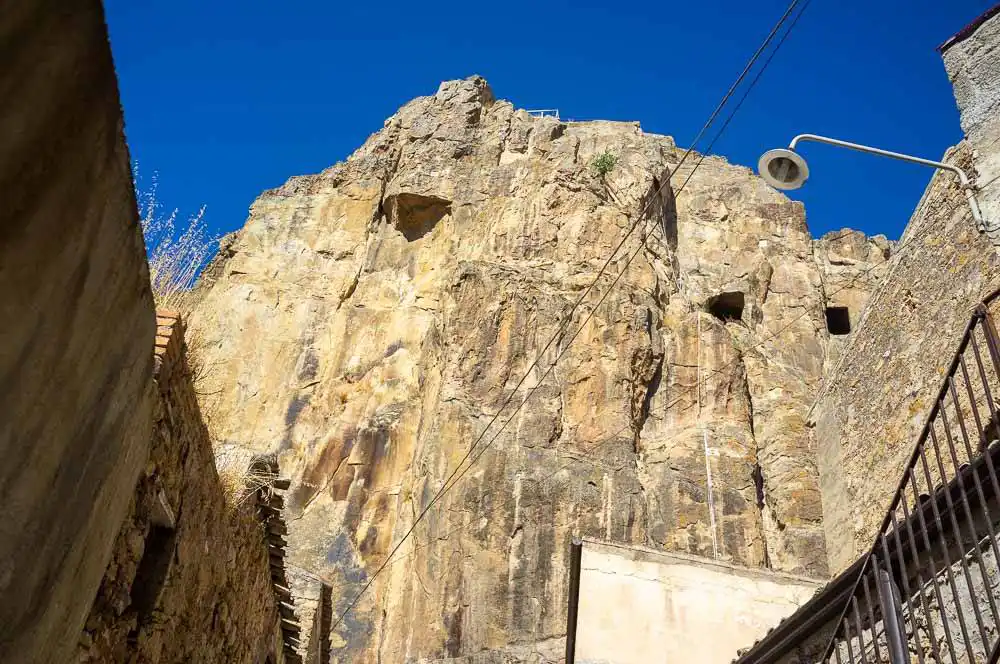
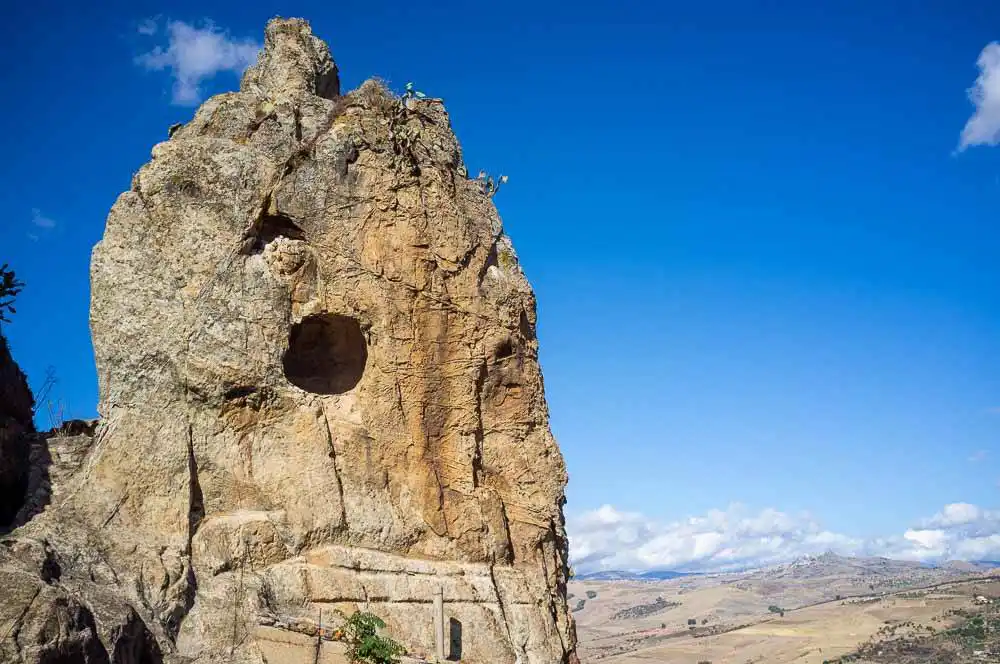
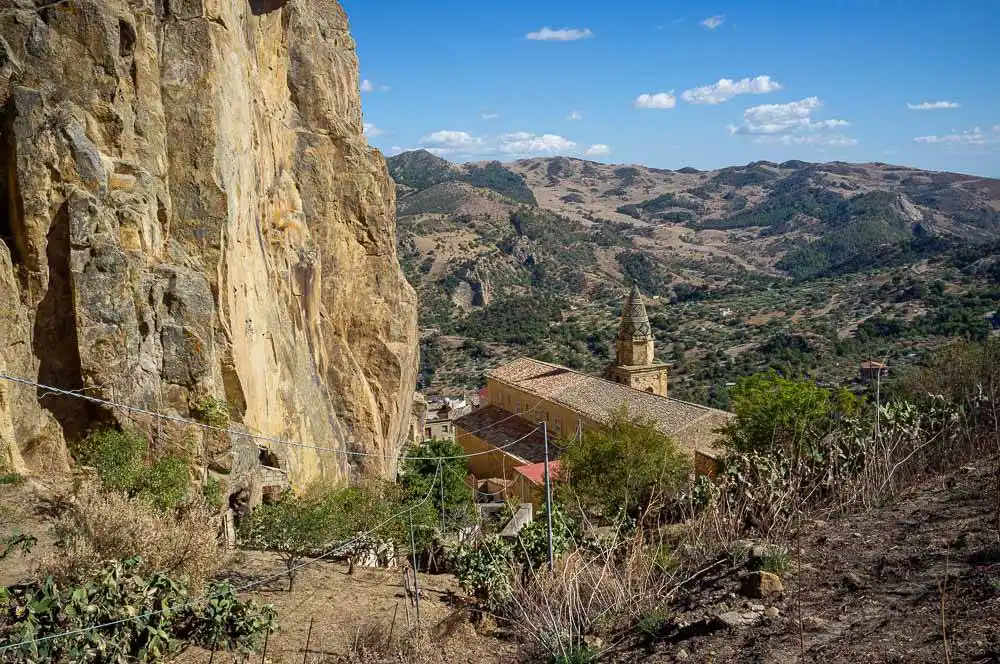
The defining visual anchor of the town is the Castello Rupestre—a medieval fortress literally chiseled into a monolithic outcrop of rock rising straight out of a sea of terracotta rooftops.
- Getting lost in the maze: Finding the trailhead to the summit is half the adventure. You will not find modern waymarking plaques. Narrow alleys lead into dead ends, private courtyards, or underground cellars. In the end, we only made it to the top by following the clucking of stray chickens and the friendly hand signals of women hanging out laundry.
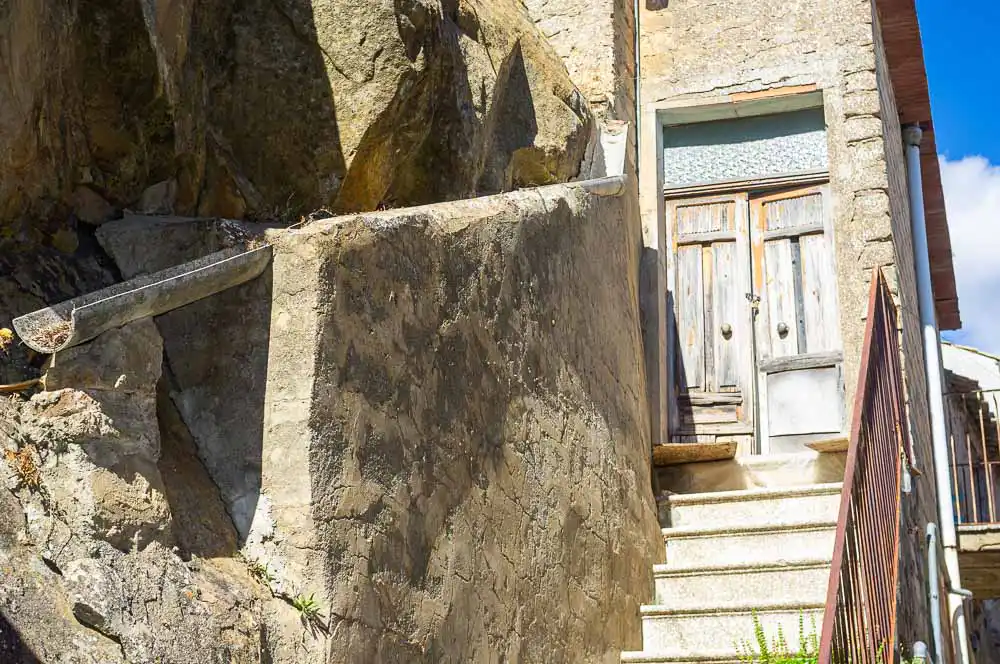
- Rock-cut chambers and dwellings: As you gain elevation, traditional stone masonry blends directly into the geology. Many homes feature neat brick facades, yet their ceilings and back walls are raw bedrock.
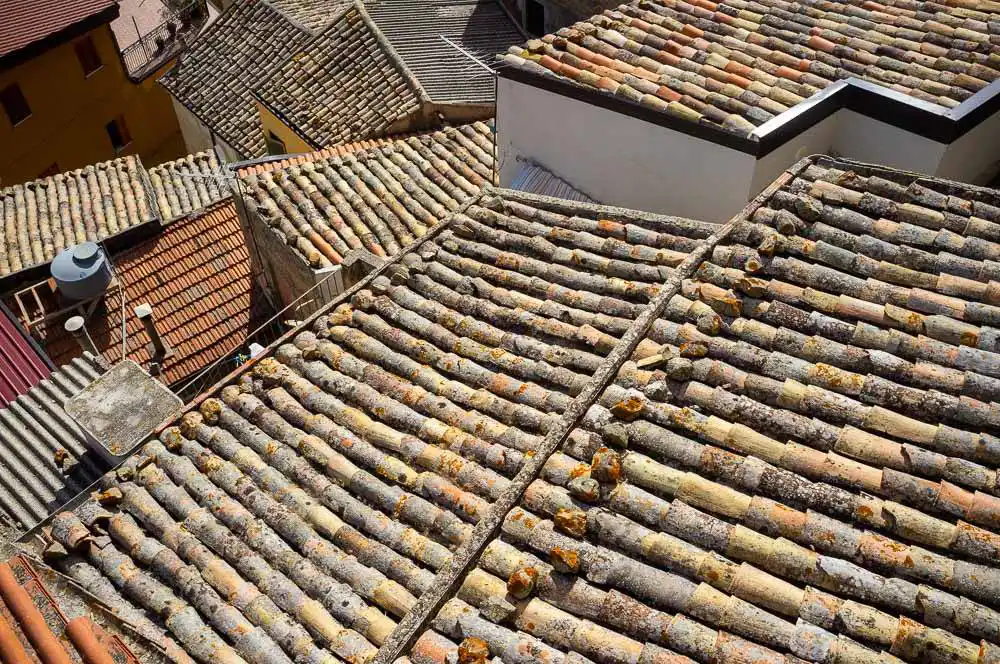
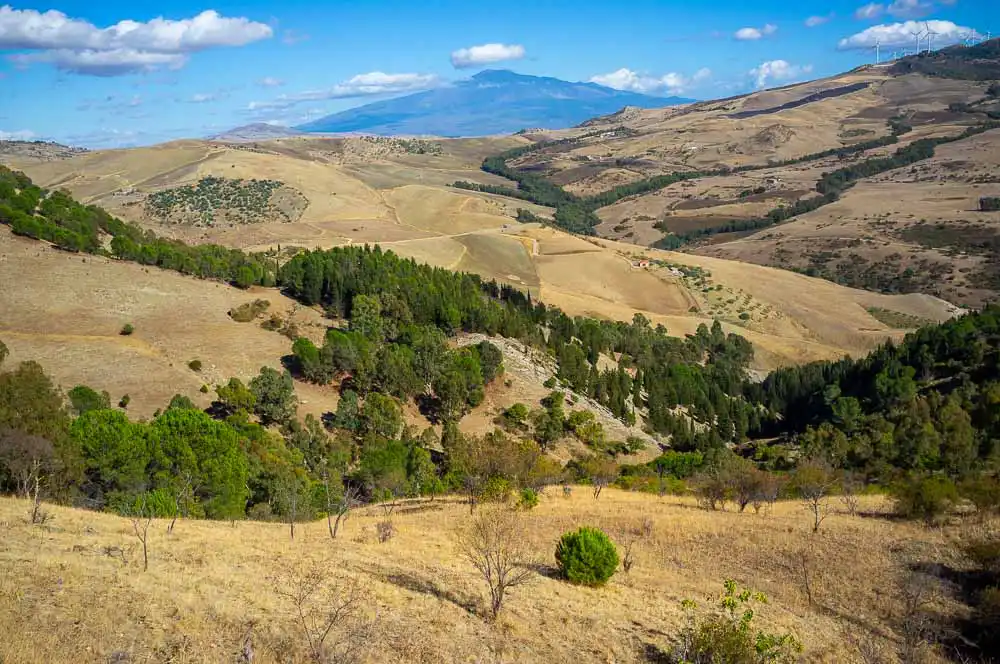
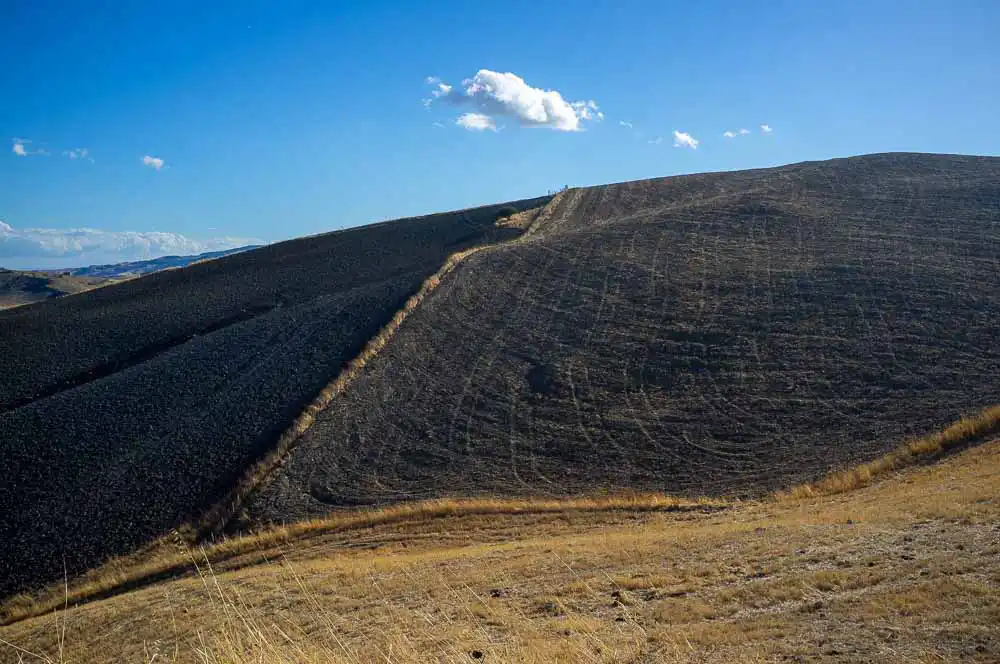
- The view from the crest: When you cross the final rock staircase and emerge onto the summit cleft, the only company you will encounter is roosting cliff birds. The payoff is immense: a patchwork of Sicilian tiled roofs below, rolling golden wheat valleys extending toward the interior, and Mount Etna puffing steadily on the eastern horizon.
- Photo tip: For the classic postcard shot of the entire rock face, head to the viewing terrace at Piazza Don Bosco on the south edge of town. Afterward, drop into a quiet bar among the locals for a proper caffè lungo—the unhurried atmosphere is pure gold.
Regalbuto and the Allure of 1€ Homes
Heading east back toward Catania, you pass through the hilltop town of Regalbuto. Its name hints at its Saracen heritage, originating from the Arabic Rahal Abbud (“Abbud’s Farmstead”).
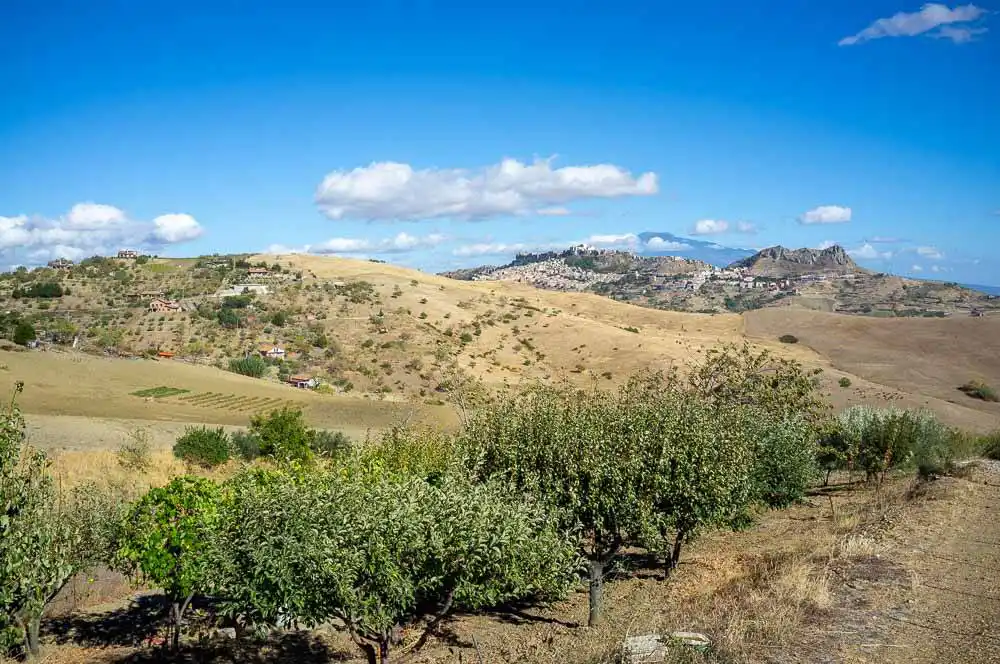
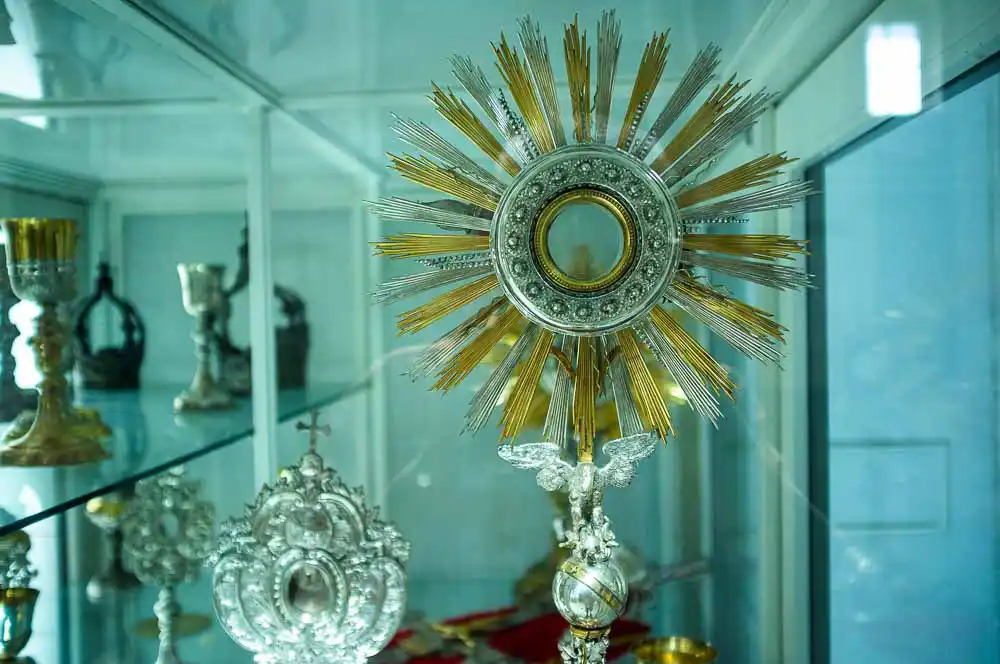
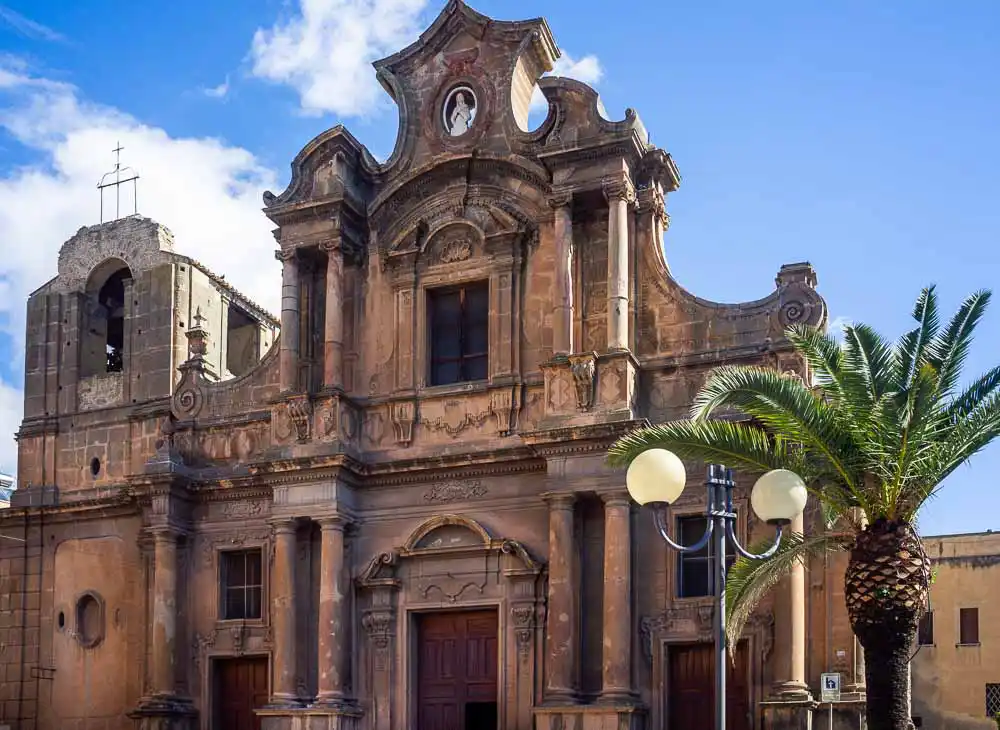
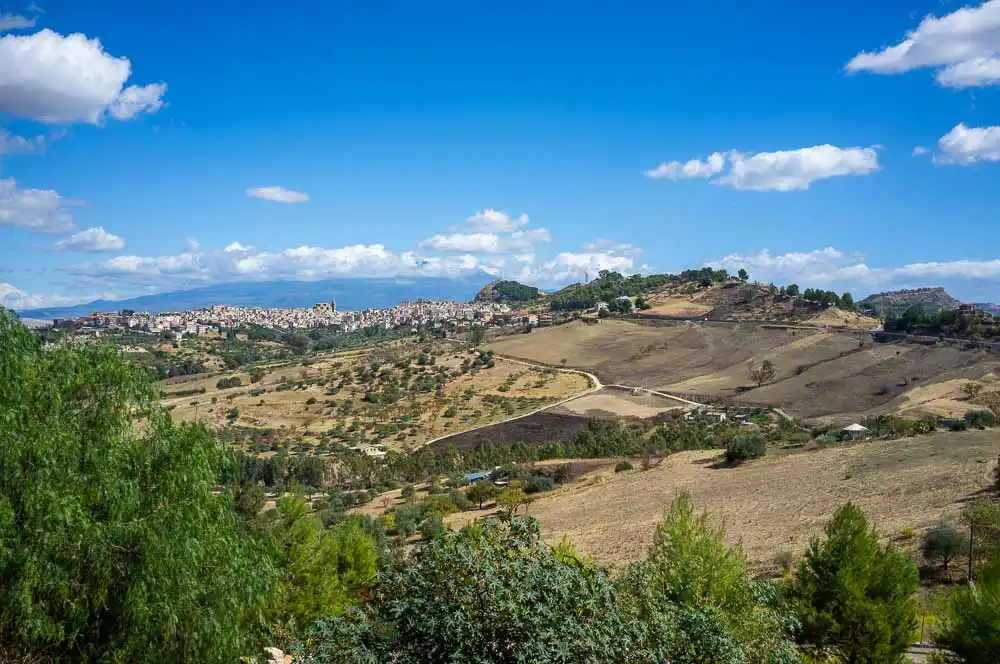
Like many interior settlements, life here clings to steep slopes. Architectural highlights include the Chiesa Madre (Mother Church) dedicated to Saint Basil, which houses an impressive 10-meter-high altar, and the church of Santa Maria della Croce, approached via a grand Baroque staircase flanked by an arched bell tower. The deep-rooted presence of the Church permeates every stone lintel.
Yet beneath its architectural pride, Regalbuto faces the challenge shared by much of inland Sicily: rural depopulation. Young people frequently relocate to northern Italian industrial hubs, leaving historic dwellings empty. To stem the decline, Regalbuto introduced a 1-euro home scheme, aiming to lure foreign remote workers and restorers to breathe life back into its forgotten alleys.
Lago Pozzillo: An Oasis Beneath Mount Etna
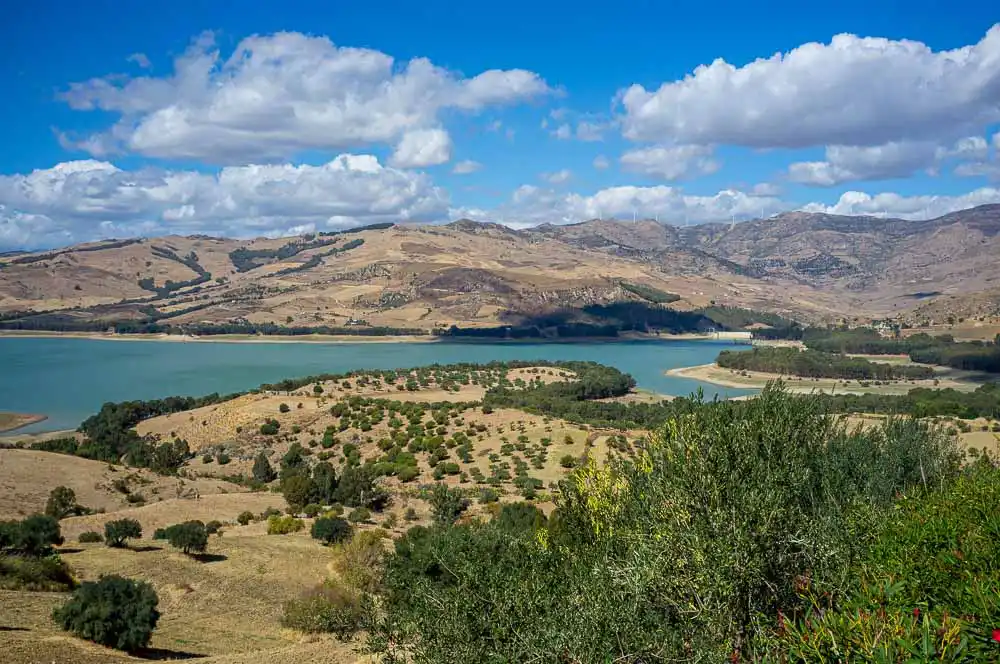
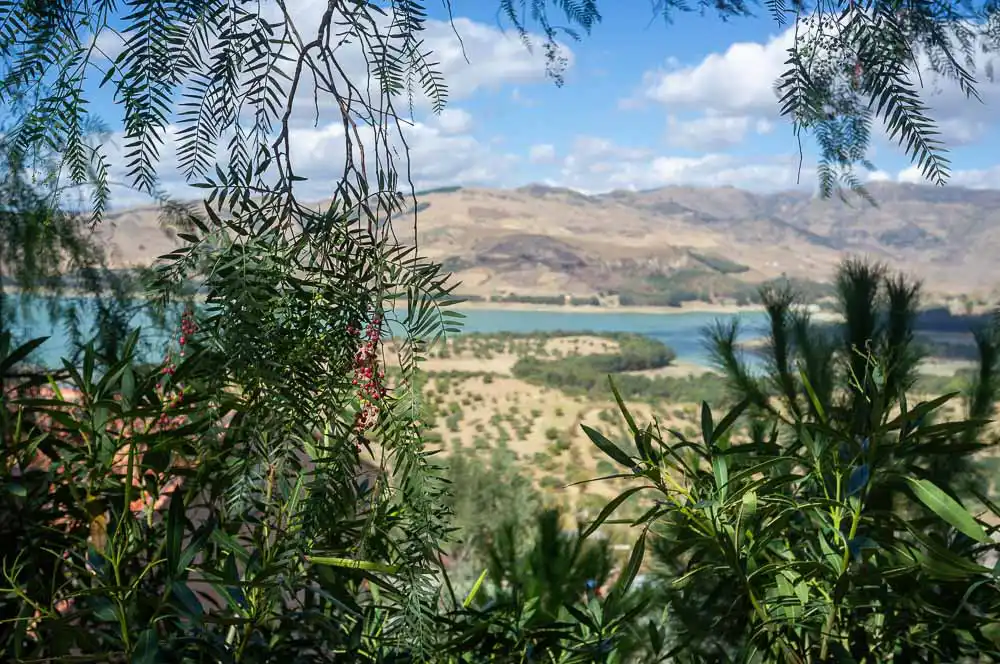
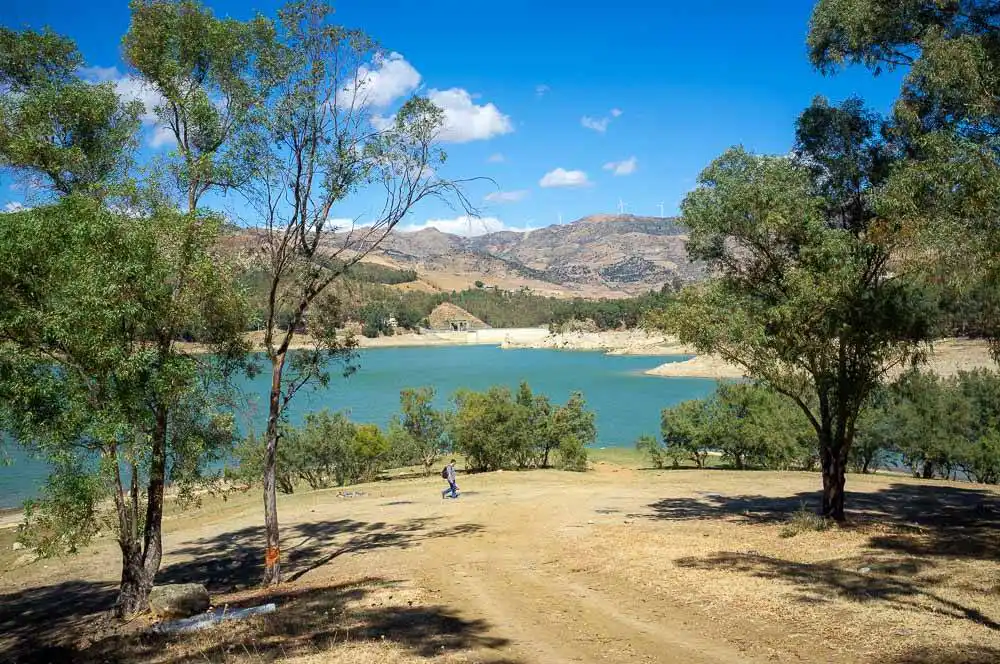
Just below Regalbuto sits the expansive reservoir of Lago Pozzillo. Formed by damming the Salso River, it ranks among the largest artificial bodies of water on the island.
- A lifeline for farming: Much like the artificial reservoir at Piana degli Albanesi in western Sicily, Lago Pozzillo is critical infrastructure. Without these vast water catchment basins, the surrounding agriculture could never survive the arid summer heatwaves.
- Lakeside walks & Etna panoramas: Following the steep, winding switchbacks down to the lake shore brings you right to the waterline. Wide, sandy mudflats reveal the seasonal ebb and flow of water levels. The shoreline tracks provide tranquil walking opportunities where Mount Etna reflects cleanly in the water on calm mornings.
- A few modest picnic clearings and recreation areas dot the perimeter, though outside peak summer weekends, you are likely to have the shoreline entirely to yourself.
📌Practical Travel Tips
- Getting around: Public transit through these remote hill towns is sparse and erratic. Renting a car is essential. Pick a compact vehicle, as navigating the narrow alleys of Gagliano and Regalbuto requires careful maneuvering.
- Driving times: From Catania airport, expect an easy 1-hour and 15-minute drive (approx. 65 km / 40 miles) via the A19 highway toward Enna, turning off toward Agira and Regalbuto.
- Parking: Avoid driving into the narrow historical core of Gagliano Castelferrato. Leave your car near the town entrance or around Piazza Don Bosco and explore on foot.
- Local food to try: Enna province is renowned for Piacentinu Ennese (a sheep’s milk cheese infused with real saffron and whole black peppercorns), locally grown almonds, and classic wood-fired Sicilian pizza.
Frequently Asked Questions (FAQ)
No. The cliff-top ruins are free to access at your own risk. Wear proper shoes with good grip, as trails can be rocky and unprotected along the cliff edges.
Older children will love scrambling up the rocky paths and discovering the carved niches. The route is entirely unsuitable for strollers due to steep, uneven rock steps.
Swimming is not permitted or recommended, as this is an active water reservoir with fluctuating water levels, silt bottoms, and agricultural utility. It is best enjoyed for lakeside walking, landscape photography, and bird watching