Hiking up Caldera Blanca is the best trail on Lanzarote you can do without a tourist bus! Here’s our personal guide and tips for a 12 km loop through lava fields with majestic views of Timanfaya National Park. Learn exactly where to start at Camino del Cráter, why you shouldn’t start on foot from Mancha Blanca, and the difference between Caldera Blanca and Caldereta. Prepare for a lunar landscape, volcanic devastation from 1730–1736, and a trek where good shoes are an absolute must. Welcome to the edge of ancient energy!
Camino del Cráter: Start and a Logistical Mistake (Don’t Underestimate the Asphalt!)
Camino del Cráter is the dirt road with a parking area where the Caldera Blanca hiking trail begins.
We fancied ourselves heroes and went without navigation. We stopped in what we thought was the village. It wasn’t Mancha Blanca but a parking area somewhere between Tinajo and the caldera. So we trudged two very bored kilometers along asphalt before even reaching the actual trail.
Step by step, the first kilometers really started somewhere else.
Lunar Landscape Near San Bartolomé: Lava Fields Off the Official Maps
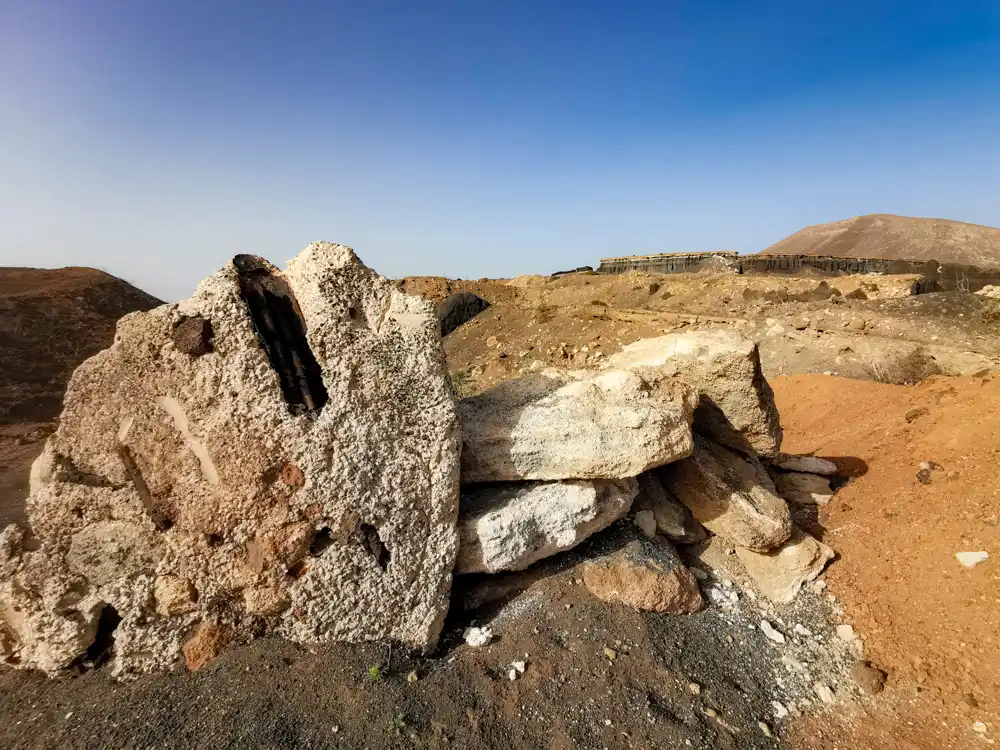
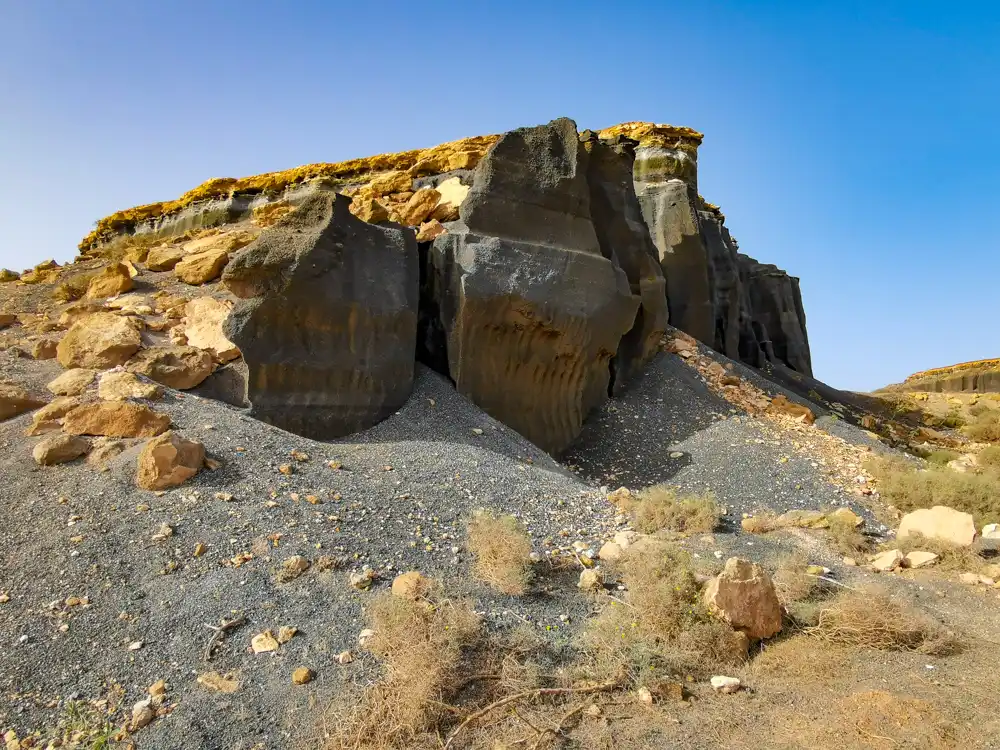
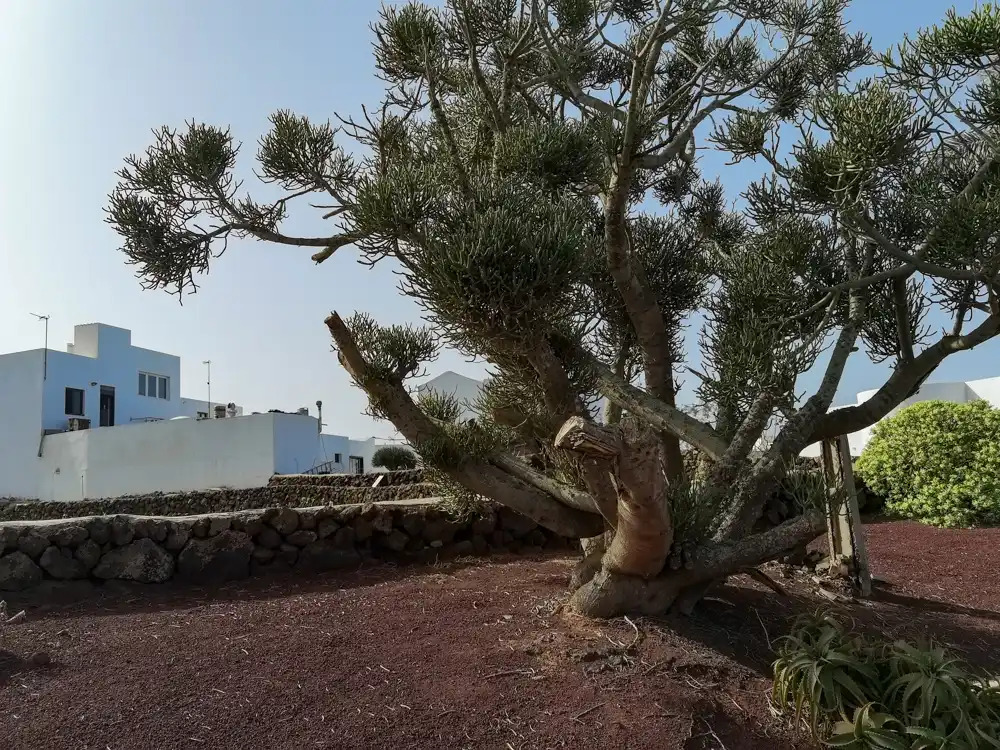
All instincts and experience tell me that the most interesting things are found where official guides and maps don’t mention. Layered terrain and the natural landscape tell the story of Lanzarote’s history better than a thousand guidebooks.
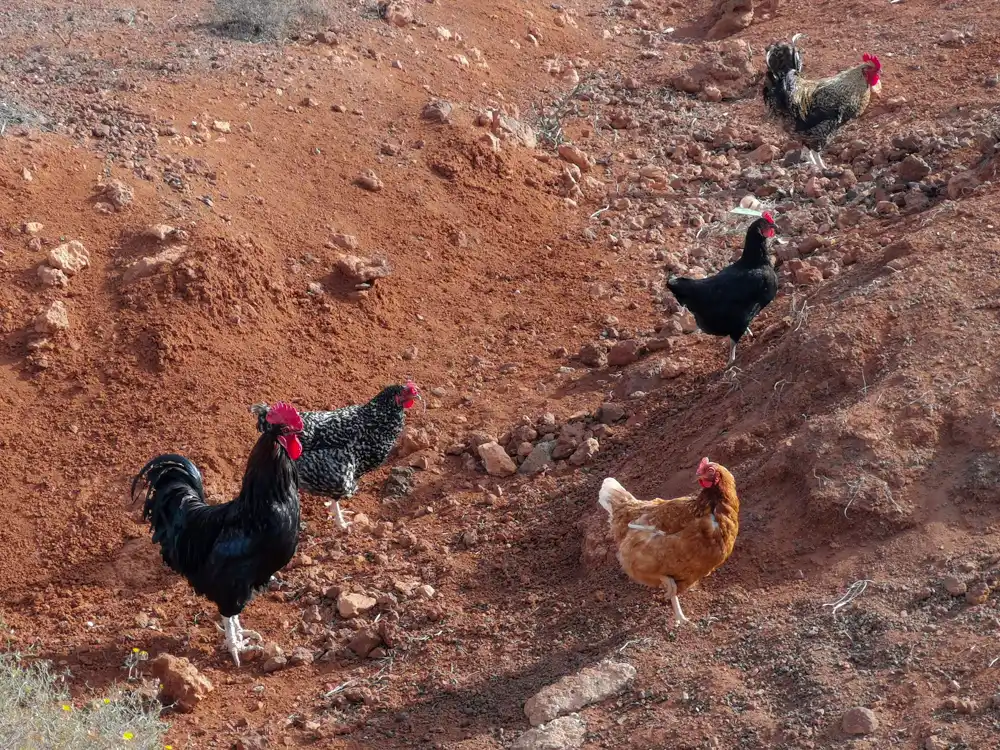
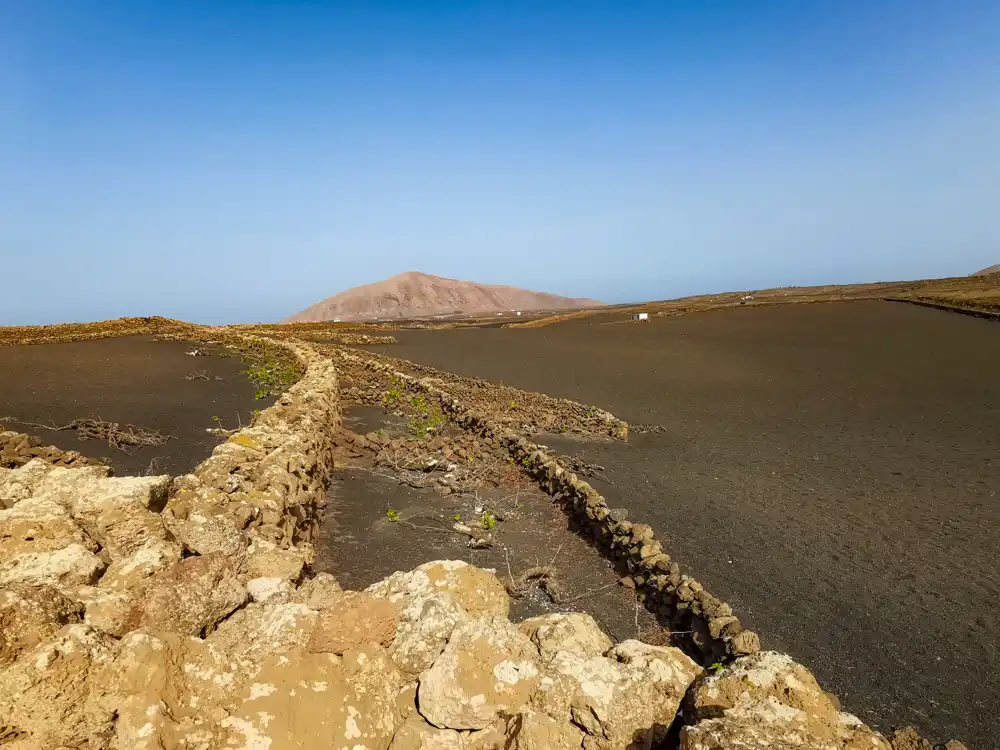
Everything is local: volcanic ash, lava fields, pebbles, gravel—locals make use of it all. And what they don’t finish, water, wind, and erosion complete. Walking through a lunar landscape without embellishment, the only regret is not sitting on a horse. Trails like this are worth it. Sunlight breaking through clouds changes the scenery minute by minute, and you can’t stop taking photos.
Eventually, a local security guard had to yell at us that entry here was strictly forbidden. He smiled, though, and we got along. 🙂
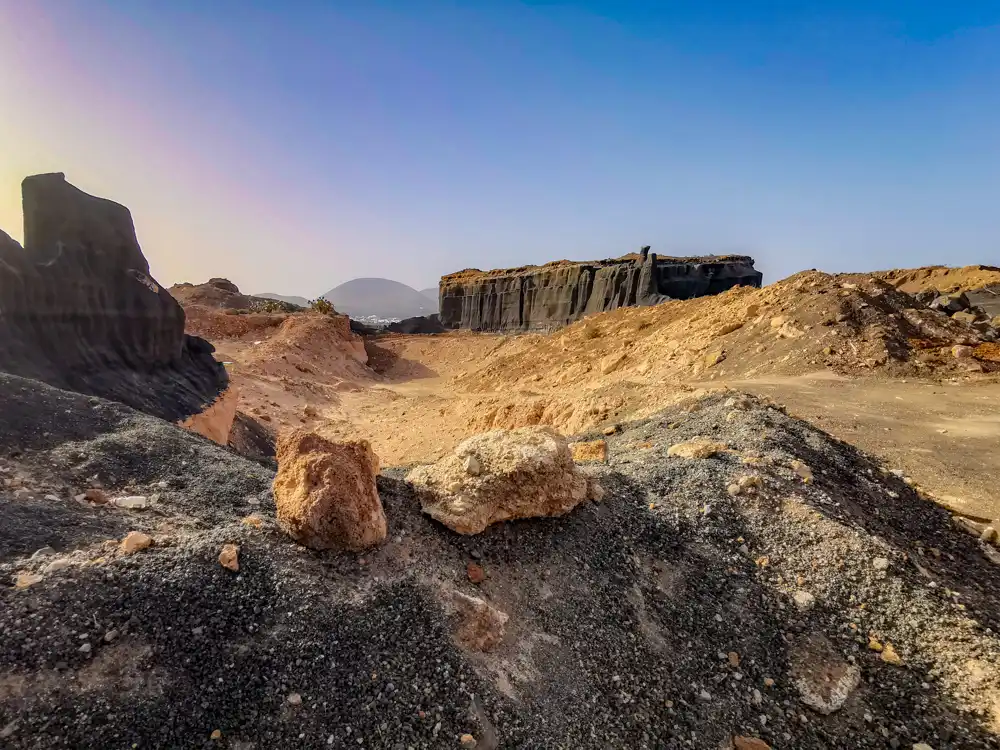
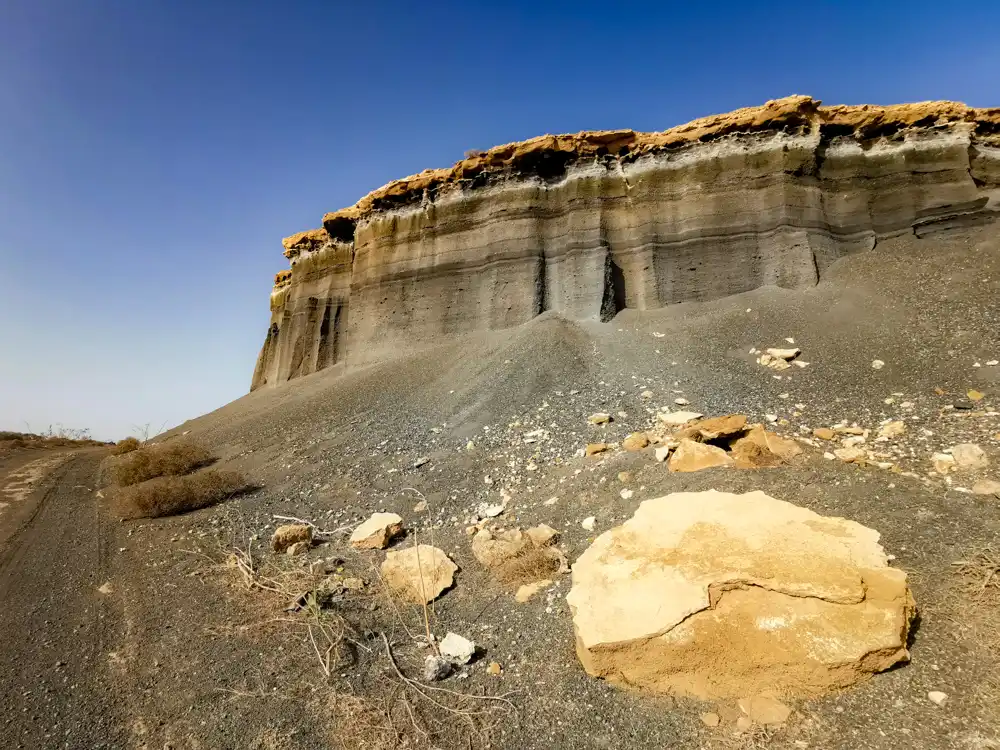
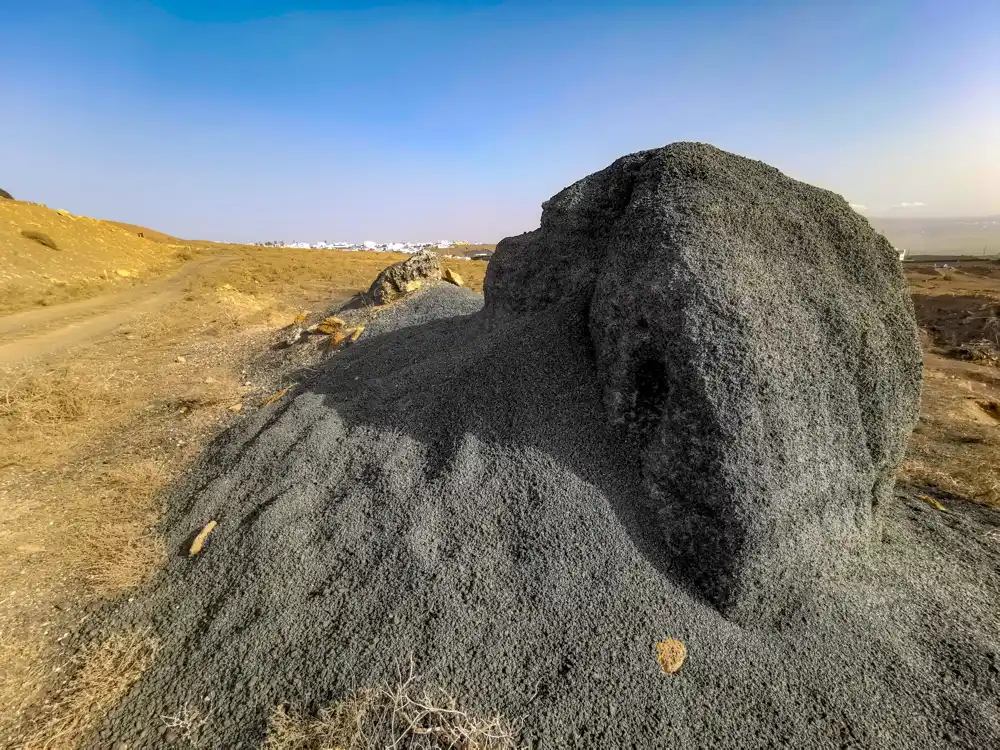
Caldera Blanca: Unique 12 km Hiking Trail in Timanfaya Park
Some places, even at the parking lot, signal that you’re not just going for a stroll—you’re shaking hands with ancient geology. The ascent to Caldera Blanca whispered from afar: “Don’t worry, I won’t erupt. I retired long ago.”
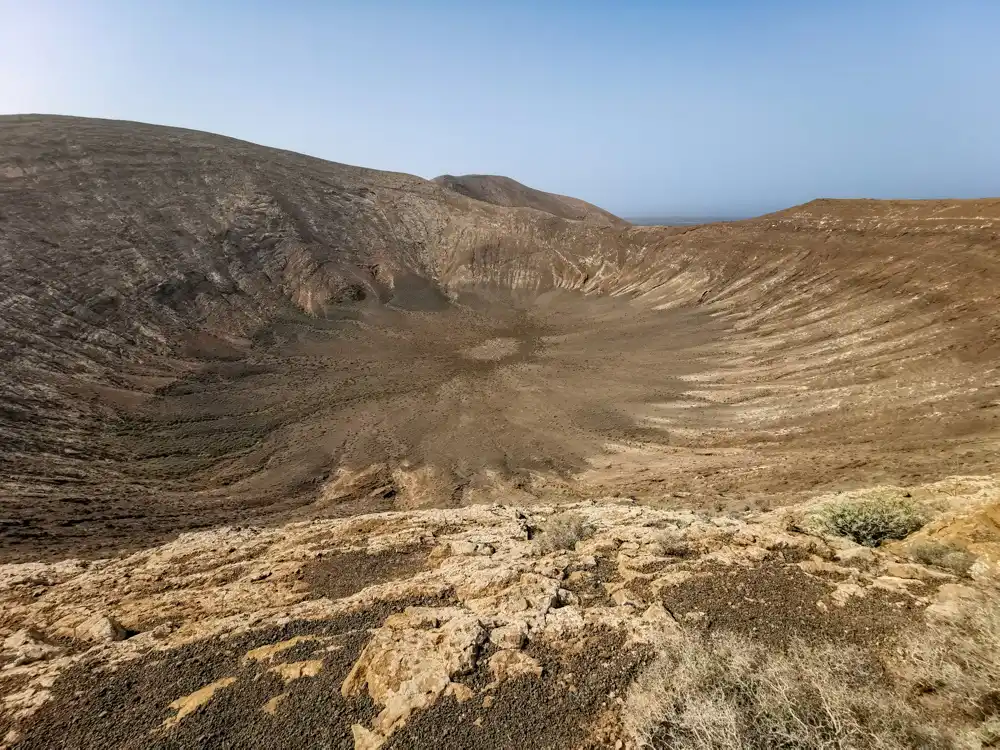
Caldera Blanca, one of the largest craters in the Canary Islands, formed about 3,000 years ago when Lanzarote was busy doing everything except being boring. Today it feels like a natural amphitheater waiting for a few curious visitors with caps and two liters of water.
Official hiking trails across Lanzarote’s volcanic terrain are scarce. Timanfaya National Park is mostly a bus attraction, off-limits to human feet. All the more reason to enjoy that the area around Caldera Blanca offers a 12 km loop around three volcanoes in lava fields entirely on your own. Considering Lanzarote’s usual tourist traffic, it was relatively empty here.
If you’re arriving by car, take road LZ-67, then immediately the dirt road called Camino del Cráter. From Mancha Blanca it’s just 5 minutes and you can park. We underestimated this and spent an extra 4 km walking along boring asphalt.
Warning: Lava Fields Require Solid Footwear 🥾
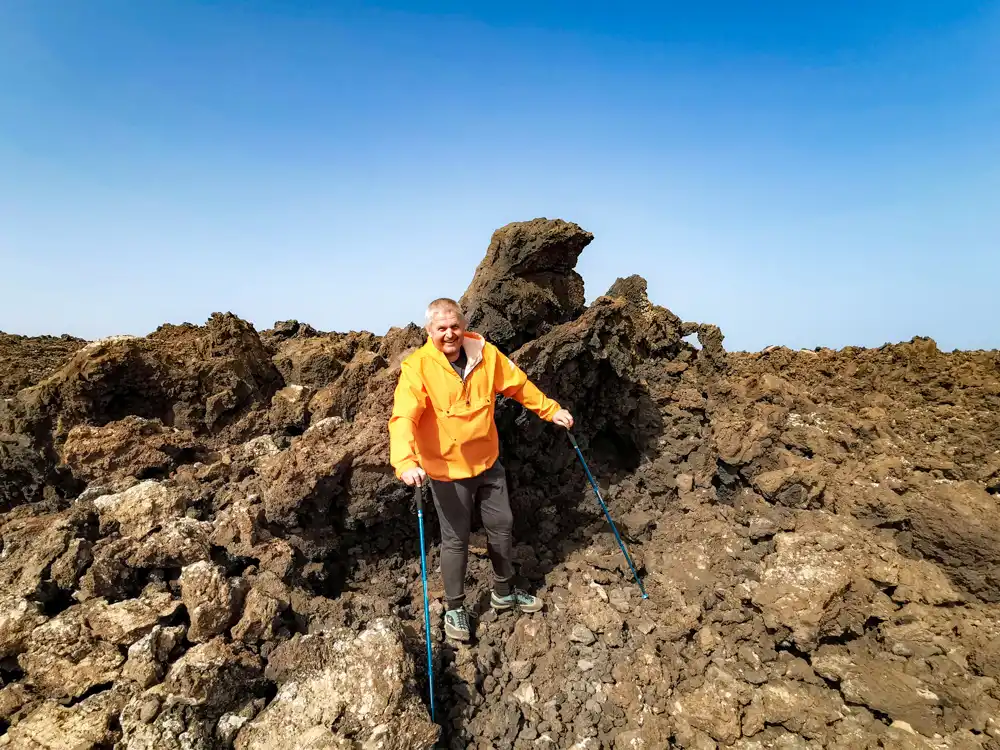
The trail is impossible to get lost on unless you leave it. Venturing between lava flows is dangerous and not recommended. Unmarked lava fields are extremely risky; walking on hardened lava is nearly impossible, and you can easily lose your way. One section featured a multi-kilometer “no way” mass of volcanic rock, up to five meters high and razor-sharp. Definitely not a place to fall backward.
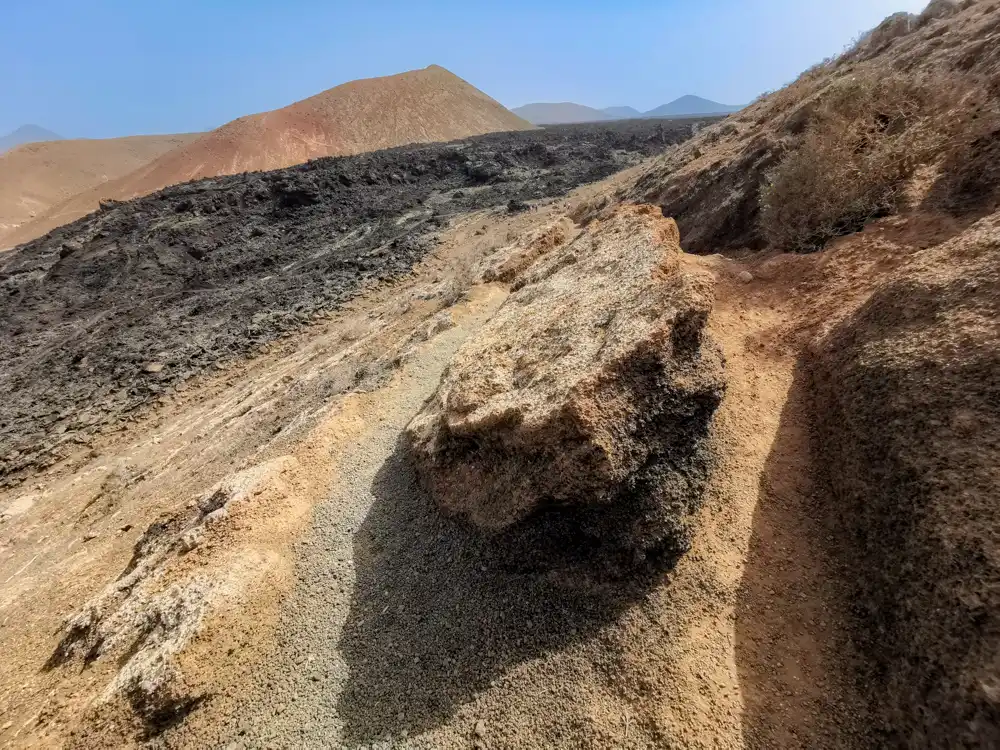
The first meters lead through a landscape that looks like broken ceramics from the gods. Lava pieces form chaotic patterns, wind whistles between edges, and you feel like you’re walking on a Mars set.
Good shoes are essential. Flip-flops and soft-soled shoes won’t survive this trail. Even normal sneakers would struggle.
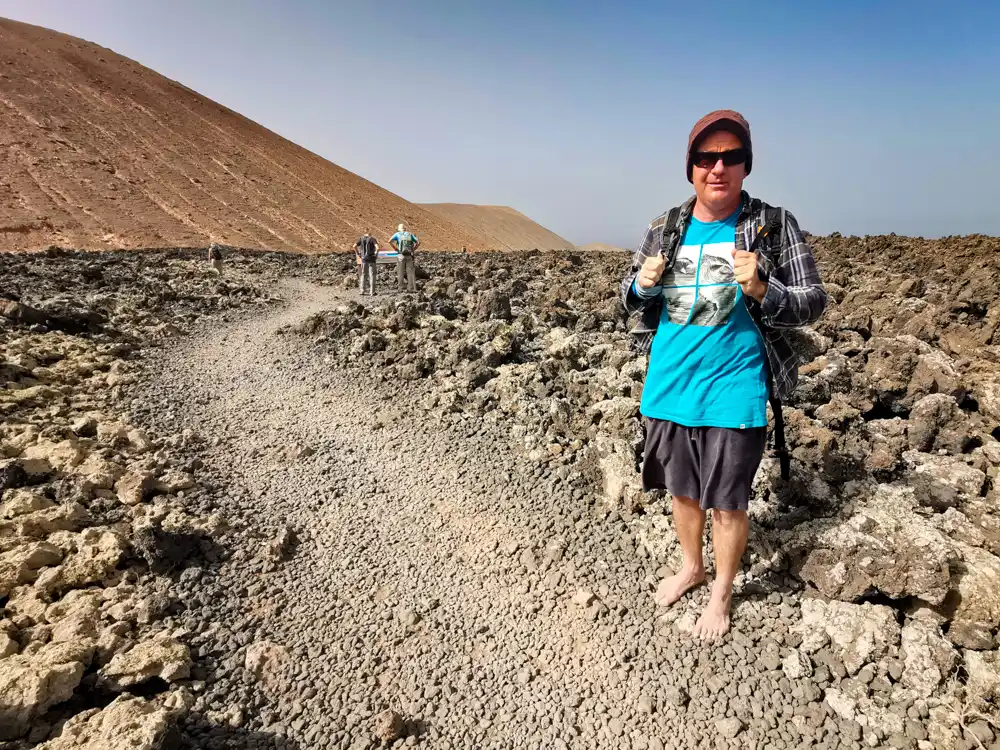
No refreshment points exist along the trail. Bring water—especially if the sun is shining. Caldera Blanca doesn’t rush to reveal everything at once. First, you pass a smaller crater: Caldereta—as if volcanoes were practicing: “Let’s start small before drawing the big one.”
La Caldereta: A Small Crater Warm-Up and Shepherd’s Shelter
After about a kilometer, you reach the first smaller volcano, Caldereta. We skirted it and peeked inside the crater.
Later we Googled and found out that the abandoned shelter on the left once served local farmers. They kept livestock in the crater until they realized tourists were a better commercial product. 🙂 The caldera held rain, pasture, and the animals had nowhere to escape. Lanzarote has over 150 such craters.
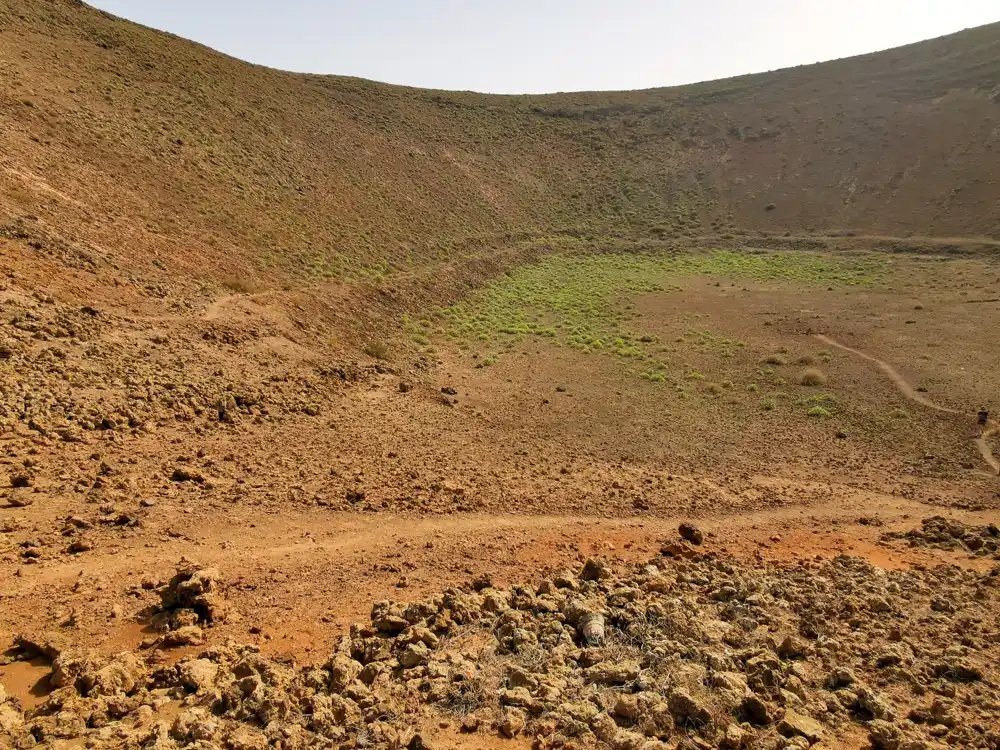
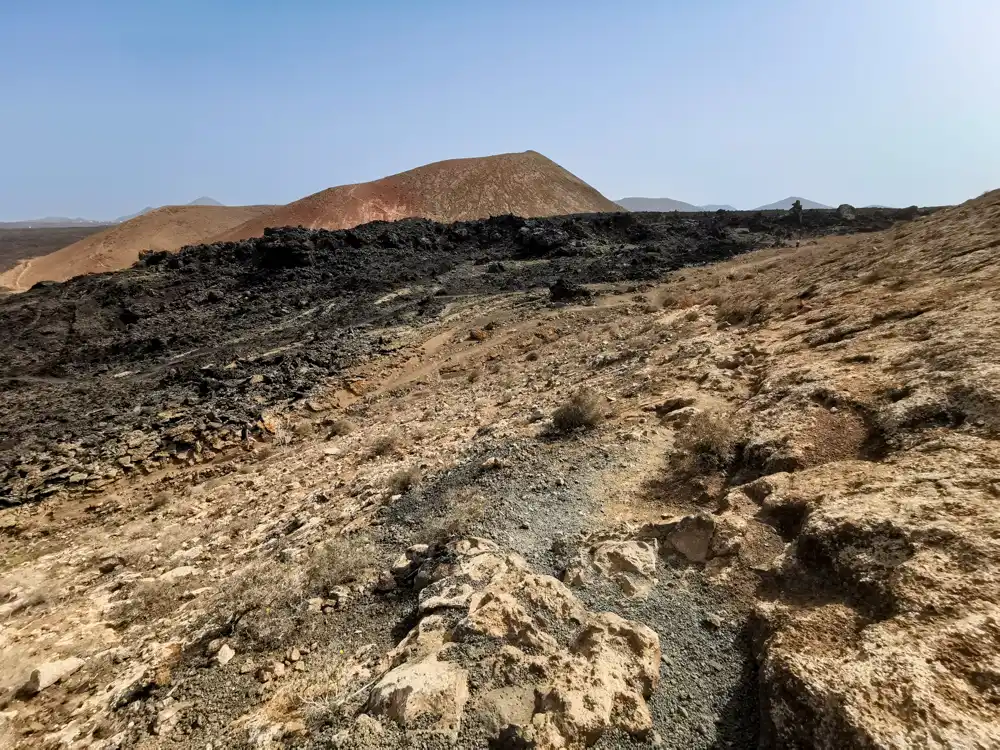
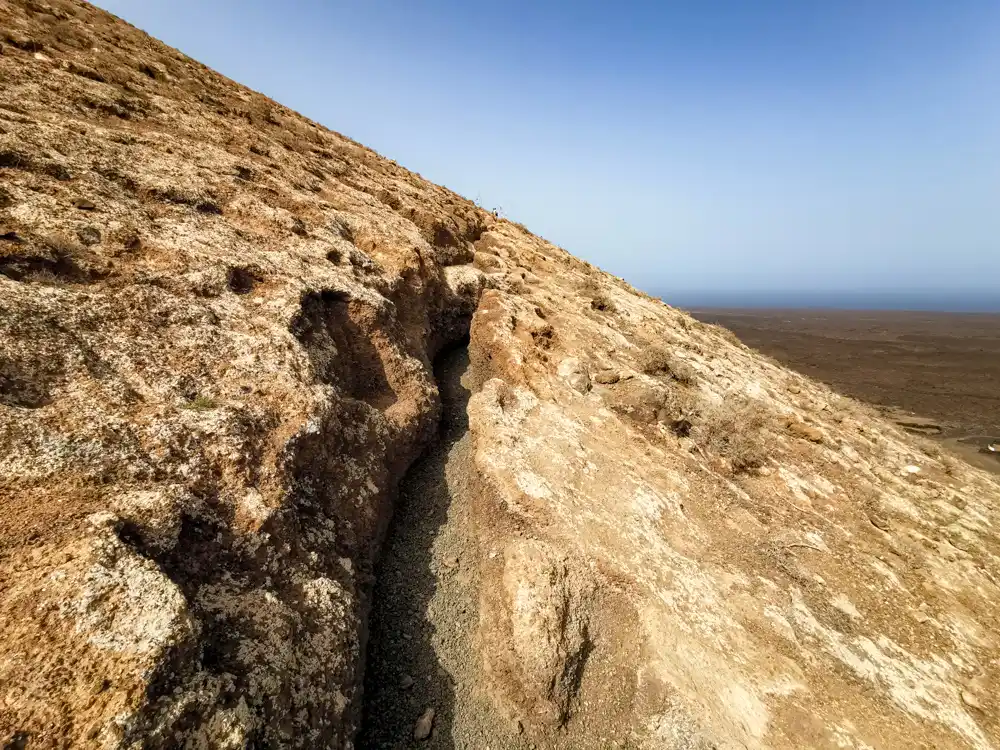
The lava sea between Caldereta and the main crater is the most fascinating. Two lava flows met here, creating a bizarre natural artwork.
This entire phenomenon resulted from eruptions between 1730–1736, which reshaped the island. Humans may try to play master of the world, but photos cannot capture this devastation. People and technology are insignificant in the face of such eruptions.
Climbing to the Crater Rim
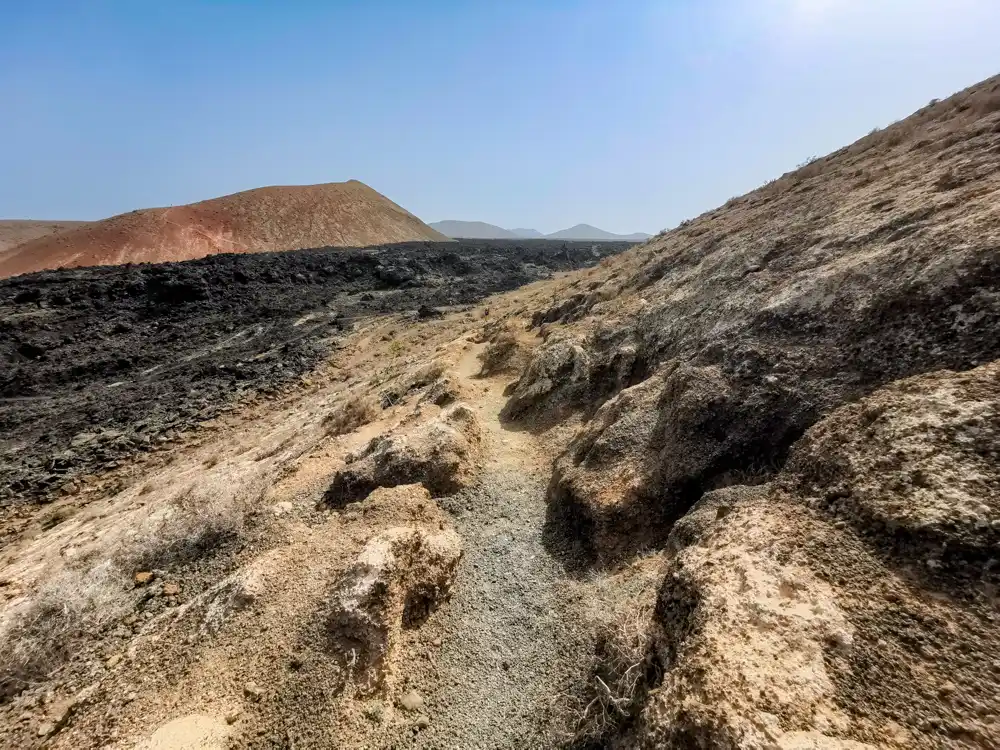
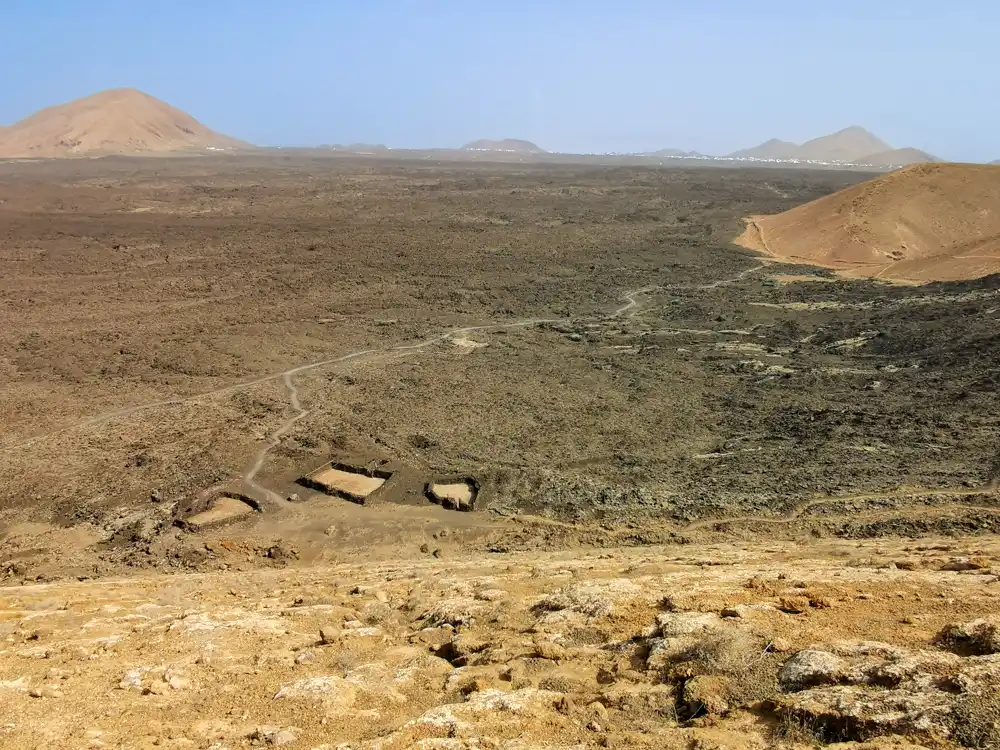
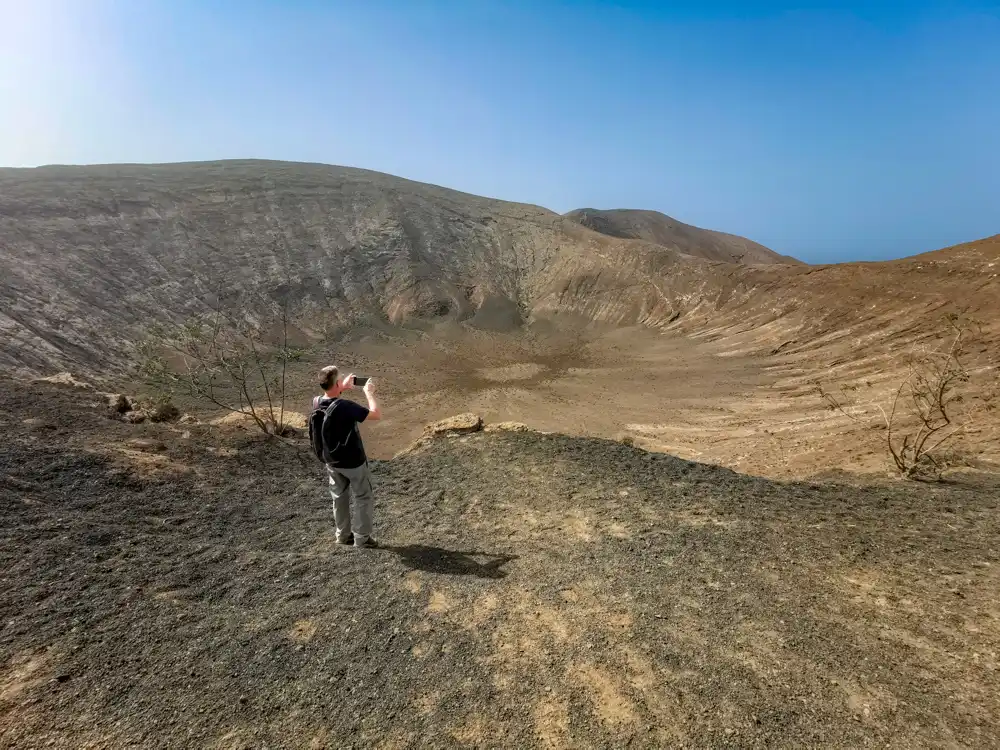
The ascent to the rim is gentle but reminds you that fitness isn’t abstract. Each step unveils another layer of the island: reddish hills, rippled lava fields, the Atlantic silently breathing in the distance. And then you arrive.
Caldera Blanca crater rim: Large circle, small ego. The summit climb gains 300 meters in elevation. But it doesn’t matter—the views in and out are breathtaking. The crater can be circumnavigated, but consider the wind—it can be dangerous along the back wall.
The silence here is different. No birds, no people, just wind and your own breathing, louder than you’d like. The panoramic view over Timanfaya Park is exceptional. The crater measures 1,200 meters across; at the highest point, you reach 458 meters above sea level.
During the hike, you’ll notice the contrast between the dark lava sea and the chalk-white crater edges. The calderas look like natural glowing islands—hence the name Caldera Blanca.
Winter temperatures stay pleasantly around 18–22°C, making it an ideal winter trek. No extremes, no technical sections—just good shoes, water, and the desire to stand at the edge of ancient energy.
From the top you can see:
– The perfectly symmetrical Caldera Blanca,
– The younger Caldereta as its faithful sister,
– The Atlantic embracing all of Lanzarote,
– And, if visibility is good, the silhouette of Fuerteventura.
Olá Olá: A Lovely Trail Etiquette
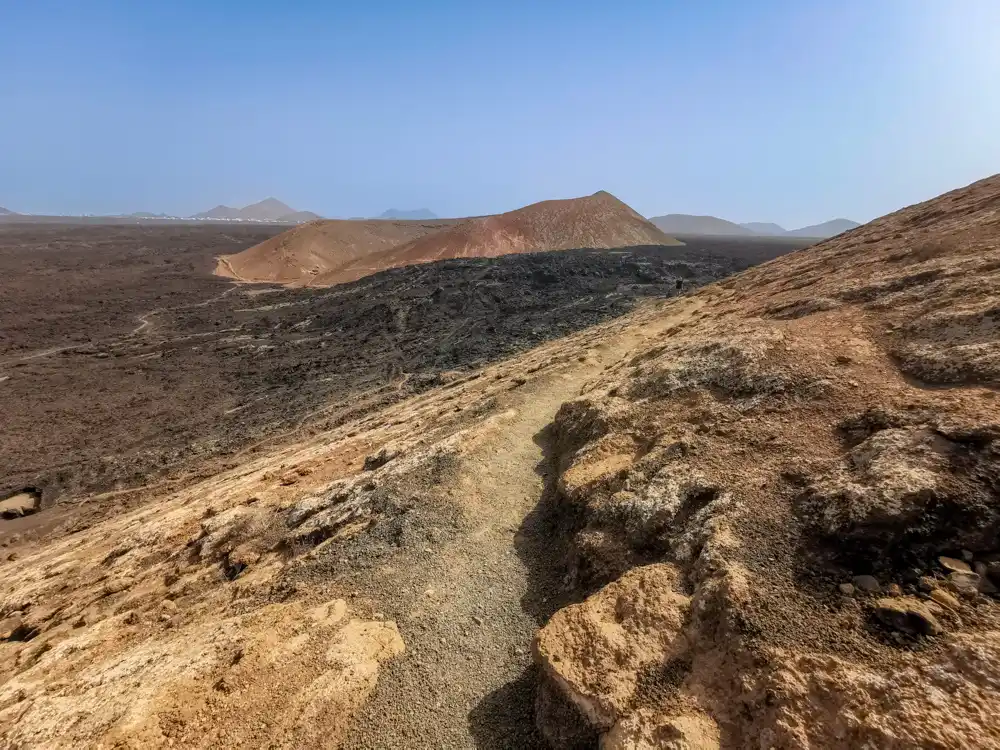
Compared to Slovakia, people smiled at each other on the trail, were attentive, tolerant, followed rules, and greeted strangers. A beautiful custom—once common at home too.
The return to the car was less thorny than expected. A kind Spanish couple offered to drive me back to the village near the parking lot. They were so nice they drove me right to the church parking. I thanked them warmly and ran the last 3 km of asphalt to the correct parking spot.
Better to park at Camino del Cráter. 🙂
La Isleta near La Santa: Post-Hike Relaxation, Blisters, and the Wild West
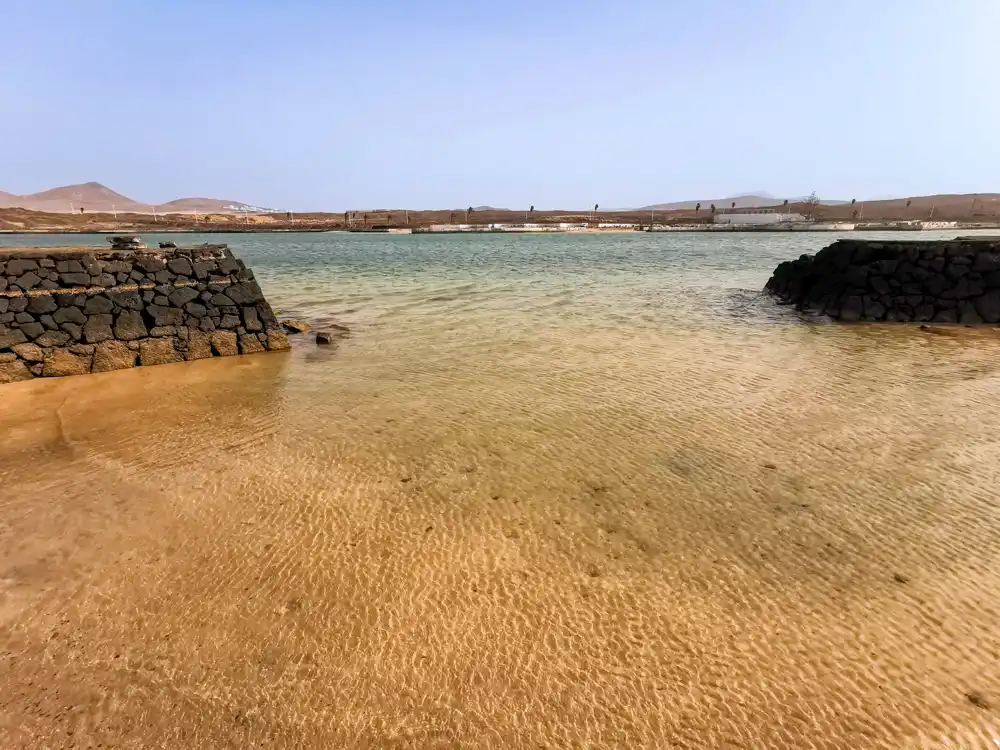
In the evening, there’s nothing better than soaking your blisters in water. The La Isleta peninsula near La Santa offers an inner sea lagoon with artificial beaches. Nearly a kilometer long and slightly unmaintained off-season, but thanks to basaltic circular pools protecting against the wind, the water is excellent.
La Isleta feels like a compromise between nature and humans. On one side, the Atlantic pounds the shore; a few meters away, the lagoon is as calm as a baby bath. Legend says local swimmers once trained here, needing “somewhere the waves don’t blow you back to Africa.”
It all feels surprisingly harmonious. No Disneyland, more a clever demonstration of how artificial can appear natural on Lanzarote—perhaps thanks to volcanic minimalism.
Water is calm, clear, and warmer than elsewhere on the coast. Blisters from hiking? Here, soaking them feels so luxurious even a spa manager would be jealous.
Wild West of La Isleta: Surfers, Vanlifers, and Free Spirits
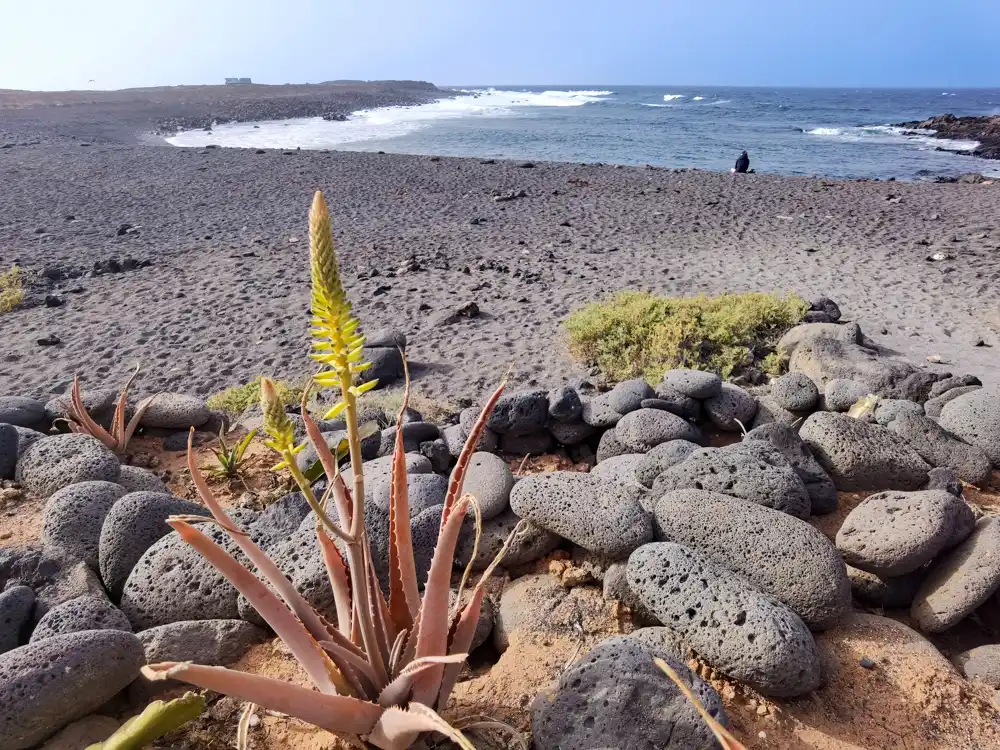
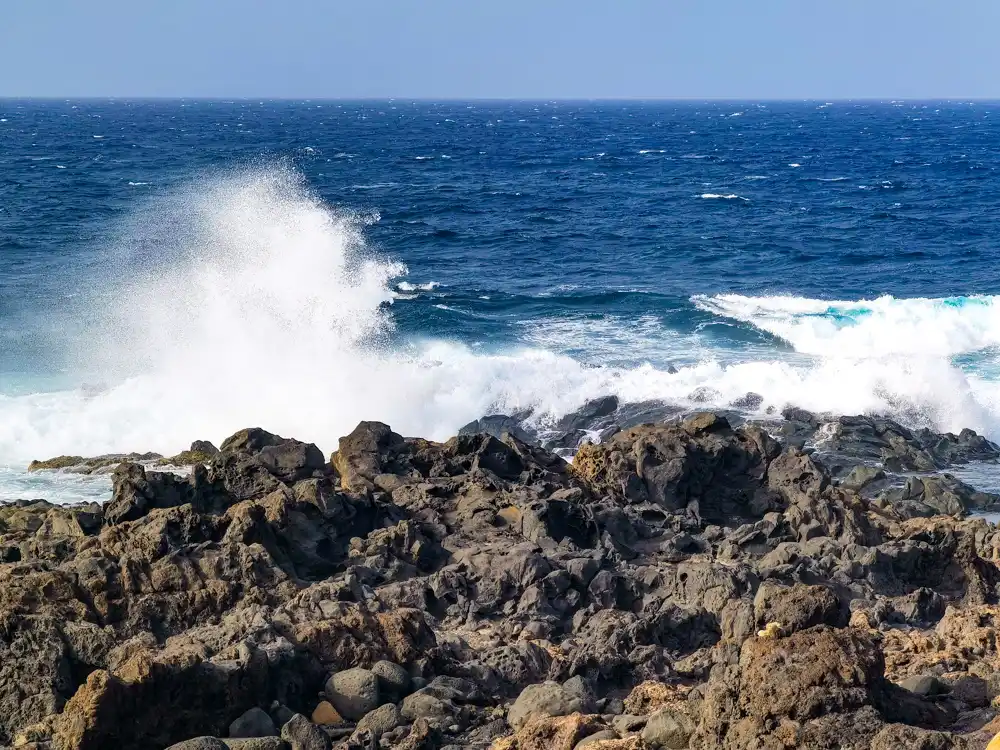
Step out of the lagoon toward the Atlantic, and you enter a completely different world. Waves crash against cliffs, wind whips faster than all your bad decisions combined. On the cliff edge, campers, vans, and independent dwellings spread out.
Some say it’s “the most authentic coast of Lanzarote”, others “a concentrated festival of freedom”. Campers swear that once you park here, you’ll leave only when your water runs out.
Wild Isla: untamed energy that all-inclusive hotels cannot comprehend—and maybe that’s as it should be. Every island needs a place to breathe without animators or themed nights. No commerce, no souvenir stalls here. 🙂
Caldera Blanca dazzled us. Tomorrow, we’ll explore Jameos del Agua, Cueva de Los Verdes, and trails below Mirador del Río.