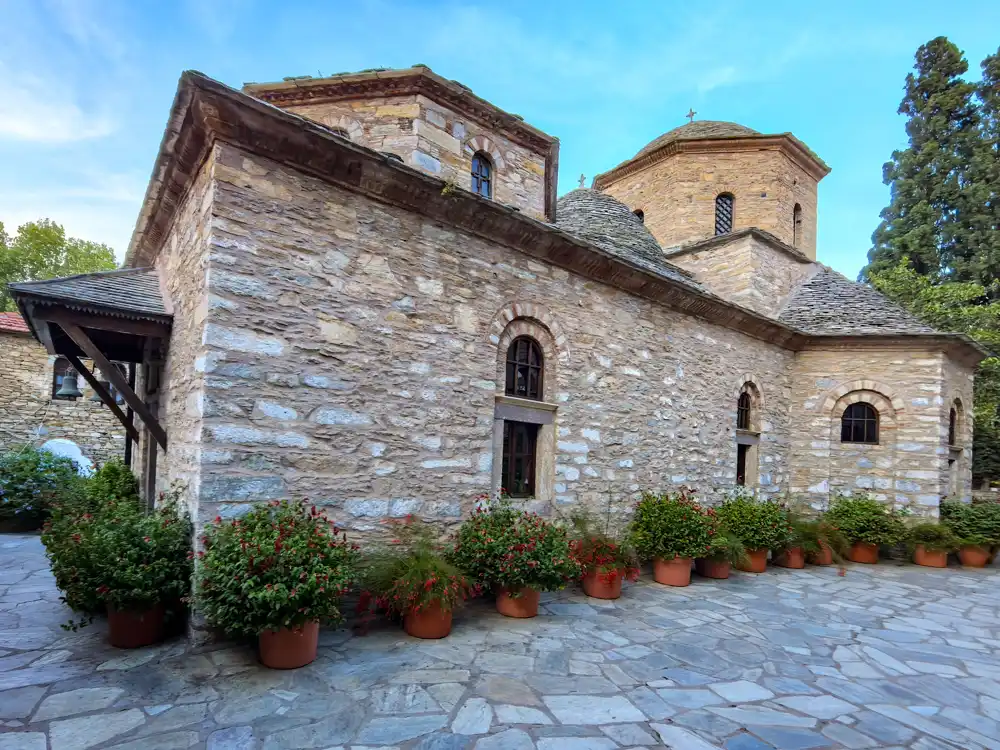
Evangelistria Monastery wasn’t the goal; it was the finish line. After completing the ridge loop around Mt. Mytikos (leading to the island’s highest point, Karafiltzanaka), we saved the monastery for the final tasting. Not quite a dessert, but something between a period and a question mark. The ridge trail ends surprisingly close to the bus stop at the monastery, which sounds like a plan—especially in a country where plans are taken merely as suggestions.
Off-season, buses run rarely, so we double-checked at the port that the last one at 7:00 PM would definitely take us home. The lady at the ticket booth confirmed it with a smile that, in Greece, carries the weight of a signature.
There is only one bus. Tickets are sold for specific seats. She even carefully marked the date on them. Everything looked phenomenal.
Reached at Five: A Win You Didn’t Plan
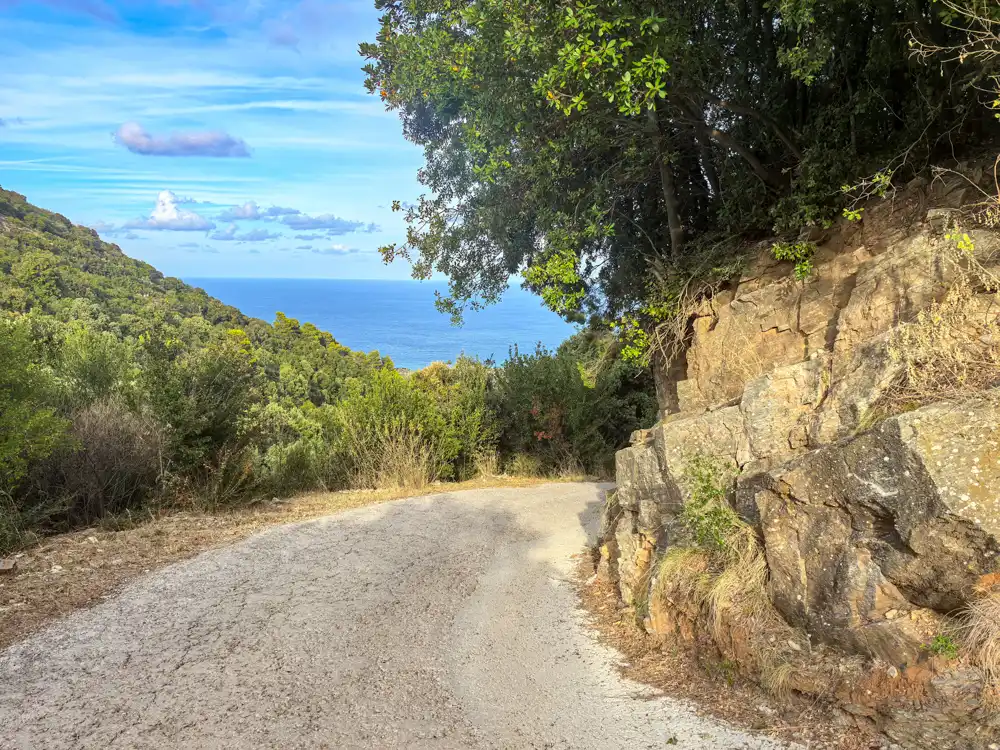
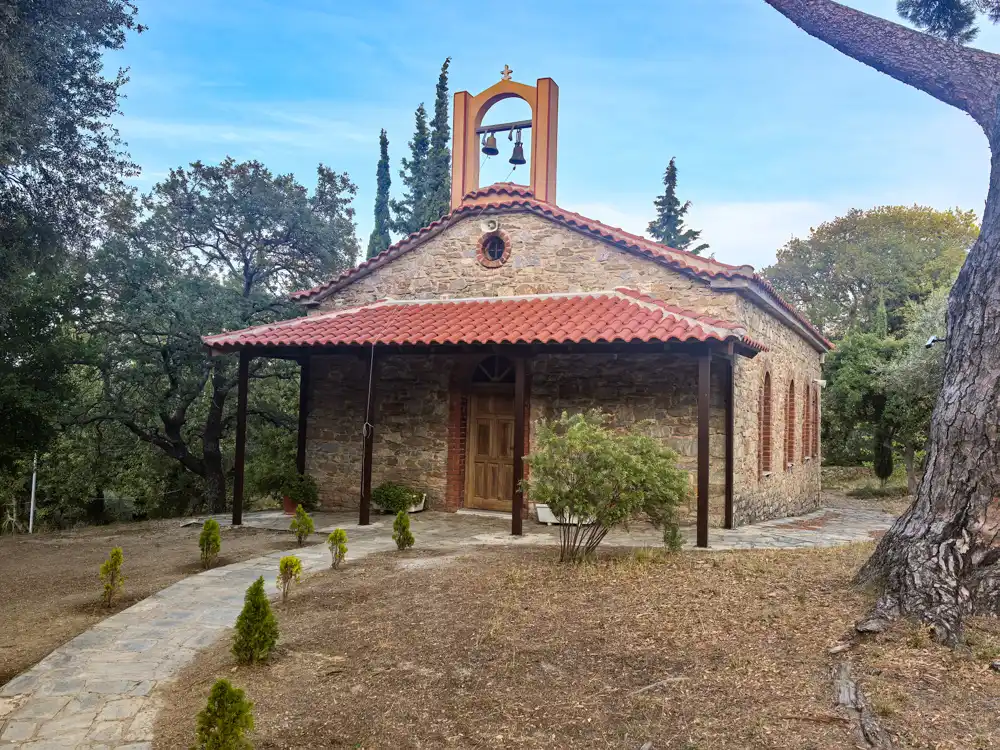
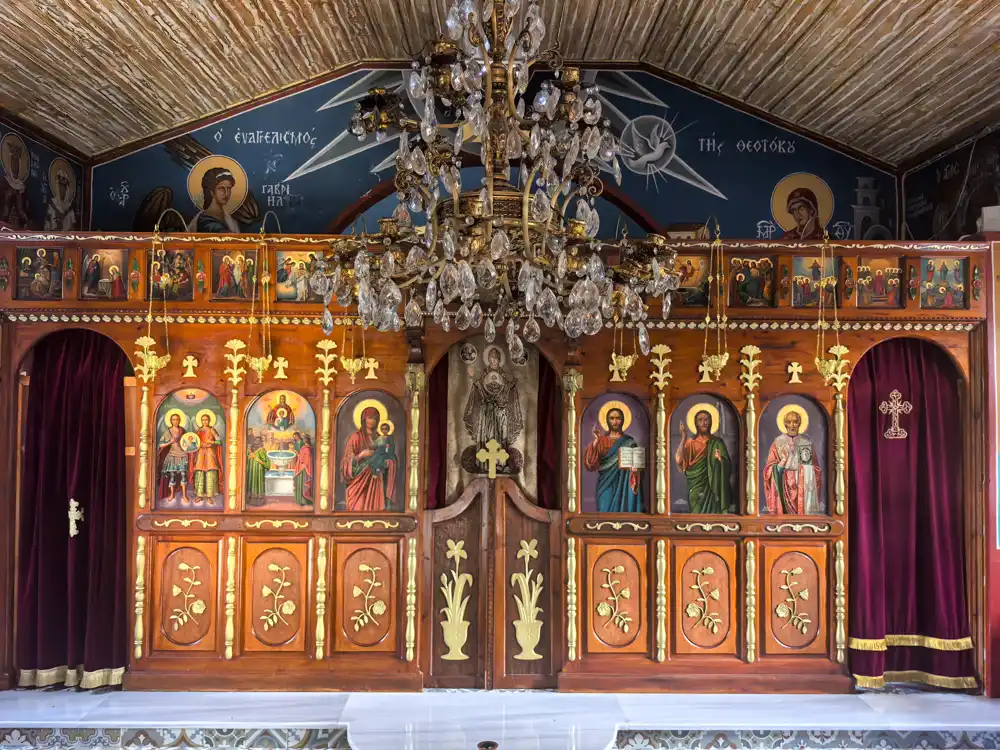
We hit the monastery around five in the evening, worn out from the trail. And suddenly, we knew our timing was perfect. The upper chapel was completely empty. We walked down the stairs. Two small hotel groups were just about to leave. We stayed. The monastery was suddenly ours alone.
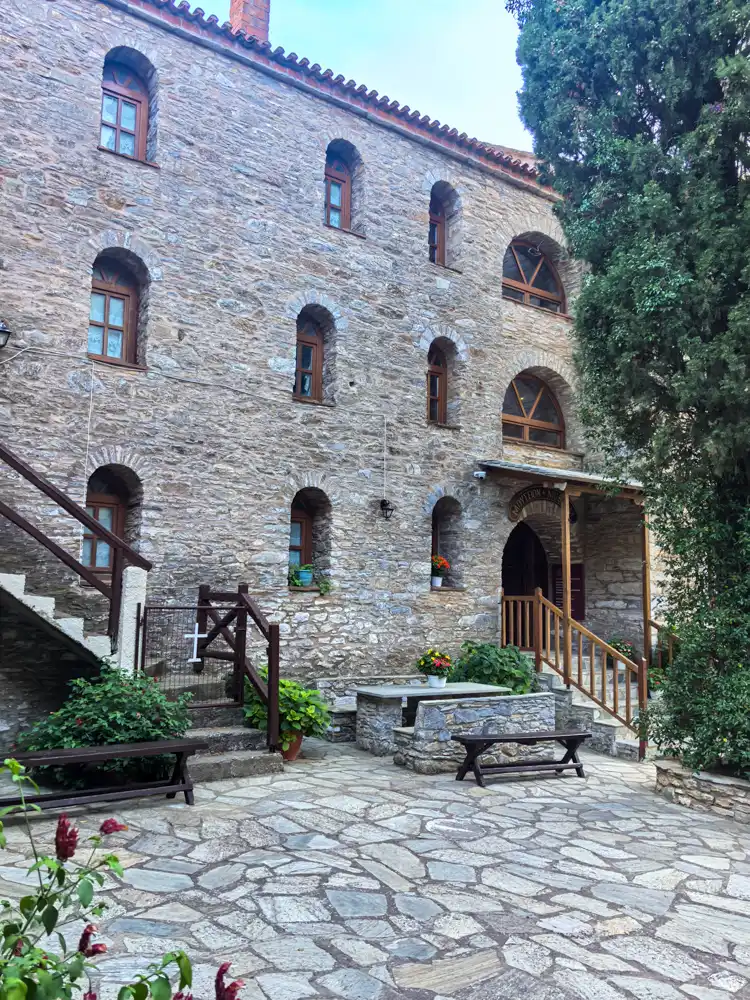
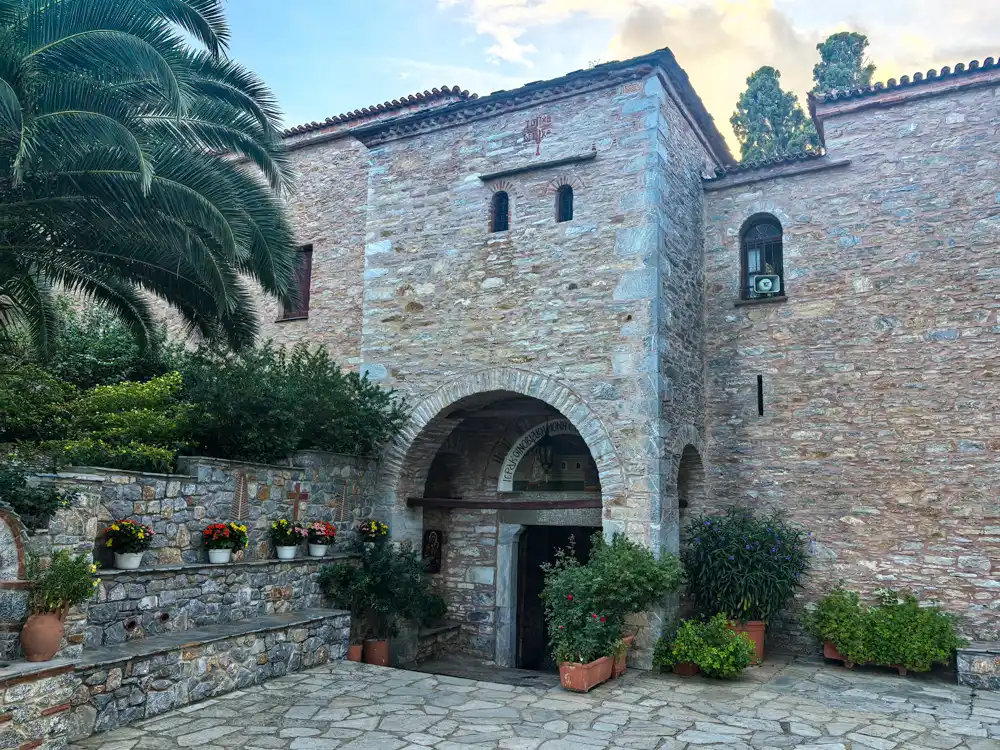
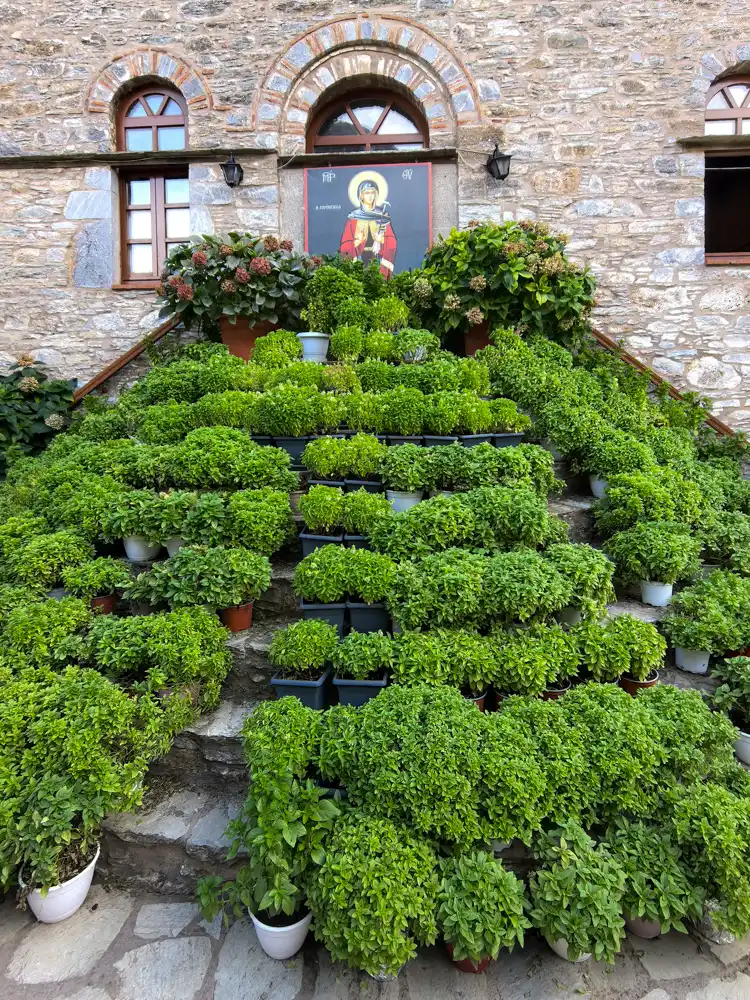
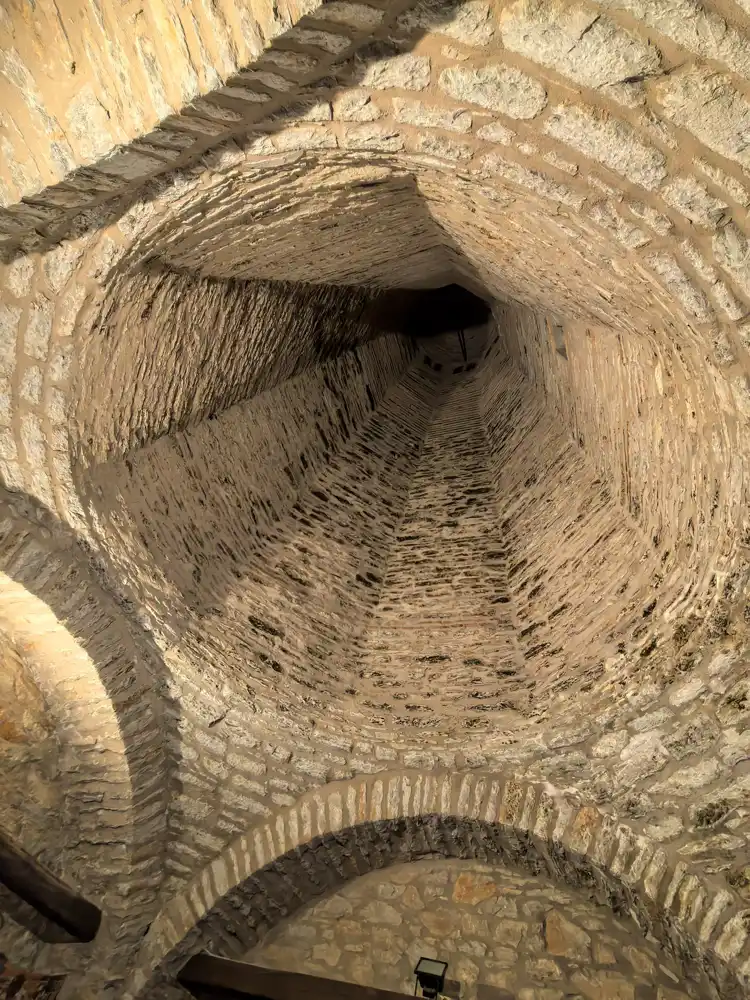
We explored every corner—the courtyard, the arcades, the stone walls, the small nooks where silence has its own echo. And right then, a small bell rang, and the evening prayer began.
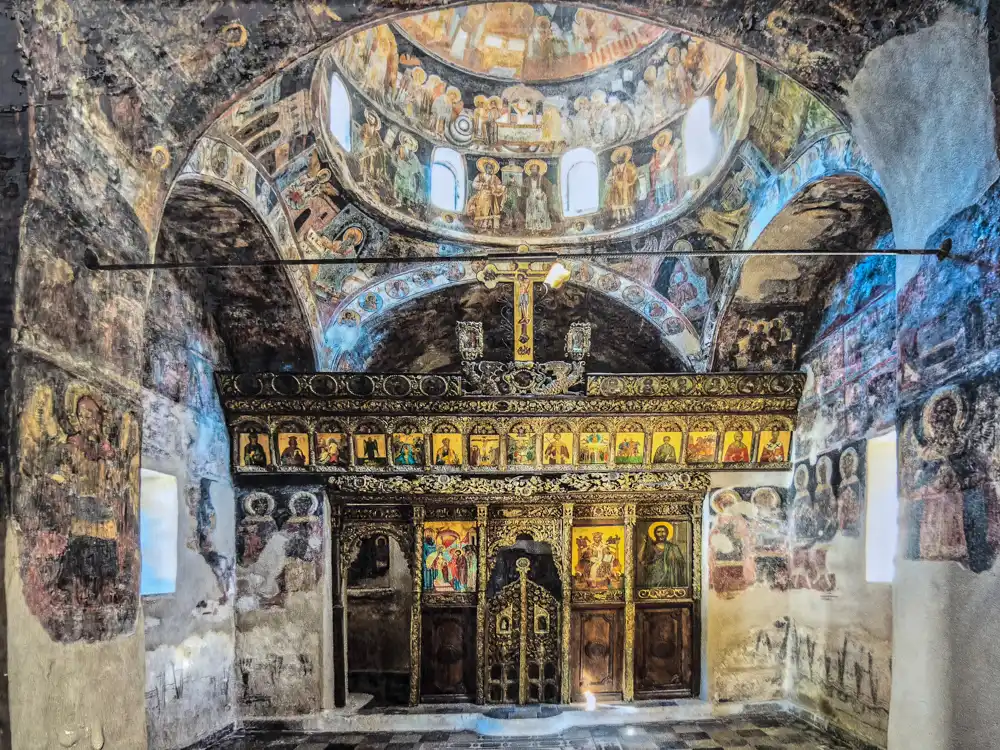
I didn’t understand a single word. But the liturgical dialogue between two abbots held me for nearly an hour. I don’t know why. Maybe it was the voice, the rhythm, the pauses, the harmony, the charm of the humble space… It felt as if they weren’t talking to each other, but to the space itself.
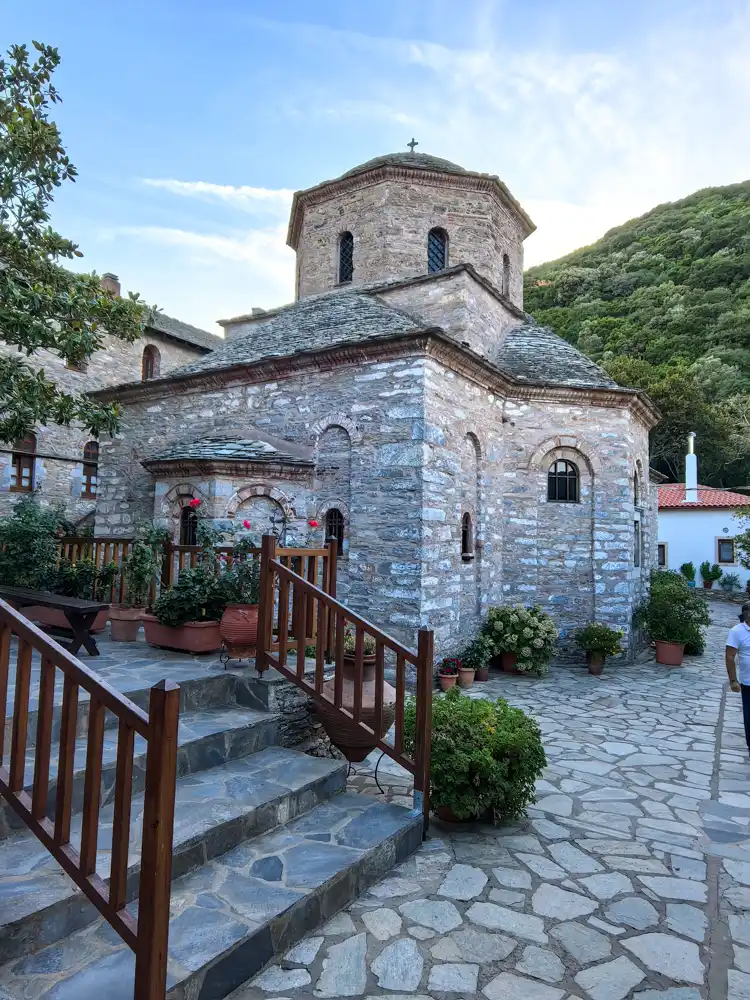
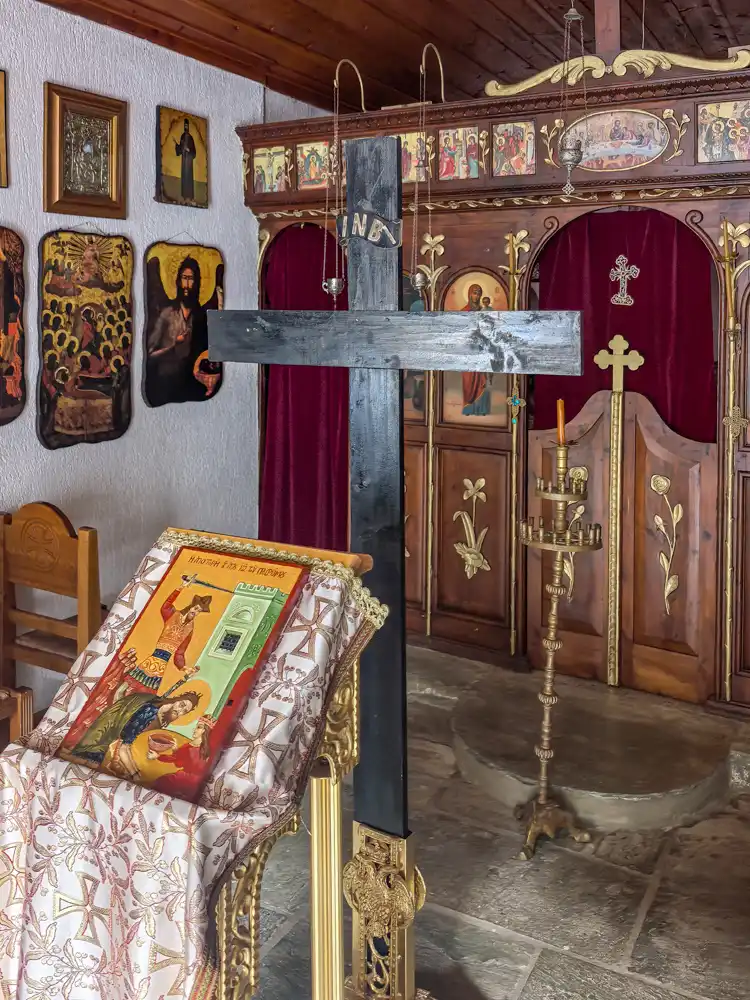
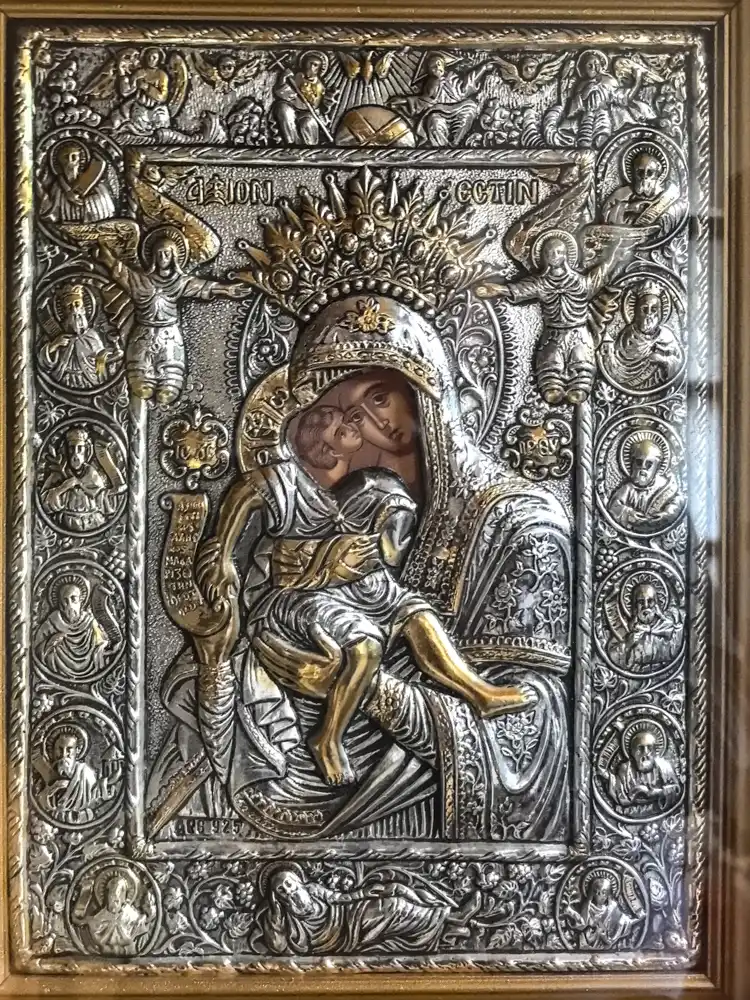
Evangelistria Monastery: Where Greece Learned to Believe in Itself
Evangelistria Monastery was founded in the 18th century, at a time when Greece wasn’t Greece yet, but an idea. The monastery became a place of spiritual refuge, education, and resistance—not loud, but persistent.
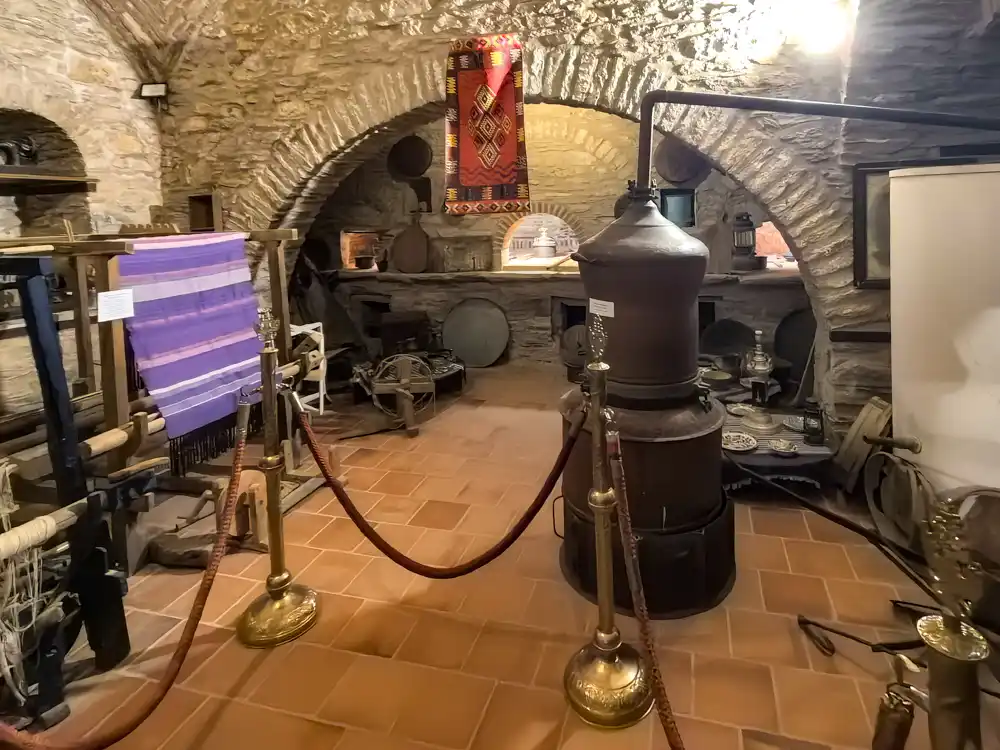
The monastery is a world-class unique site: it was right here, in the monastery’s weaving workshop in 1807, that the first official Greek flag with a white cross was designed and woven. This is where Greece learned to believe in itself. They say people met here who believed that identity could be saved through prayer, education, and patience. They say the monks hid books and ideas here when it was dangerous to speak them aloud.
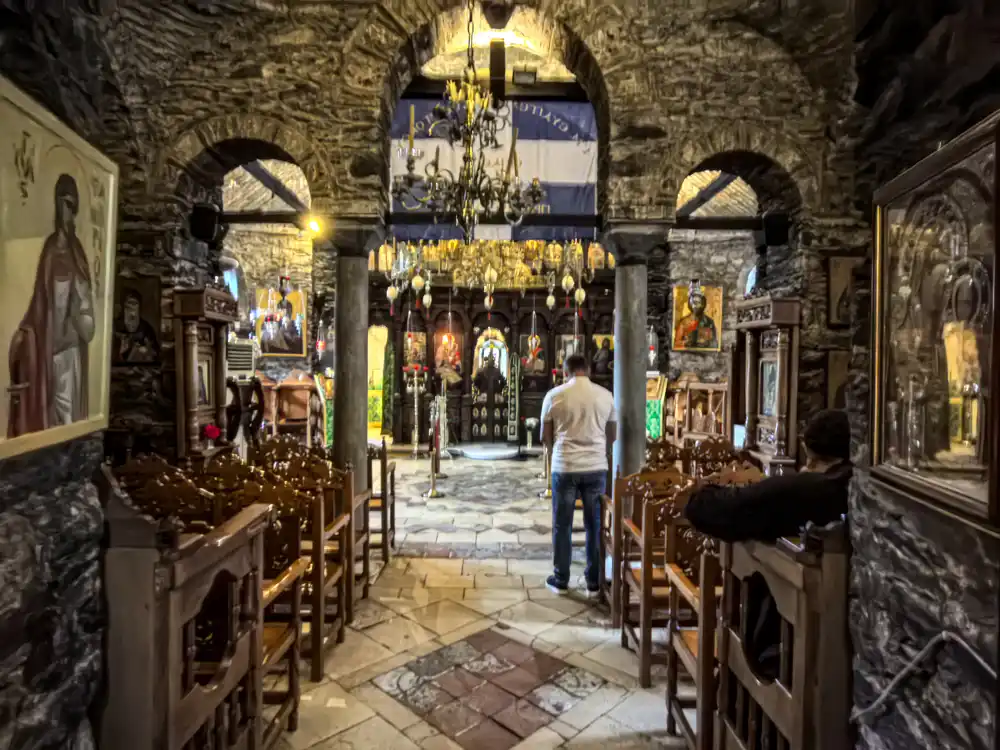
And they say some of them never left the monastery. Not in body—but in voice. When you stand in the courtyard at night and the wind blows the right way, you feel as if the prayer hasn’t ended yet. Or so they say.
By the way, it was right here, in 1807, that the first modern Greek flag (a white cross on a blue background) was designed and woven.
Monks, Olives, and Scents You Remember
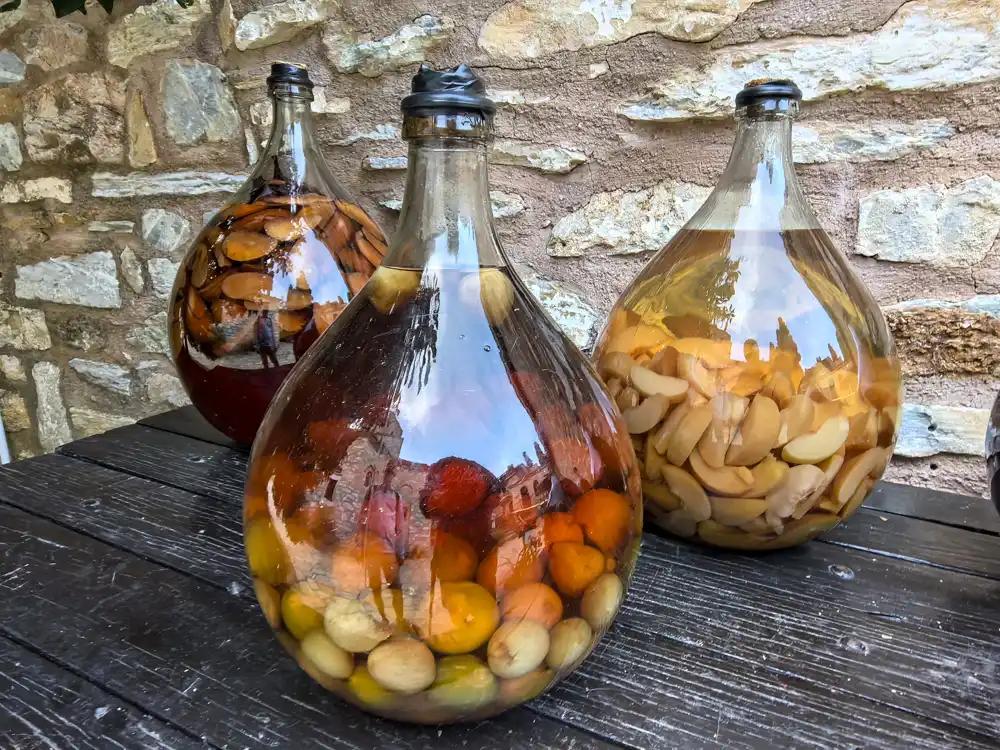
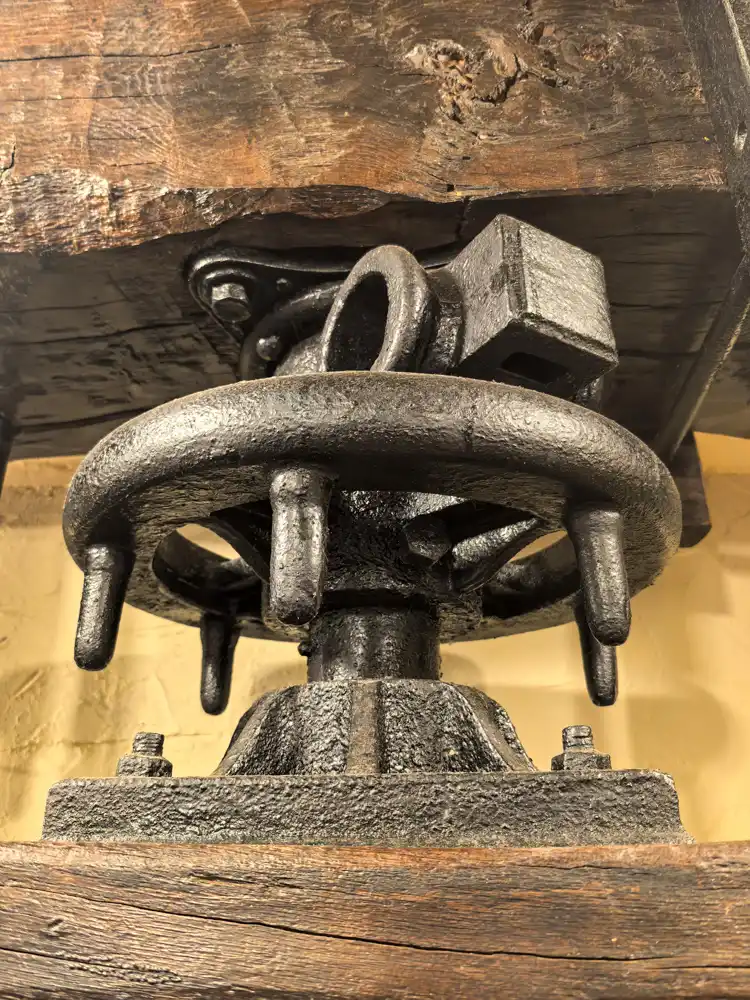
The local monks are surprisingly skilled. Besides prayers, they produce high-quality olive oil, wine, and small products that aren’t just mere souvenirs. We tasted the wine.
But it was the oil perfume that got me. The scent of olives, laurel, and incense. I bought it for my wife—at least I thought I did. I still use it today. Not as a cosmetic, but as a trigger for memory.
Bus Epilogue: Greek Reality in Real-Time
We left Evangelistria Monastery at 6:30 PM. We stood at the stop alone. Half an hour early—just in case. After all, what if the bus didn’t wait?
At 6:40 PM, the last group left by a hotel shuttle. We stayed. It was silent. It was dark. By 7:20 PM, we already knew that Greek reliability had once again triumphed over the schedule.
At 7:30 PM, a mechanic in a pickup truck drove by. Panicked, I asked about the bus. He smiled. “That’s normal here. Hop in. I’ll take you down.”
At the port, I ran to the ticket booth. The lady was chatting busily with the drivers. “There weren’t many people, so the bus didn’t go,” she said. I showed her the tickets. “And what about this?” I asked. “I don’t know. Just go tomorrow.”
When I told her we didn’t need to go tomorrow because we had already been there today, she thought for a moment. Then she gave me a refund and threw the tickets into the trash.
Clean. Simple. Greek.
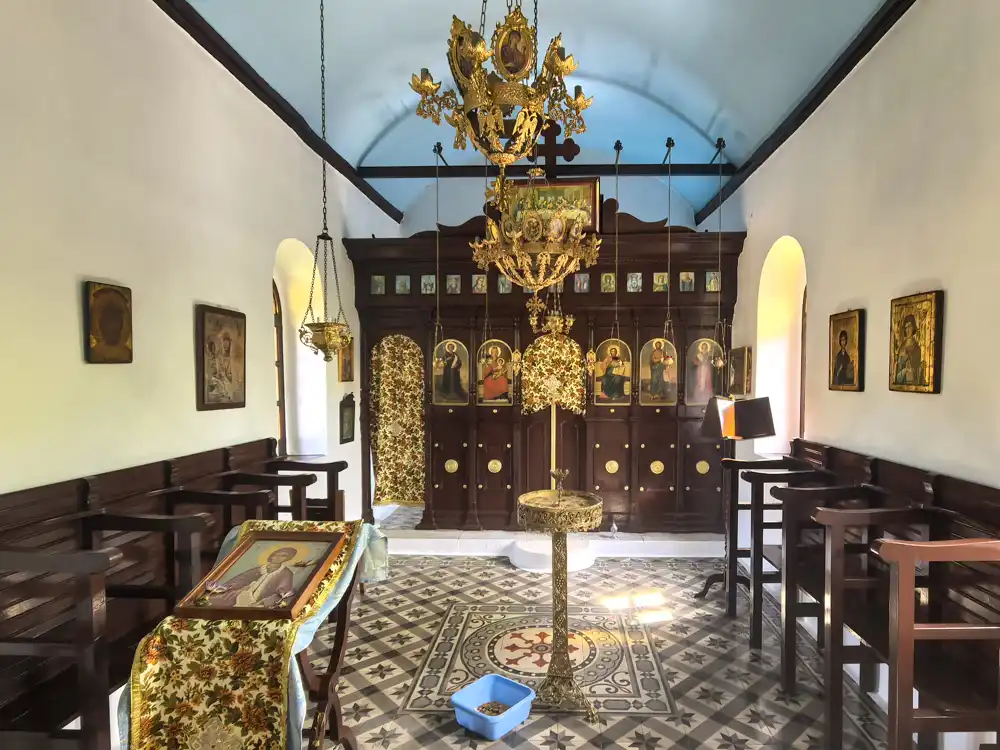
Skiathos monasteries, Big Silence
Skiathos is dotted with dozens of small chapels and monasteries. They aren’t attractions. They are stops. The locals take care of them naturally—not because they have to, but because they belong to the landscape as much as the pines and olives.
Some of those we visited:
- Moni Kechrias – A monastery hidden in olive groves where time behaves itself and doesn’t rush.
- Agios Nikolaos – A chapel above the sea where the wind sounds like an old song.
- Panagia tis Giannaki – A place of pilgrims, songs, and holiday patience.
- Agios Ioannis – A small monastery in the rocks, ideal for those seeking peace rather than answers.
They say these places remember people. Not names. Footsteps. I just hope we stomped loudly enough.