I wake up beneath Monte Kumeta. My body is still half-asleep, but my mind is already plotting nonsense. Every morning, Sicily confronts you with a fundamental dilemma. Either you flop onto a beach, bake in the sun, and ignore the mountains. Or you ditch the coast, head into the rugged interior, and enjoy raw peaks where you will not cross paths with another soul all day. The mountains won again. I set off on the Monte Rossella hiking Sicily route.
I picked an innocent loop starting from Sant’Agata around Monte Rossella. From a distance, it looked like a lazy Sunday stroll for retirees. Six kilometers in, I was laughing through grimaces. My watch clocked 400 meters of elevation gain already. The sun was merciless, and my calves were on fire.
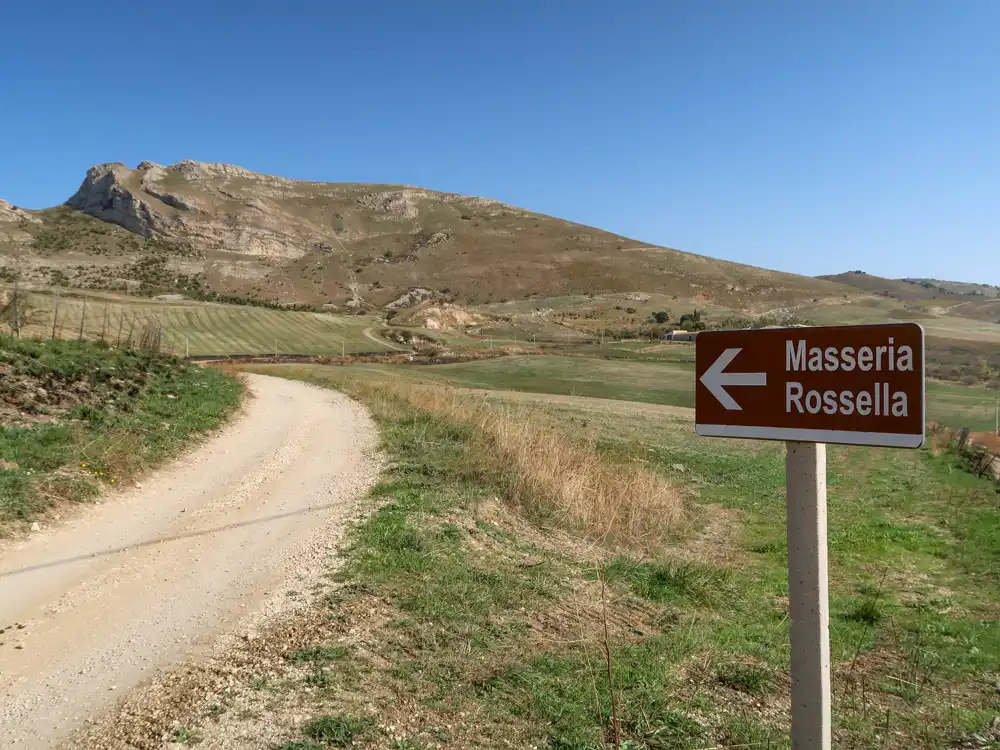
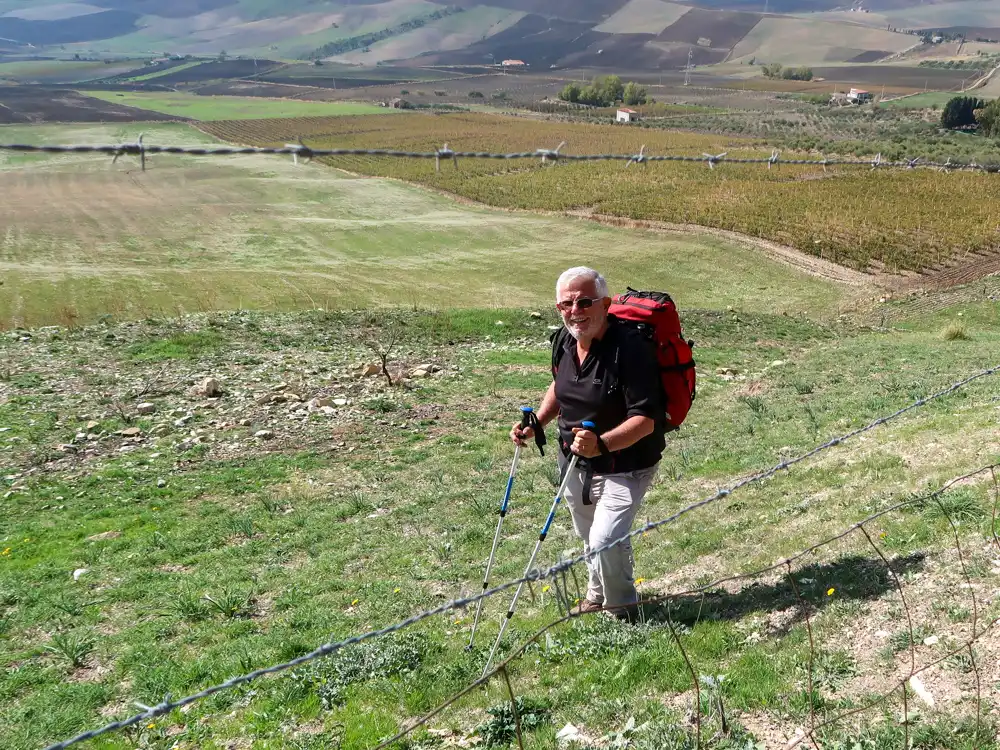
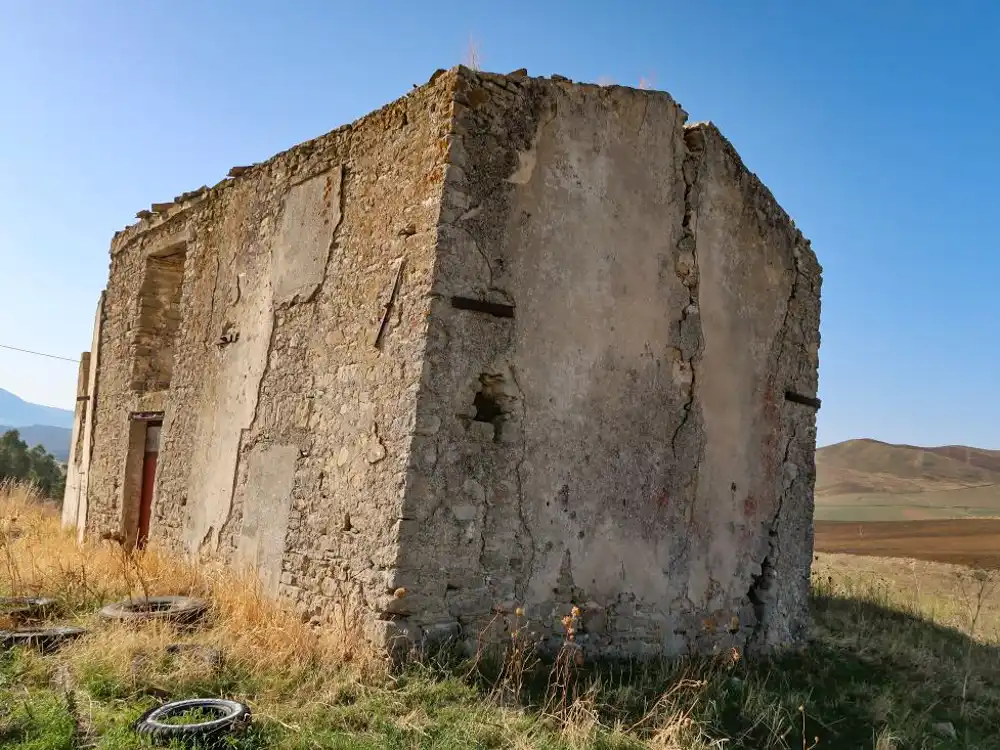
Near Masseria Rossella, I suddenly bumped into a lone wanderer. His backpack was bigger than he was, his shirt soaked through, with the gaze of a madman. He was trekking on foot all the way from Agrigento to Corleone. Seventy-five kilometers behind him and a serious stretch still ahead. Only later did I realize what kind of apparition that was.
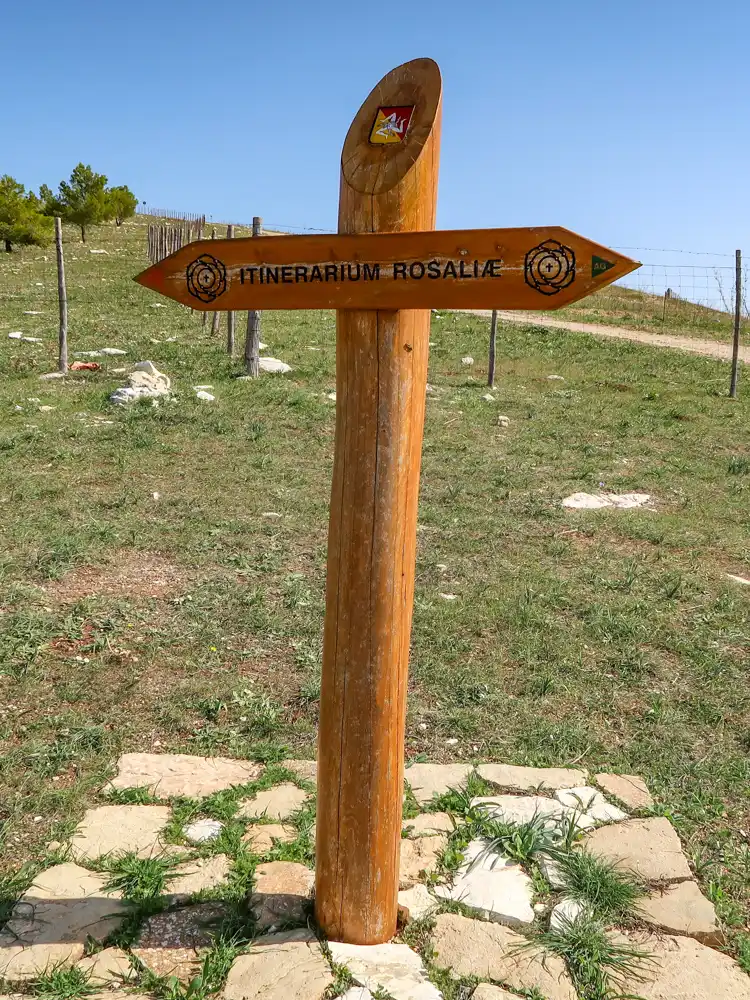
Both Magna Via Francigena and Itinerarium Rosaliae run right through here. Sicily’s answer to Santiago de Compostela. Except instead of charming pilgrim bistros, you get dust, thistles, and your own rambling thoughts.
Green Meadow in Front, Vertical Cliff Behind
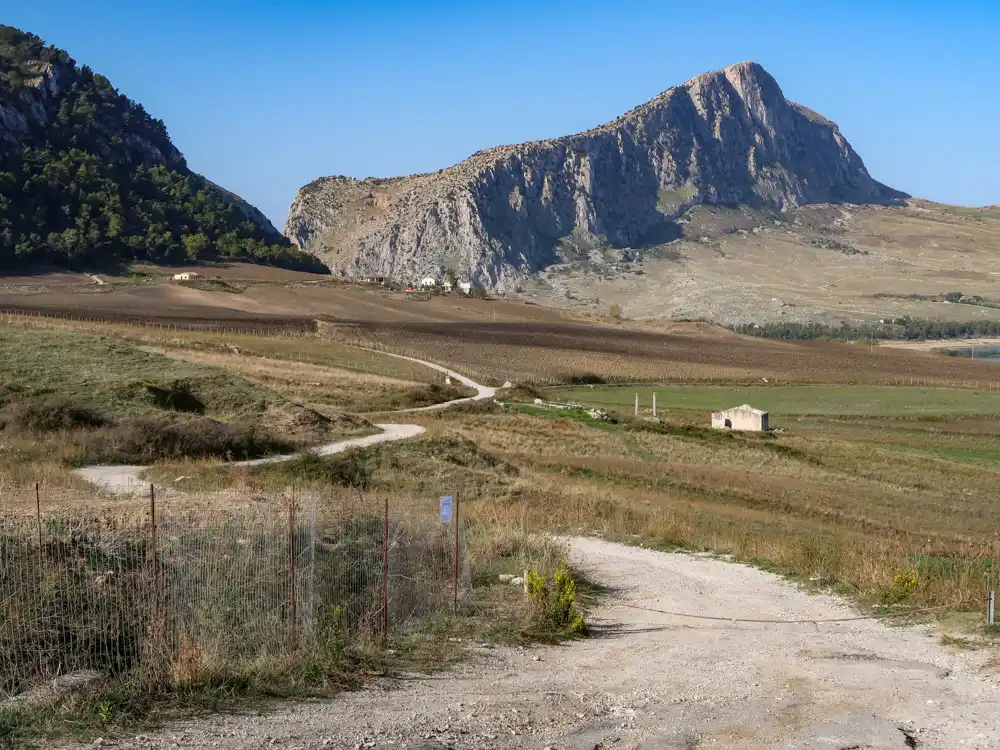
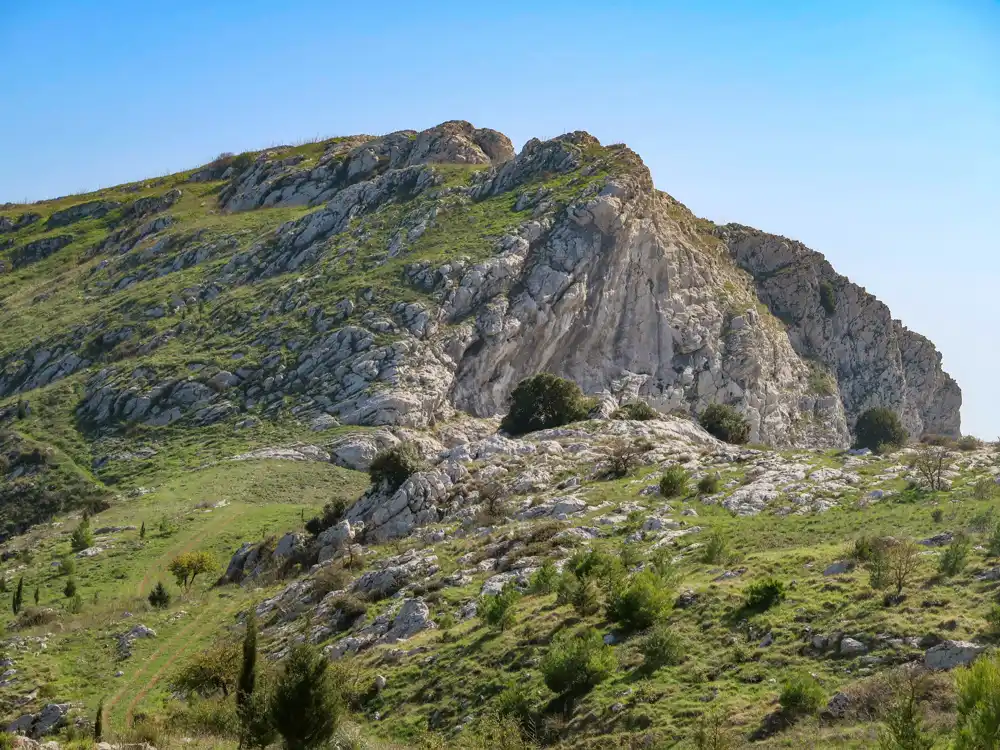
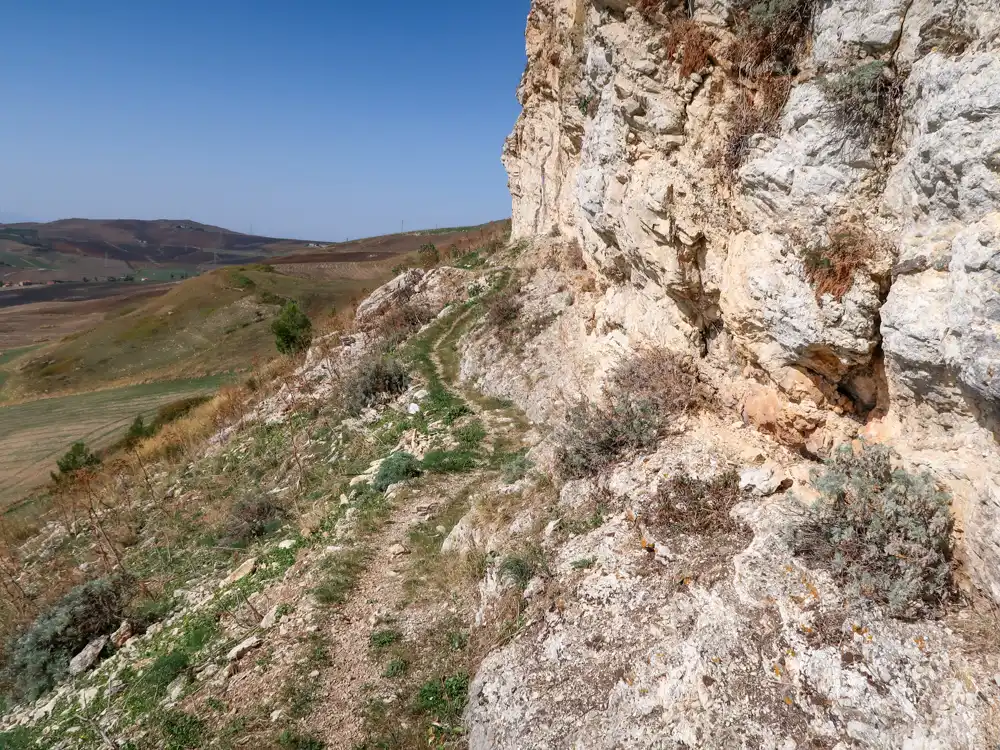
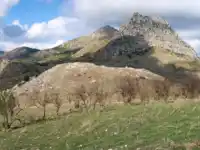
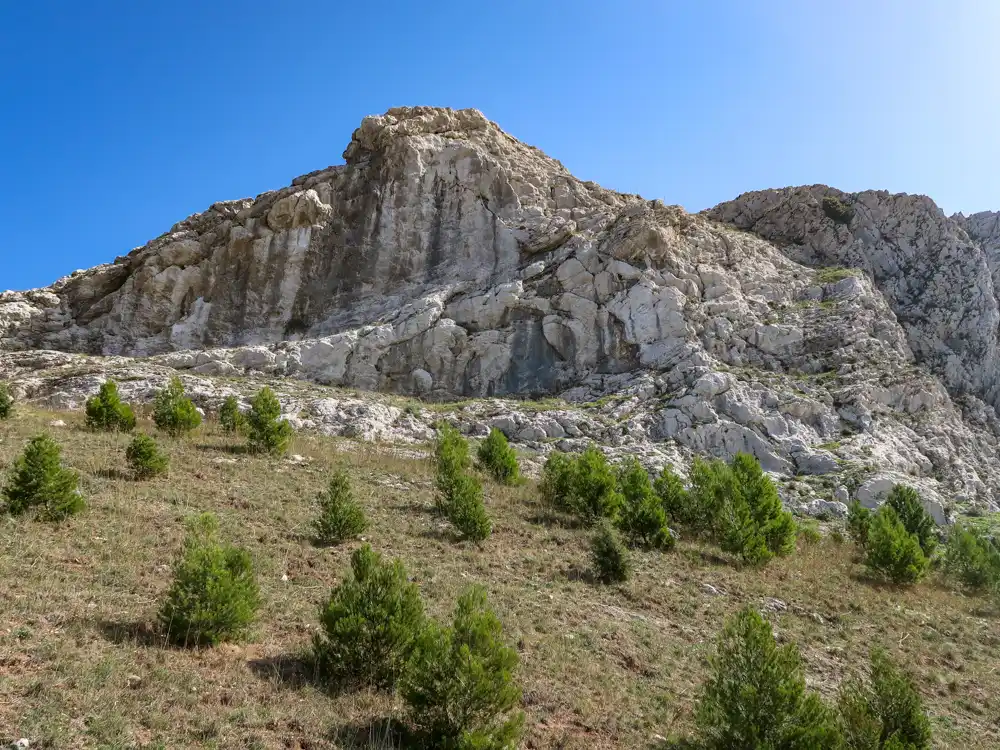
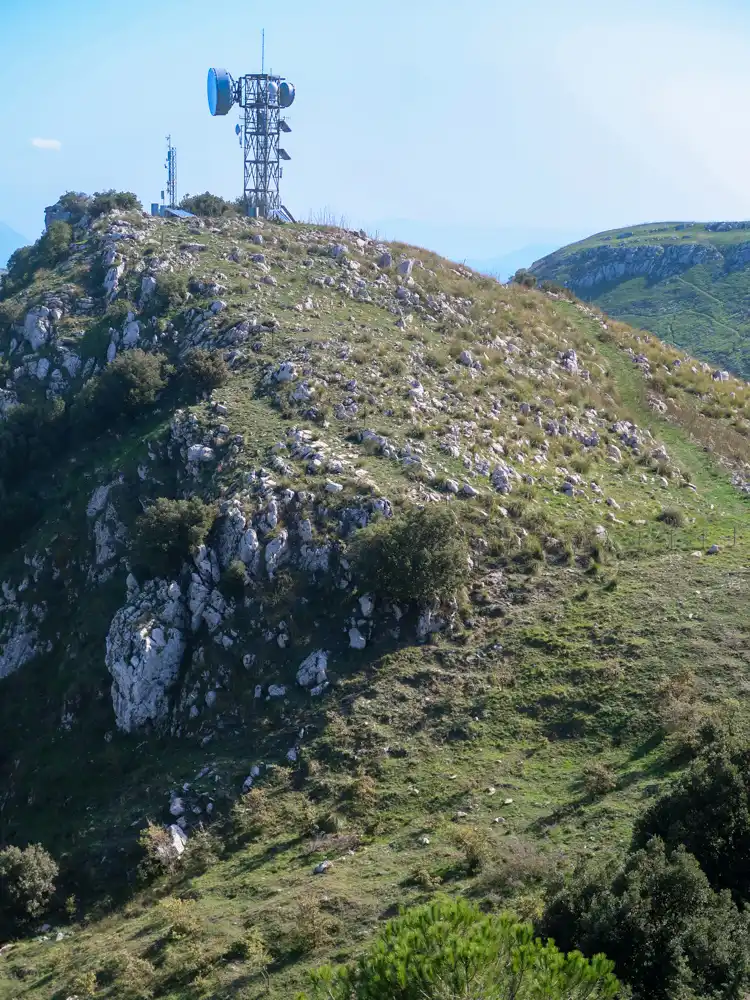
Monte Rossella stands at just 1,064 meters. On paper, that sounds harmless. But Sicilian mountains pull off a brilliant optical trick. They are deceptive.
From the gentler side, the slope looks like green velvet. Pasture, cows, countryside romance. You convince yourself you could run up in flip-flops. But once you skirt the massif, a sheer limestone wall bares its teeth at you from the rear. Zero compromise. You scramble up, gasping for breath. Every few minutes you tell yourself the ridge ahead must be the crest. You arrive, only to find the real summit hidden another hundred vertical meters higher. It was simply invisible from below.
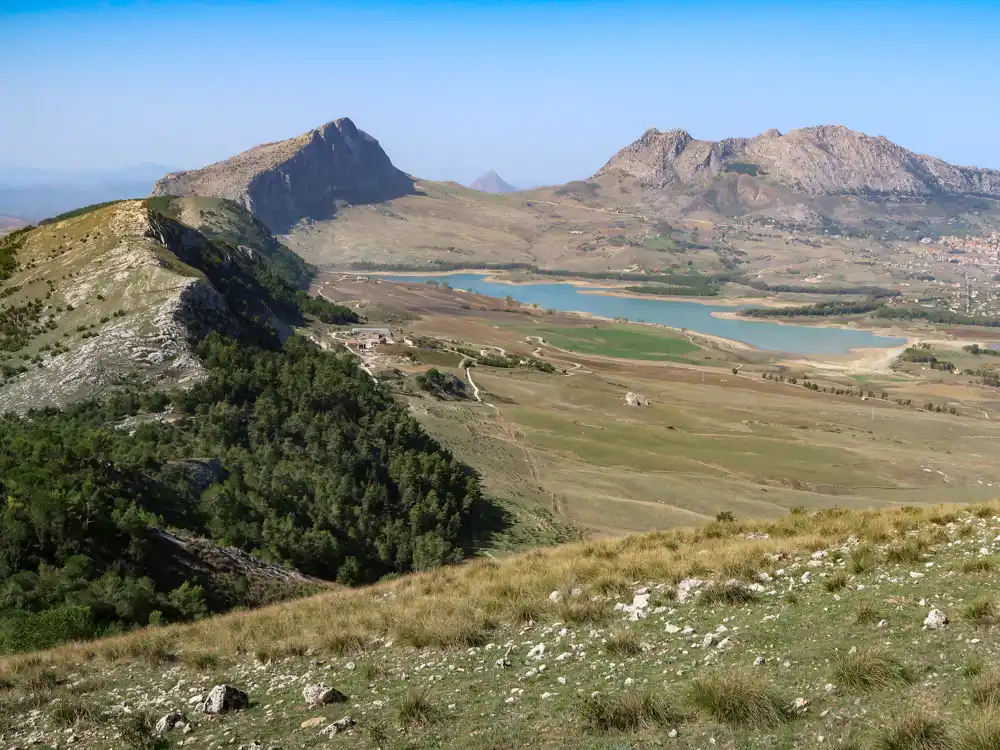
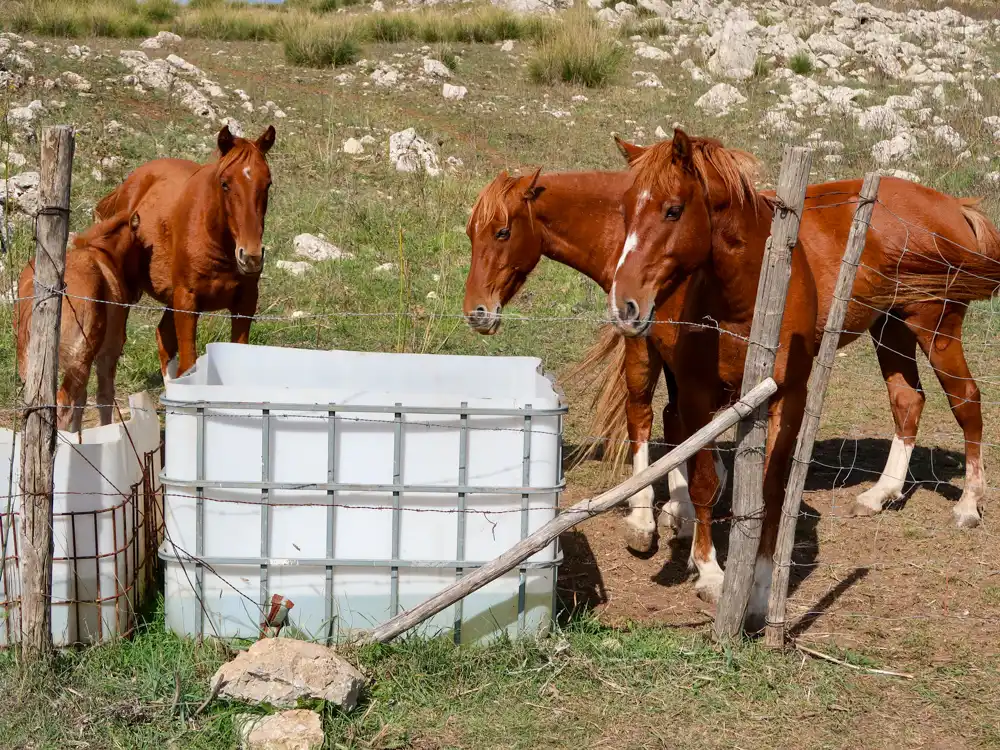
Yet on the crest by the summit plateau of Monte Leardo, pure catharsis hits. I stand at the top, gasping not just from tachycardia, but from the view. I meet a local shepherd lazily steering his flock. He also takes care of the horses. We do not understand a single word of each other’s language, but we bond instantly. He offers me a swig of some fiery local moonshine.
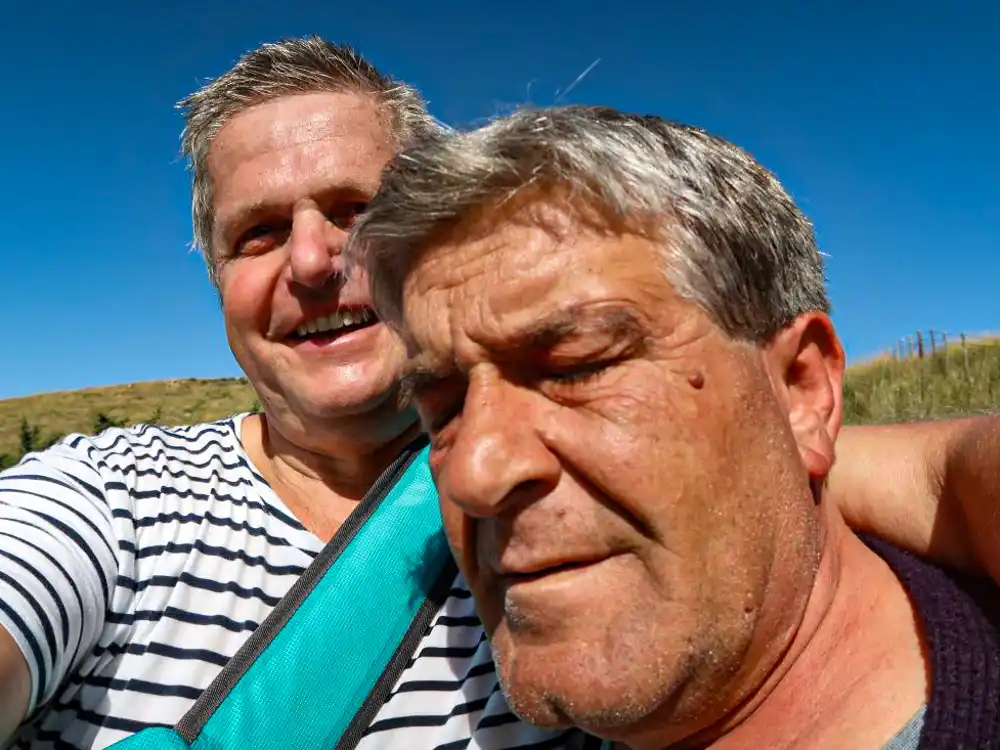
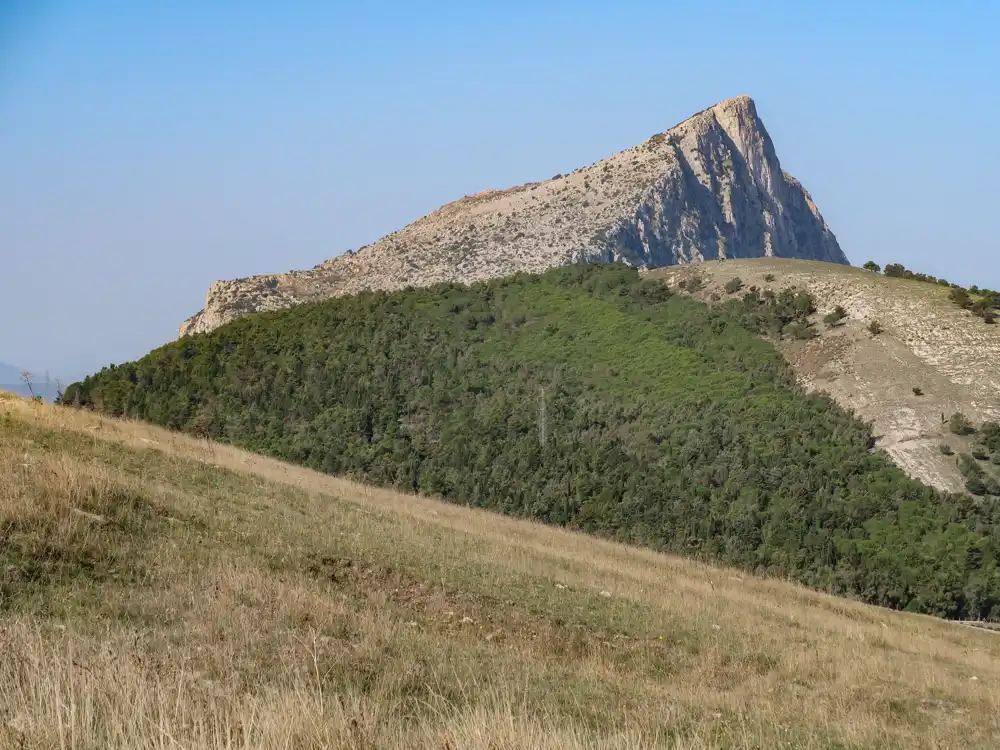
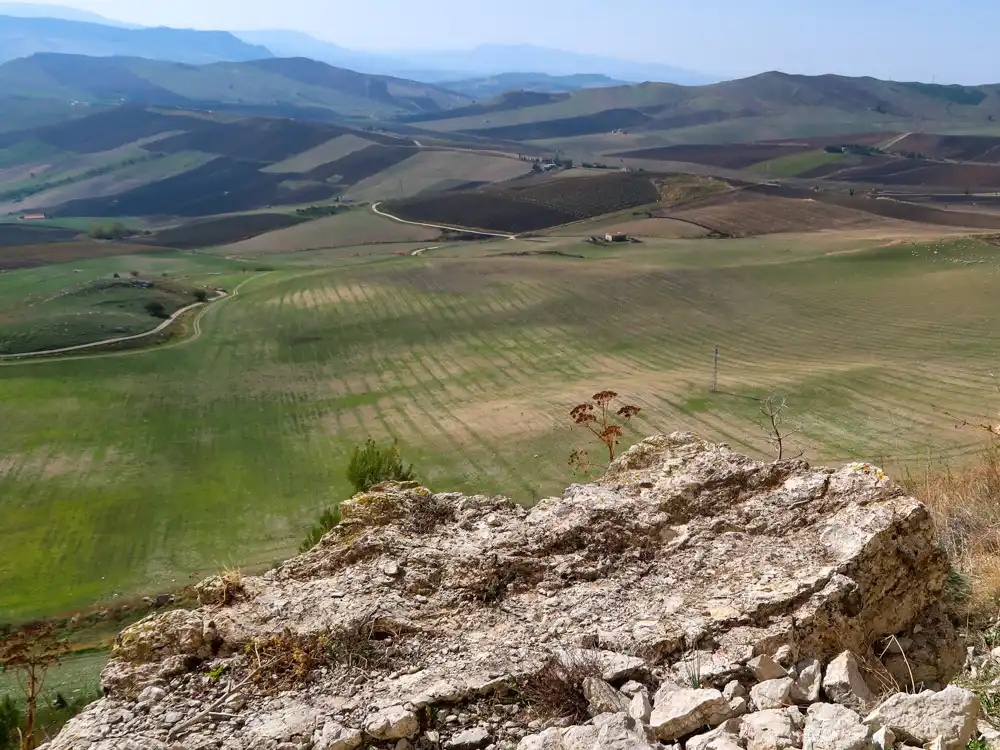
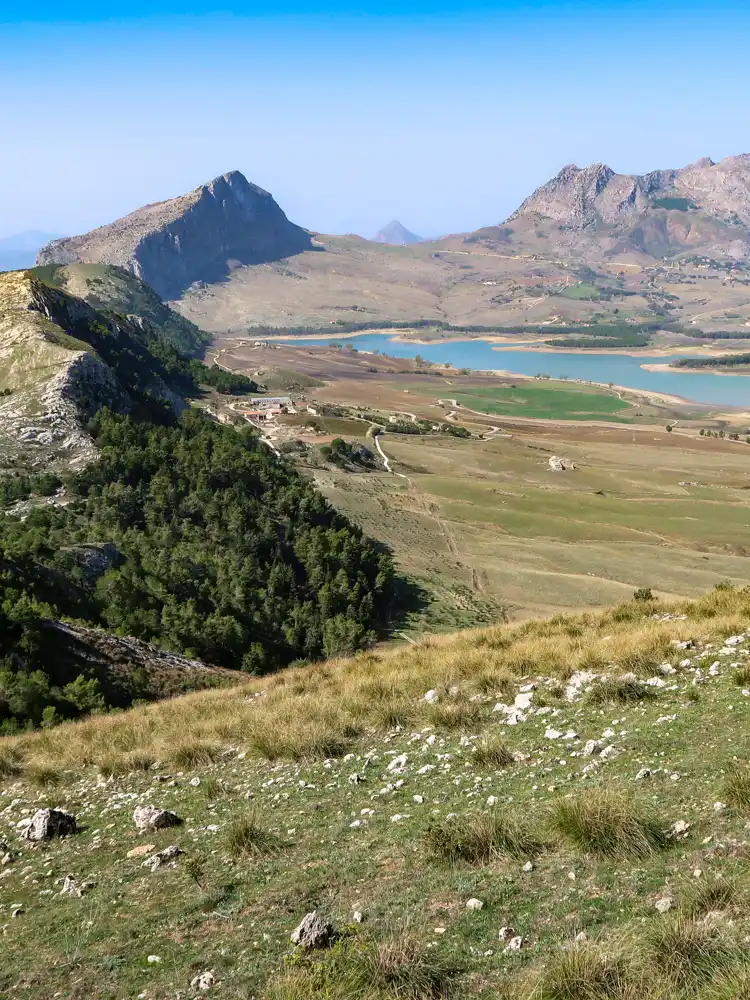
The Piana degli Albanesi basin lies below like a serving tray. I can spot both massive hubs of civilization—Lago di Piana degli Albanesi on one flank and Lago di Scanzano on the other. In between lies nothing but bare rock and silence. A deep, heavy silence you will never experience along the coast.
Inland Oddity: The Ghost Town Where the Water Died
Descending through a mountain saddle, I stepped straight into the twilight zone. Suddenly, I stood in the middle of a completely deserted village. These were not medieval stone ruins. They were standard, relatively modern two-story houses, paved streets, garages, and verandas. Several homes still had intact wooden shutters and padlocks on the front doors. Yet the entire place was dead. No humans, no parked cars, not even a mangy dog barking.
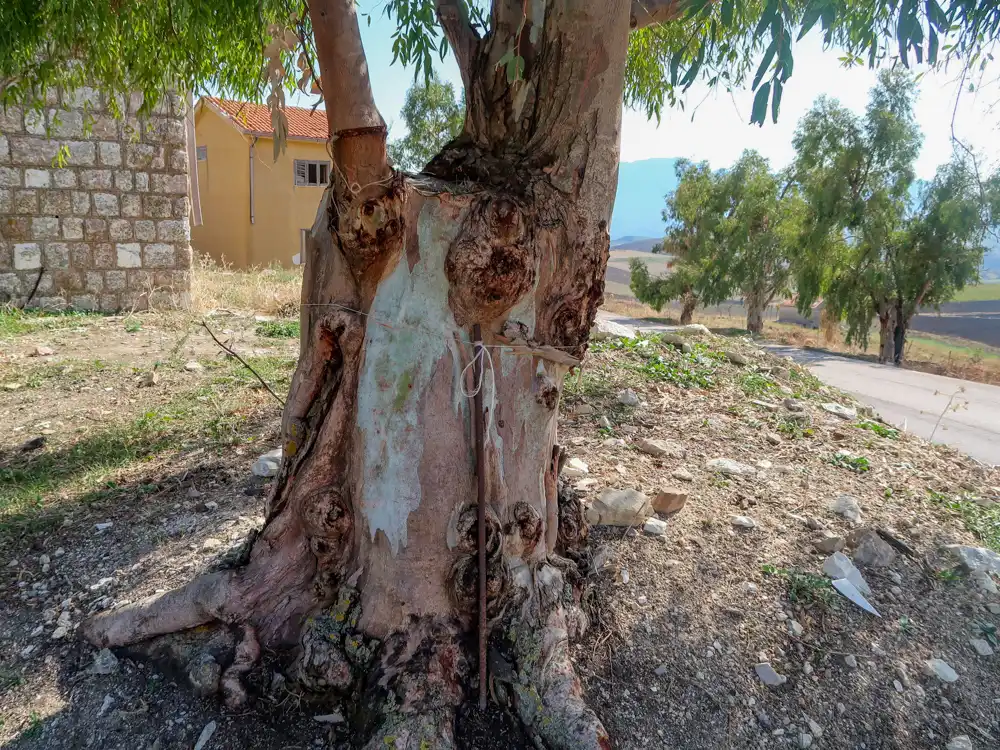
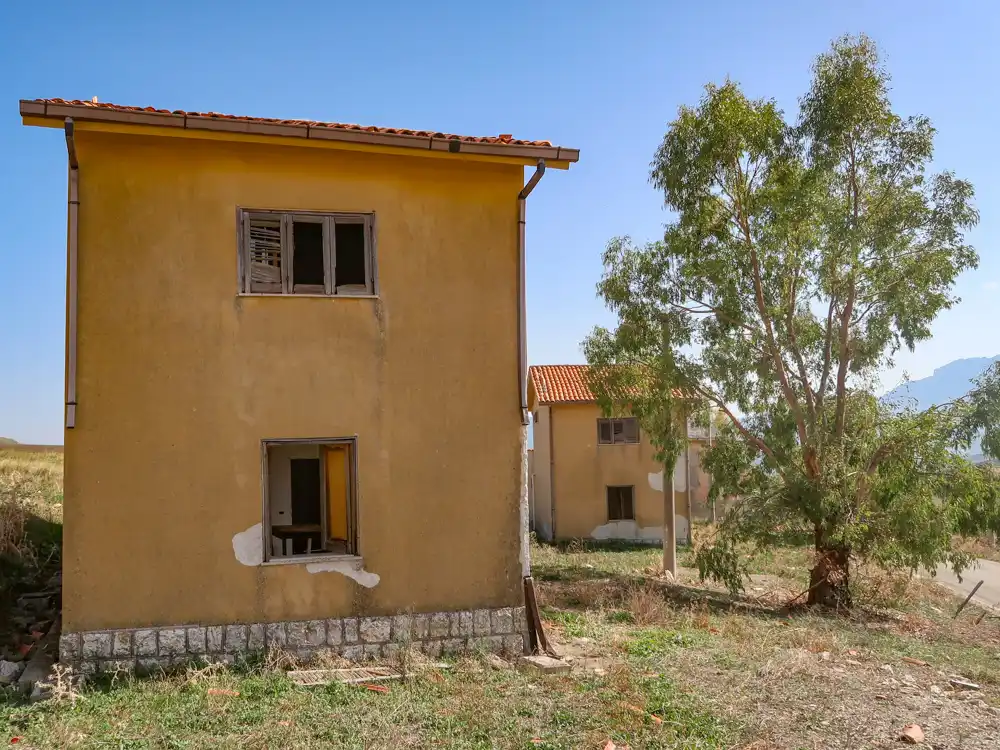
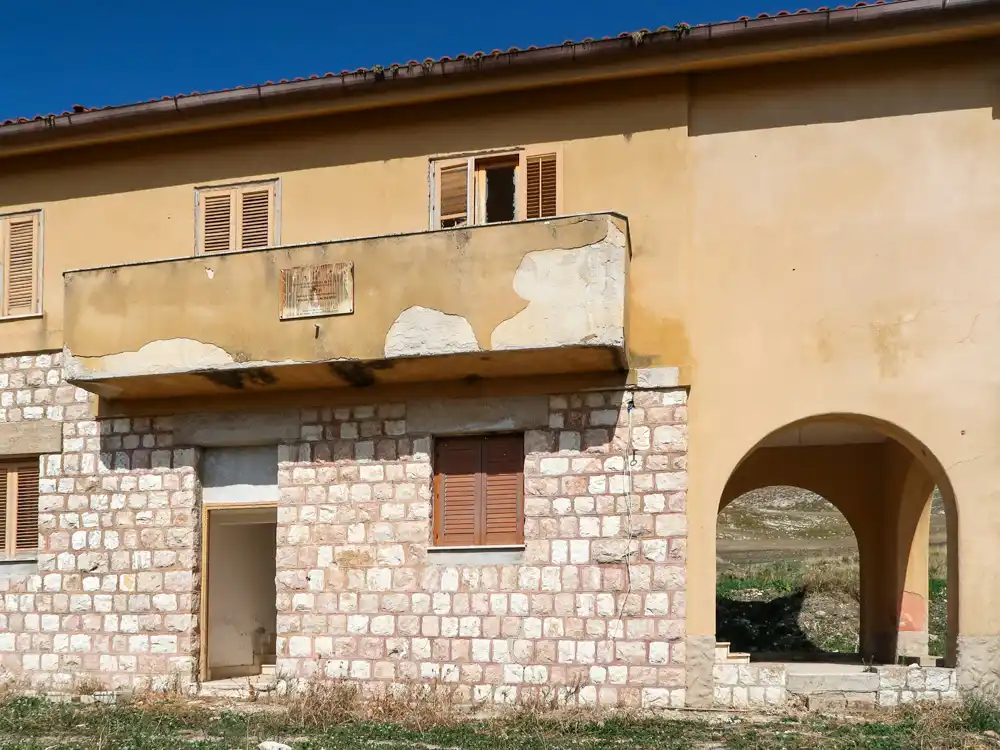
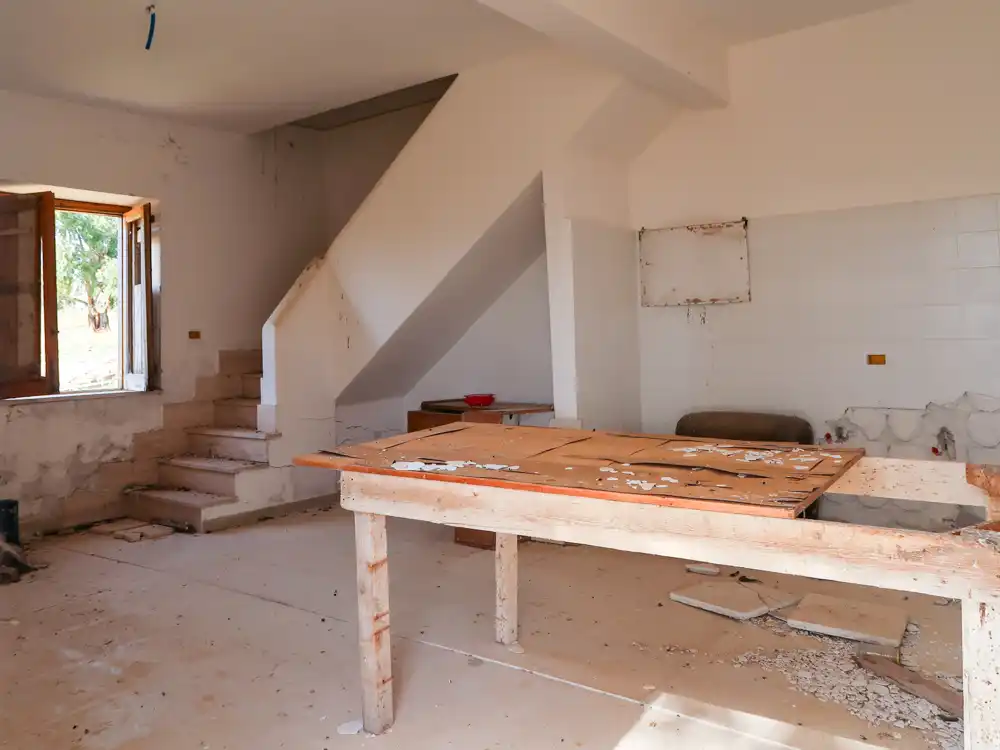
It felt like walking onto the set of a low-budget post-apocalyptic movie. Later down in the valley, I asked an old local man what on earth happened up there. He shrugged, spat out a cigarette butt, and muttered: “Finita l’acqua.” The water ran out.
The natural springs dried up, the municipal wells pumped pure mud, and the regional government abandoned them to their fate. Once you lose water, you have nothing left. Families packed their pots, blankets, and fled to the cities. They simply left an entire modern settlement behind to the thistles and wind. Raw Sicilian reality without makeup.
Masseria Rossella and White Catarratto Therapy
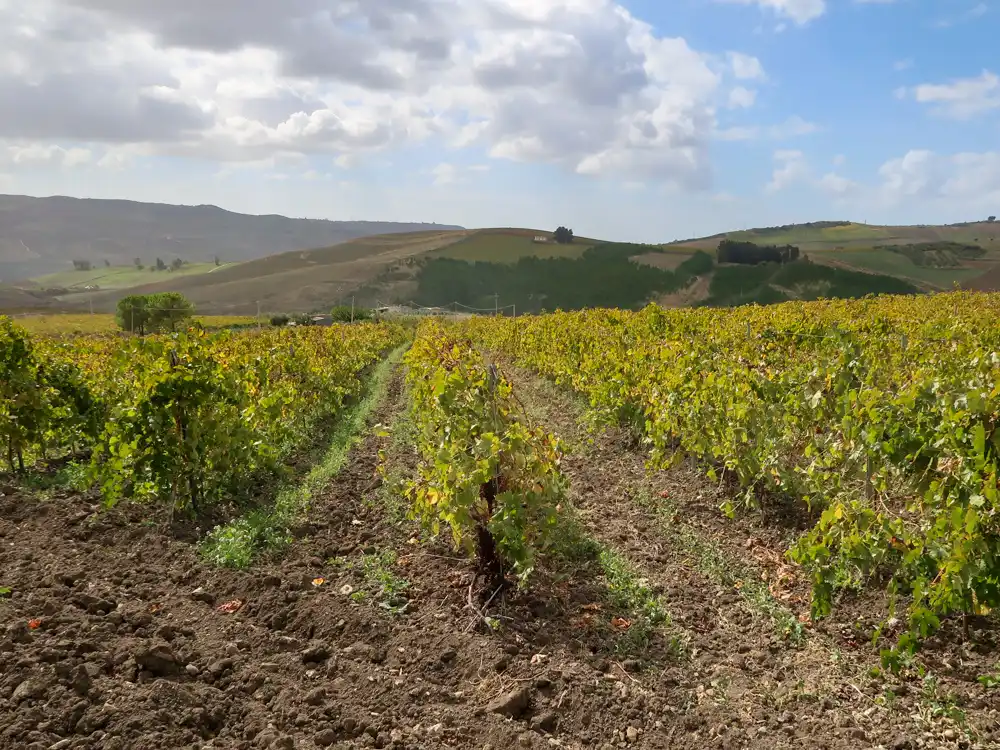
After hours of tramping through dust and skirting loose scree, I dropped off the hillside straight into Masseria Rossella. A nineteenth-century historical estate. Weathered stone walls, shading pergolas, antique barrels, and endless vine rows. In that exact moment, it looked like a desert mirage.
I collapsed onto a wooden bench. I shook the chalky dust off my shoes and ordered a glass of local white Catarratto. Crisp, mineral, with a dry bite. I knocked it back in two gulps. In that single split second, my legs forgot every single meter of the 500-meter climb. This is precisely why I love the interior. You endure stone-cold purgatory on the trail just to savor divine serenity with a cold bottle on the table thirty minutes later.
📍Practical Trail Tips (Logistics)
- Trailhead: Road junction near Sant’Agata or directly at Masseria Rossella (accessible by car via the SP5 road between Piana degli Albanesi and Ficuzza).
- Route specs: Loop length approx. 12 – 14 km, elevation gain approx. 550 m, hiking time 4:00 to 5:00 hours.
- Terrain: Gravel forestry tracks, historical mule paths (regie trazzere), and steep, unmarked rocky slopes near the summit ridge.
- Sun & hydration: Not a single functional drinking water source exists along the route. Carry at least 2.5 liters of water per person and protect your head—the limestone ridge offers zero shade.
- Navigation: Sentiero Italia markings are faded and sporadic. Always download an offline map (Mapy.cz or Wikiloc).
- Agriturismo: Masseria Rossella serves outstanding regional food and estate wine. Outside peak summer, check their operating hours beforehand.
Frequently Asked Questions (FAQ)
As long as you stick to the southern and western grassy-rocky flanks, the terrain is safe. Keep well away from the northeastern drops where the rock plummets vertically. And one golden rule: if you spot livestock guardian dogs watching over a flock, give them a wide berth. In their eyes, I clearly read one unspoken promise: “Just step a little closer, and I’ll rip your rear end wide open.”
Yes. The site is not fenced off, and the outdoor streets are openly accessible. However, do not venture inside the buildings due to cracked masonry and unstable roof beams.
The lower gravel roads around the base and sections of Magna Via Francigena are fantastic for gravel and mountain bikes. The rocky summit ridge across Monte Rossella and Monte Leardo is strictly for foot travel.