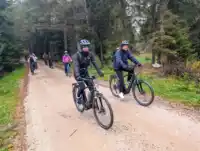
For me, the absolute highlight of the region is climbing the Gavia from the Santa Caterina side. For one, the resort sits at a higher altitude, meaning less distance to cover from base camp. Secondly, there is significantly less traffic and much more rewarding scenery. Whenever we set up base in Santa Caterina, this ride is an absolute rule.


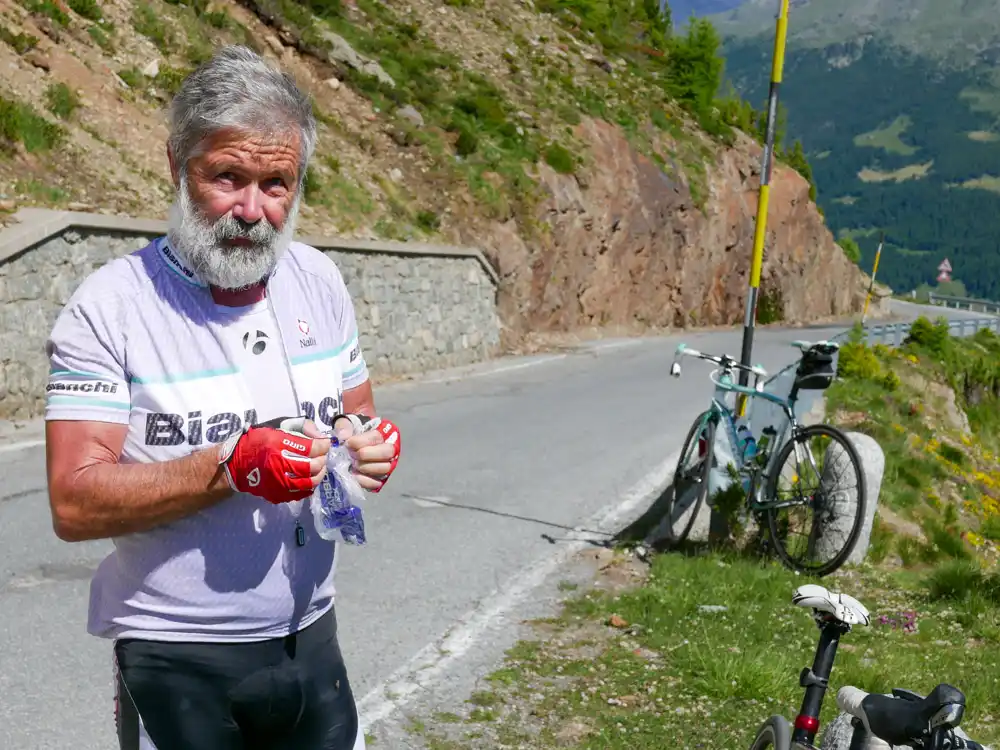
💖 Giro d’Italia: Cima Coppi and the Day Strong Men Crie
Passo Gavia (2,652 m) is one of the most sacred and feared peaks of the pink Grand Tour. It frequently serves as the Cima Coppi—the highest summit of the entire race, where maximum mountain classification points are awarded. The Giro has tackled this giant 14 times in total.
The Dirt Road Debut (1960): The Gavia was introduced to the Giro in 1960 by legendary race director Vincenzo Torriani. Back then, the road was a narrow, unpaved dirt track meant for military mules, entirely lacking guardrails. Legendary climber Imerio Massignan crested the summit first, but three flat tires on the treacherous gravel descent cost him the overall lead.
The Apocalypse of 1988: The most iconic and brutal day in modern cycling history took place here on June 5, 1988. During Stage 14, an apocalyptic blizzard slammed into the pass, leaving half a meter of snow and temperatures at -5°C. Riders wearing thin summer kits were freezing, crying from sheer agony, and shaking uncontrollably. American Andy Hampsten survived the frozen inferno to claim the pink jersey (Maglia Rosa) and win the Giro, marking a day forever remembered as “the day the strong men cried.”


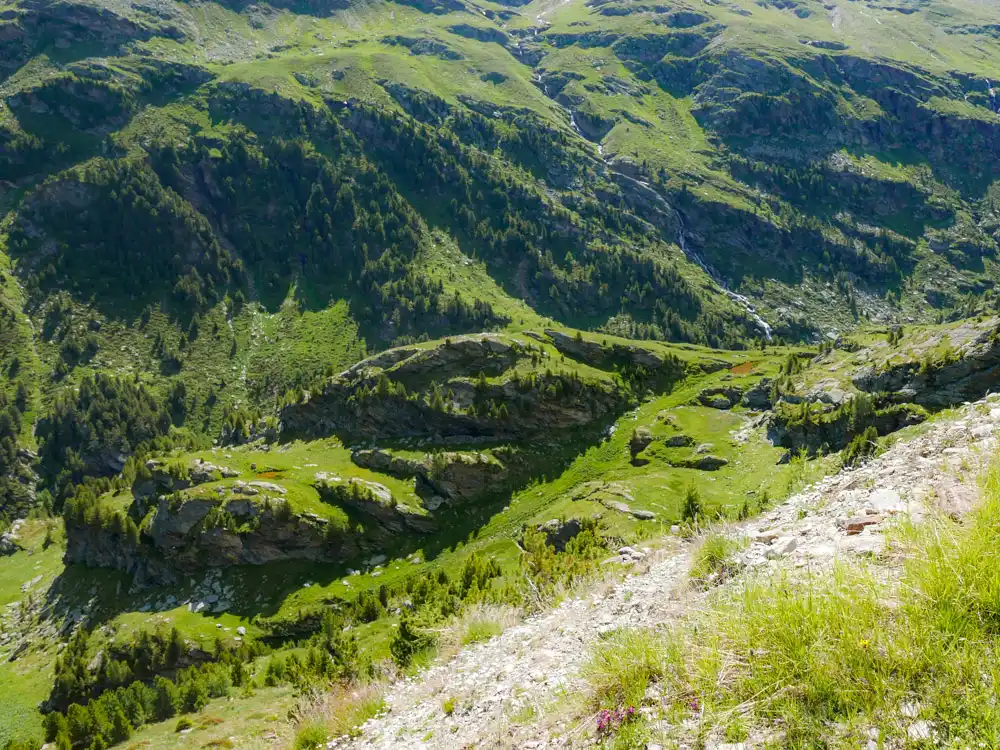
My First Gavia Experience
“Don’t worry, Peteer,” Norbert said, trying to motivate me. “We’ll knock out Mortirolo, grab some food, hop over one more little hill, and we’re back at the hotel. You can do this easily…”
That “one more little hill” happened to be Passo Gavia. At the time, I had absolutely no idea what I was getting into. Standing at an altitude of 2,652 m—just three meters shorter than Gerlachovský Štít, the highest peak in Slovakia—Passo Gavia was to be my second “Grand Tour” mountain right after the Stelvio. It would have been perfectly fine, had my dear friends not decided to combine it with the Mortirolo on the exact same day. What doesn’t kill you makes you stronger, right?


I managed to crack the Mortirolo Pass despite a few serious mid-climb crises. We rolled down into Ponte di Legno and devoured a fantastic Italian pizza. But as we ate, the Passo Gavia loomed directly above us. Our group consisted of two competitive young speedsters, two incredibly fit veteran racers, and me. Right before setting off, we double-checked the logistics: “Don’t forget to make the turn. It’s a very stealthy, unassuming right turn off the main road, about a kilometer past the town center.”
A Crisis of Values
The moment we hit the lower slopes, I knew I was in deep trouble. Ahead lay 17.3 km of climbing with a vertical gain of 1,363 meters. My brain started plotting immediately: “I’ll just slow down, let them drop me, and call a local taxi. Surely some driver will crawl up here for 30 euros.”
It didn’t work out. My ego wouldn’t let me quit, so I pressed on to give it a shot. After gaining the first 500 vertical meters, I consumed my very last energy gel. “I should turn around and descend. I can only survive this inside a car. But what if no taxi comes along?” I clipped back into my pedals and slowly kept grinding. The altitude meters ticked away painfully slow. The summit felt like it wasn’t getting any closer.
By the time I reached 700 vertical meters of climbing, a stone fountain saved my life. Water was rushing out. I didn’t care for a second whether it was filtered or drinkable; my bottles had been bone-dry for miles.
Panics started setting in. Turning back was no longer an option, and the summit was entirely out of sight. I began evaluating my options rationally: I will flag down any passing car and offer the driver 50, even 100 euros, just to throw my bike in the back and drive me to the top.

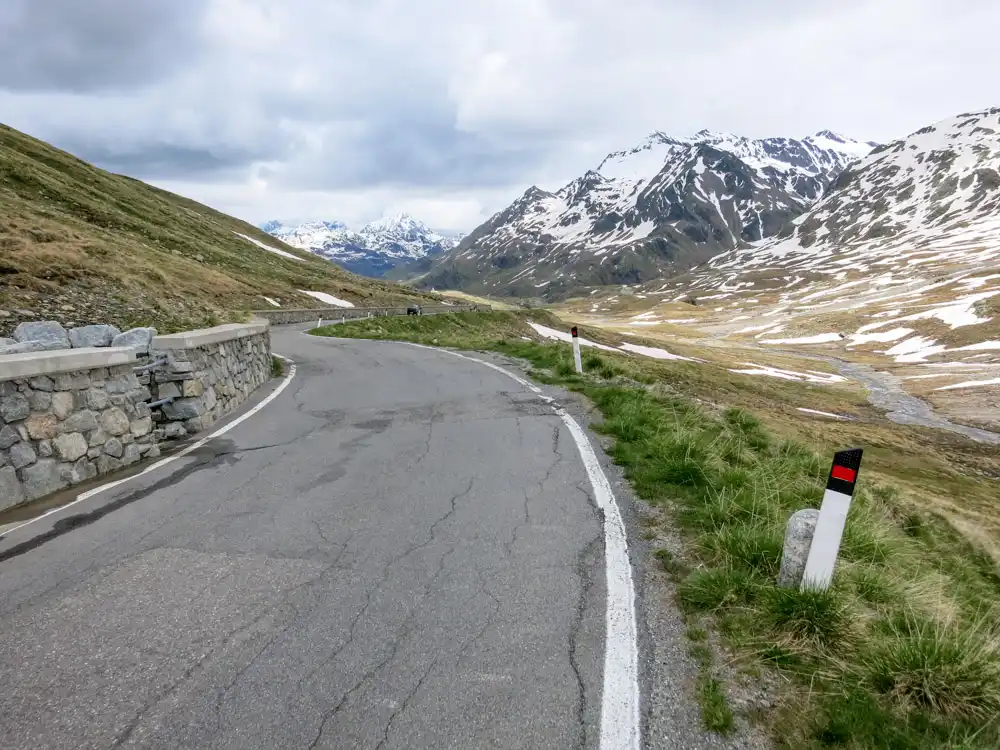
Value crisis
I laid my bike down on the grass and started hitchhiking. Car after car zipped right past me. Nobody stopped. The panic was reaching its peak. I got back on the bike and pedaled up to a small dirt pullout where a few cars were parked. “Maybe mushroom pickers. I have to convince someone.” But there wasn’t a soul in sight. In sheer desperation, I started shaking the parked cars, hoping to trigger an anti-theft alarm and draw the owners out of the woods. I checked my wallet; I had a little over €200 in cash. Fear turned me into a generous high-roller—I would gladly hand over every single bill to anyone willing to drive me up.
Nothing. The car alarms were blaring into the empty forest, but nobody appeared. I was morally hitting rock bottom. The road narrowed down significantly, practically becoming a paved walking path. Dusk was settling in. I was experiencing a massive bonk. Total demoralization. At that point, only motorcyclists were roaring past me, but that remaining symbol of civilization was the only thing keeping me sane. At least I wasn’t completely abandoned in the wilderness. Otherwise, I would have started screaming for help.
It was getting dark. I couldn’t do this anymore. Then came the tunnel—a terrifying, pitch-black, unlit cavern where the deafening roar of passing motorcycles echoed off the wet rock walls, sounding like the soundtrack to my impending doom. The moment I exited the tunnel, I was completely broken. “This is it. I can’t turn the pedals anymore.”
A Bicycle for a Life
I had to force someone to stop and give me a lift. “I’ll gladly give them the entire bike. I just want to survive this.” Driven by pure survival instinct, my brain chose a radical strategy: I was going to play the ultimate victim. I have to stop a car by any means necessary.
I laid my road bike flat across the asphalt lane and threw myself onto the gravel at the edge of the road.
It worked instantly. The very first vehicle slammed on its brakes—a Dutch family with two kids inside a Volkswagen Caravelle. The father rolled down the window and asked if I needed urgent assistance. I managed to squeeze out a desperate plea for a lift to the top, muttering that I had “slightly overdone it today.”
They were absolute saints. They immediately fed me a cold can of Coca-Cola and two Snickers bars, then loaded my bike into the back. The warmth of the van hit me, and I sat there completely silent, processing my survival. About half a kilometer higher up the road, I looked out the window and spotted Noro. He was completely zentered, leaning with one foot against a patch of icy snow on the shoulder. He was done for, too.
When we reached the summit, the Dutch family refused to let me out. They kindly asked if they should drive me all the way down to my hotel. Truly incredible people. “No,” I replied, “I can manage the downhill.” With violently trembling hands, I got back on my bike and began the descent into Santa Caterina. My hands were cramping and shaking so hard from exhaustion that I didn’t dare cross 25 km/h on the descent.

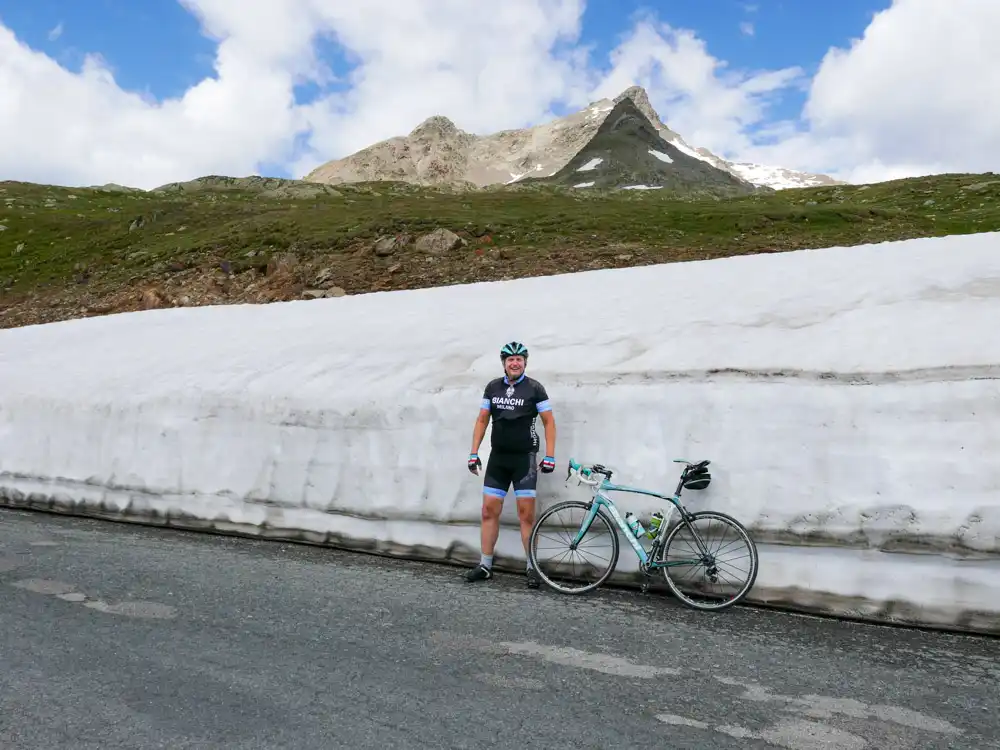

Passo Gavia safety peak
Thirty minutes later, I rolled into the resort town. Noro caught up with me shortly after. “Peťo! What on earth are you doing here? Where did you come from?” I humbly confessed the entire truth, blessing the absolute humanity of the Dutch. “Why didn’t you guys stop for me? I almost died up there,” Noro admitted with a weak laugh. 😉
All’s well that ends well. The sun was setting, and we were safely sitting on the town square with cold beers in hand. Suddenly, my phone rang. It was the other two powerhouse riders from our group. “You idiots! We are completely lost in the middle of nowhere! I’m staring at a road sign that says Venice!?!?” In their blind competitive drive, they had missed the critical turn and accidentally climbed all the way up Passo Tonale instead. We had no choice but to hop into the support car and spend half the night retrieving them over two mountain passes.

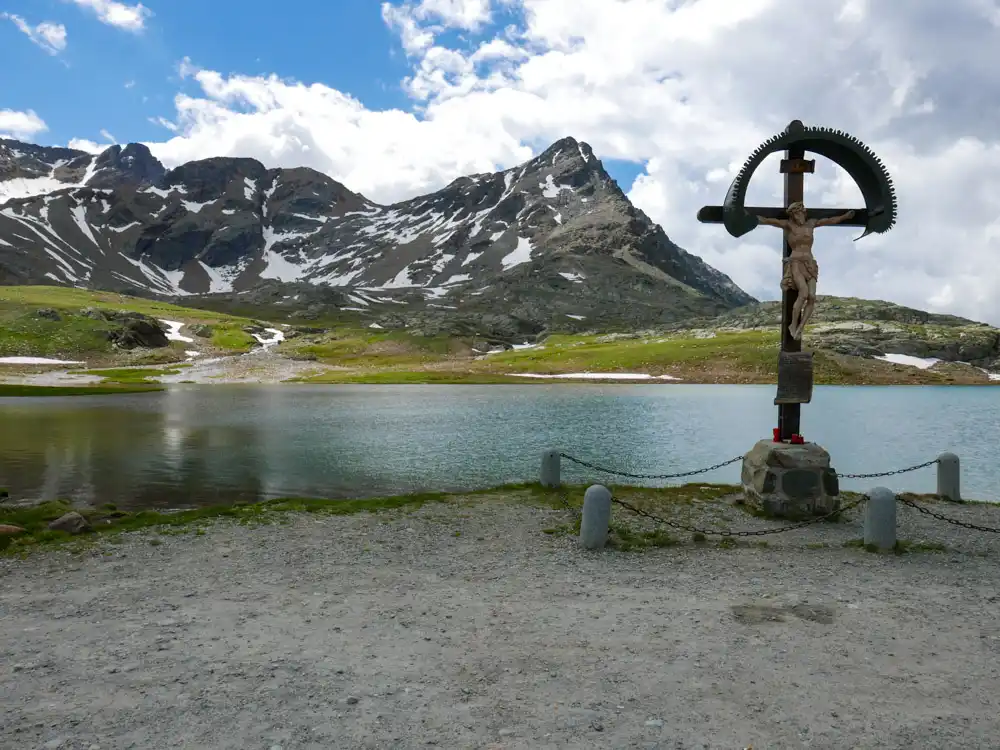


I have climbed the Passo Gavia multiple times since that day, from both sides. But it was never quite that dramatic again. And I have never combined it with the Mortirolo ever since. 😂
Passo Gavia hiking
For some, the Gavia summit is the ultimate finish line; for others, it is just the starting point. Hikers and mountaineers absolutely love this pass.
Directly above the pass on the eastern side towers the majestic Corno dei Tre Signori (3,360 m), flanked by Monte Gaviola (3,025 m). On the opposite side of the tarmac sits Monte Gavia (3,223 m).


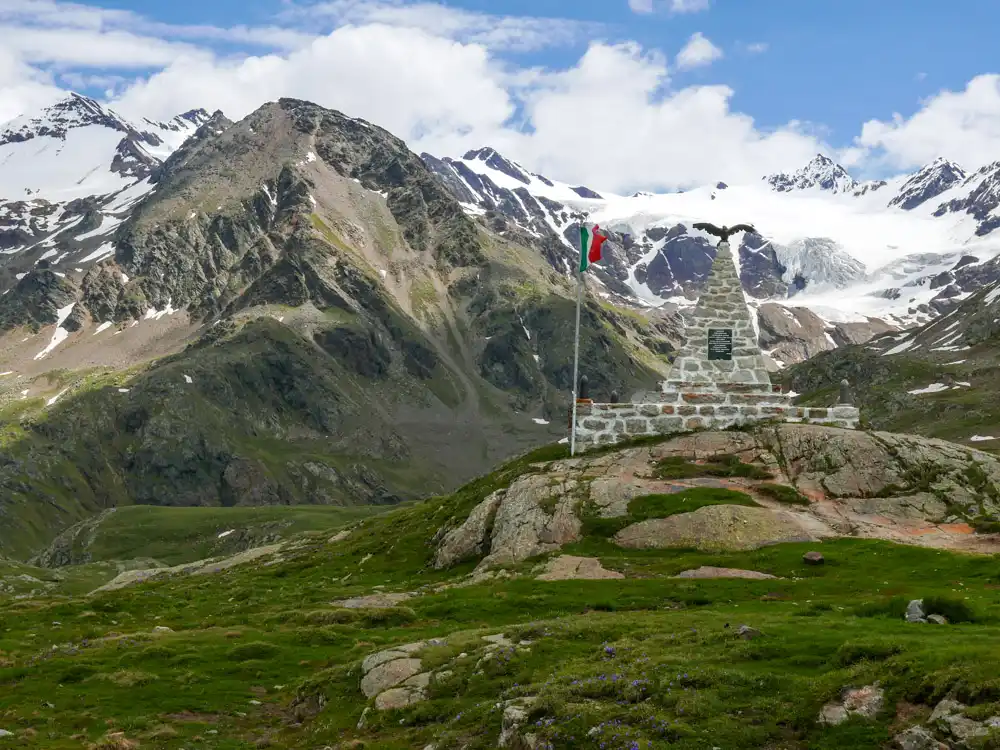
If you follow the road for less than 3 km toward Bormio, you will reach a prominent war memorial. This is the official trailhead for routes leading into the stunning Punta San Matteo (3,678 m) group. This rugged glaciated cluster includes several prominent peaks over three thousand meters, such as Pizzo Tresero (3,594 m), Punta Pedranzini (3,599 m), and Cima Dosegù (3,560 m). An active outdoor soul simply cannot get bored up here.